The Moon’s biggest scar may be hiding something even stranger than the impact that made it. Deep beneath the South Pole-Aitken basin on the lunar far side, scientists have identified a huge mass of unusually dense material, preserved far below the surface and still weighing down the basin floor.
That finding points to a violent chapter from the solar system’s early history, and to a lunar interior that may have stayed more stable than many researchers expected.
The South Pole-Aitken basin is enormous, the largest preserved impact basin on the Moon and one of the oldest. It stretches roughly 2,000 kilometers across, sits on the far side, and records a collision from about 3.9 to 4.3 billion years ago, when impacts were still reshaping the inner solar system. Unlike Earth, whose surface has been reworked by plate tectonics, erosion, and volcanism, the Moon has kept many of those ancient scars intact.
Now one of those scars appears to hold a clue buried in the mantle below.
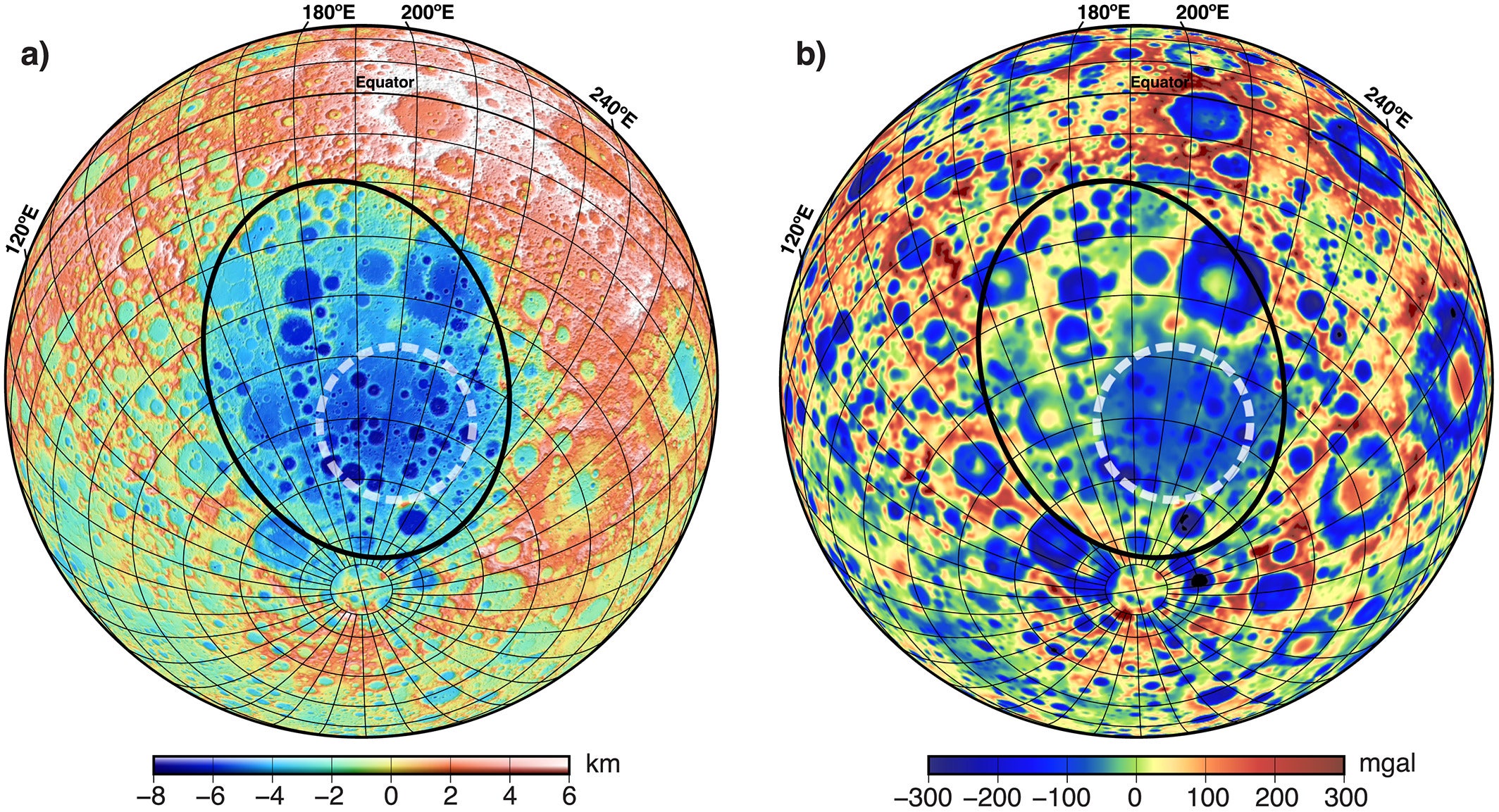
“When we combined lunar gravity data with topography, we found a huge amount of extra mass hundreds of miles under the basin,” said Peter B. James, a planetary geophysics professor at Baylor University. “One explanation is that metal from the asteroid that created the crater is still embedded in the Moon’s mantle.”
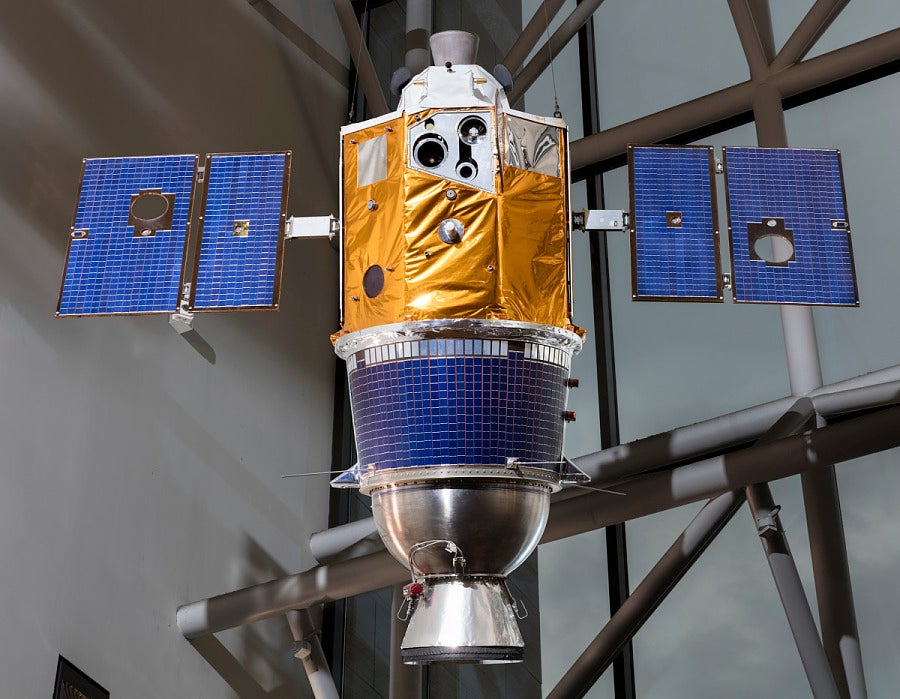
The new work drew on two major lunar data sets. One came from NASA’s Gravity Recovery and Interior Laboratory, or GRAIL, which mapped tiny variations in the Moon’s gravity field using twin spacecraft. The other came from the Lunar Orbiter Laser Altimeter, or LOLA, aboard the Lunar Reconnaissance Orbiter, which has gathered nearly 7 billion topography measurements and filled in gaps left by earlier mapping near the south pole.
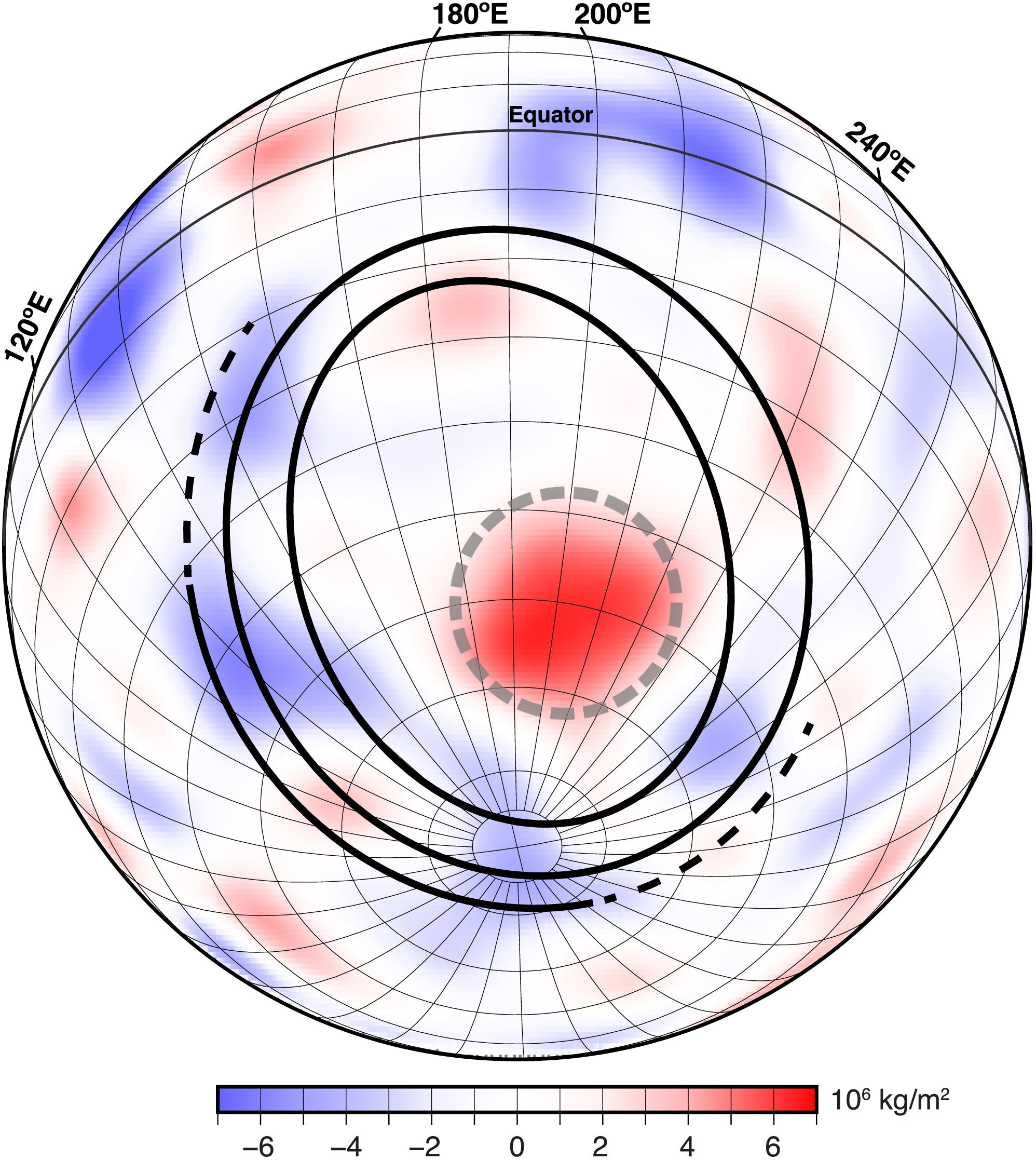
Together, those measurements allowed the team to compare the Moon’s surface shape with the gravity field produced by material below it. What emerged was a conspicuous excess of mass beneath the South Pole-Aitken basin floor, centered near the southern interior of the basin and lining up with a central topographic depression.
The numbers are hard to ignore. The anomaly has an integrated excess mass of at least 2.18 × 10¹⁸ kilograms, about 0.003% of the Moon’s total mass. It likely extends to depths of at least 300 kilometers, and perhaps much deeper. Its weight appears sufficient to explain why the basin floor is pushed downward by roughly 1 to 2 kilometers.
That matters because the depression had previously been interpreted as a possible sign of impact melt sheet contraction. In this analysis, the better explanation is simpler: the floor is sagging under the load of dense material below.
The research points to two plausible origins.
One is impact metal. Simulations of giant basin formation suggest that if the object that struck the Moon had a differentiated iron-nickel core, that metal could have been scattered into the upper mantle instead of sinking cleanly to the center. The amount of excess mass detected under South Pole-Aitken is broadly consistent with the dispersal of a roughly 95-kilometer-wide iron-nickel core through the mantle.
The other possibility reaches back to the Moon’s earliest cooling history. After its formation, the Moon is thought to have had a global magma ocean. As that molten body cooled and minerals crystallized, dense oxide-rich material could have formed late and sunk unevenly. If some of those dense leftovers became stranded beneath this region, they could also account for the gravity signal.
The study does not settle the question. It also notes a complication: the mass anomaly is offset by about 400 kilometers to the southeast of the basin center. If the anomaly came from the impactor, that offset becomes an important constraint for future models of how the collision unfolded. If it came from oxide-rich lunar material, some mechanism would still be needed to explain why it became concentrated there.

The work also sharpens the picture of the basin itself.
Using improved LOLA and GRAIL data, the researchers updated best-fit ellipses for the basin’s inner rim and identified an exterior scarp beyond the previously mapped outer rim. Those results largely agree with earlier work, but the newer coverage near the south pole makes the basin boundaries more reliable.
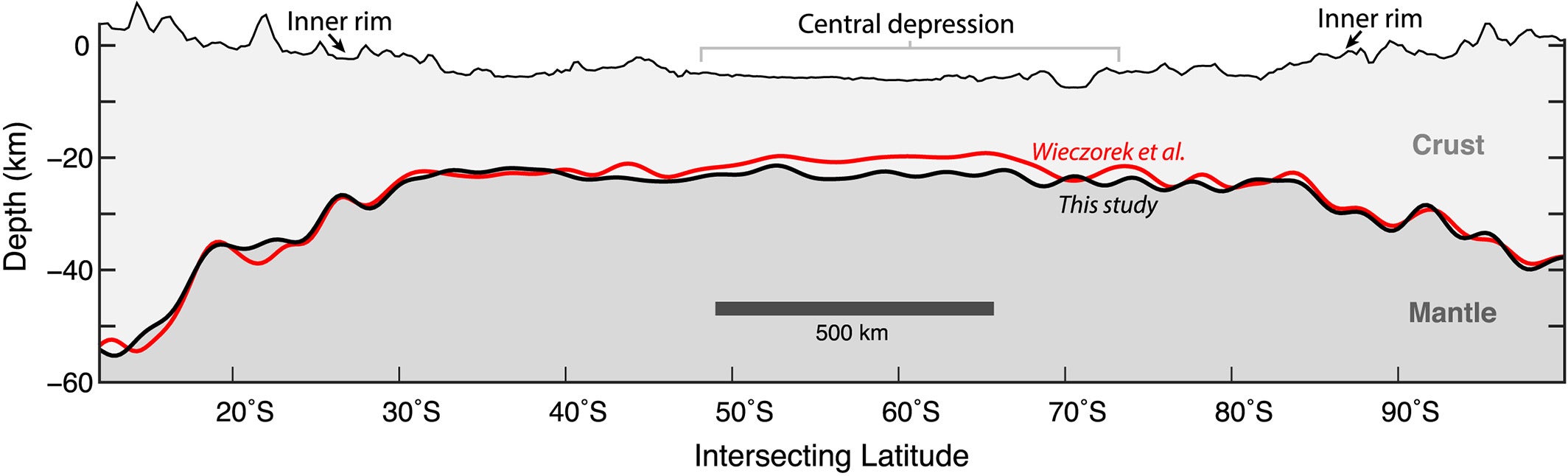
The crust inside the basin remains another puzzle. Models in the paper suggest that undisturbed crust in the central basin interior is at least 16 kilometers thick, and other crustal thickness models place that central region at roughly 13 to 22 kilometers. That is thicker than some previous estimates and complicates efforts to explain how the crust there formed after such a massive impact.
The collision likely excavated nearly all the preexisting crust in the basin interior, along with some upper mantle material. Any crust left there today probably came from later processes, including inward flow of crust shortly after impact, crystallization from an impact melt pool, volcanic activity, or later infill by ejecta.
Even so, the basin still preserves a record that few places in the solar system can match. Larger impacts almost certainly happened elsewhere during planetary accretion, but later bombardment and internal heating erased much of that evidence. South Pole-Aitken survived.
Whatever its origin, the anomaly tells scientists something important about the lunar interior. It seems to have remained in place for billions of years.
If the dense material was emplaced when the basin formed, its survival suggests the Moon’s deep mantle was rigid enough to keep it from sinking away. The paper estimates that the lower mantle beneath South Pole-Aitken would have needed a viscosity of at least 8 × 10²¹ pascal-seconds to keep such a load from dropping toward the core-mantle boundary. Under one dry-lherzolite rheology, that implies an upper temperature limit of about 1480 degrees Celsius for the lower mantle during the latter half of lunar history.
That does not mean the whole Moon looked exactly like this everywhere. But it does suggest that the interior lost a substantial amount of its original heat and that parts of the mantle stayed cool and stiff enough to preserve ancient structure.
For planetary scientists, that is part of the larger appeal of the far side. Unlike the volcanic near side, much of this region escaped the extensive resurfacing that can blur the earliest record. The South Pole-Aitken basin remains one of the clearest natural laboratories for studying giant impacts, crustal excavation, and the deep aftermath of basin formation.
This work raises the scientific value of the South Pole-Aitken basin for future lunar exploration. A mission to the basin could help test whether the buried anomaly reflects impactor metal or dense lunar material left over from magma ocean crystallization. Either answer would sharpen the story of how the Moon formed and cooled.
The results also suggest that samples from the basin could do more than describe one crater. They could preserve evidence of the impacts that shaped rocky worlds across the early solar system, events Earth’s own surface no longer records clearly. In that sense, the far side is not just remote terrain, it is an archive.
Research findings are available online in the journal Geophysical Research Letters.
The original story “Massive underground structure discovered beneath the Moon’s South Pole-Aitken basin” is published in The Brighter Side of News.
Like these kind of feel good stories? Get The Brighter Side of News’ newsletter.
The post Massive underground structure discovered beneath the Moon’s South Pole-Aitken basin appeared first on The Brighter Side of News.


Leave a comment
You must be logged in to post a comment.