A living web runs through the soil beneath forests, prairies, marshes, and croplands, linking plants to fungal partners that help feed them, move water, and pull carbon underground. Until now, no one had mapped that web at the scale of the planet.
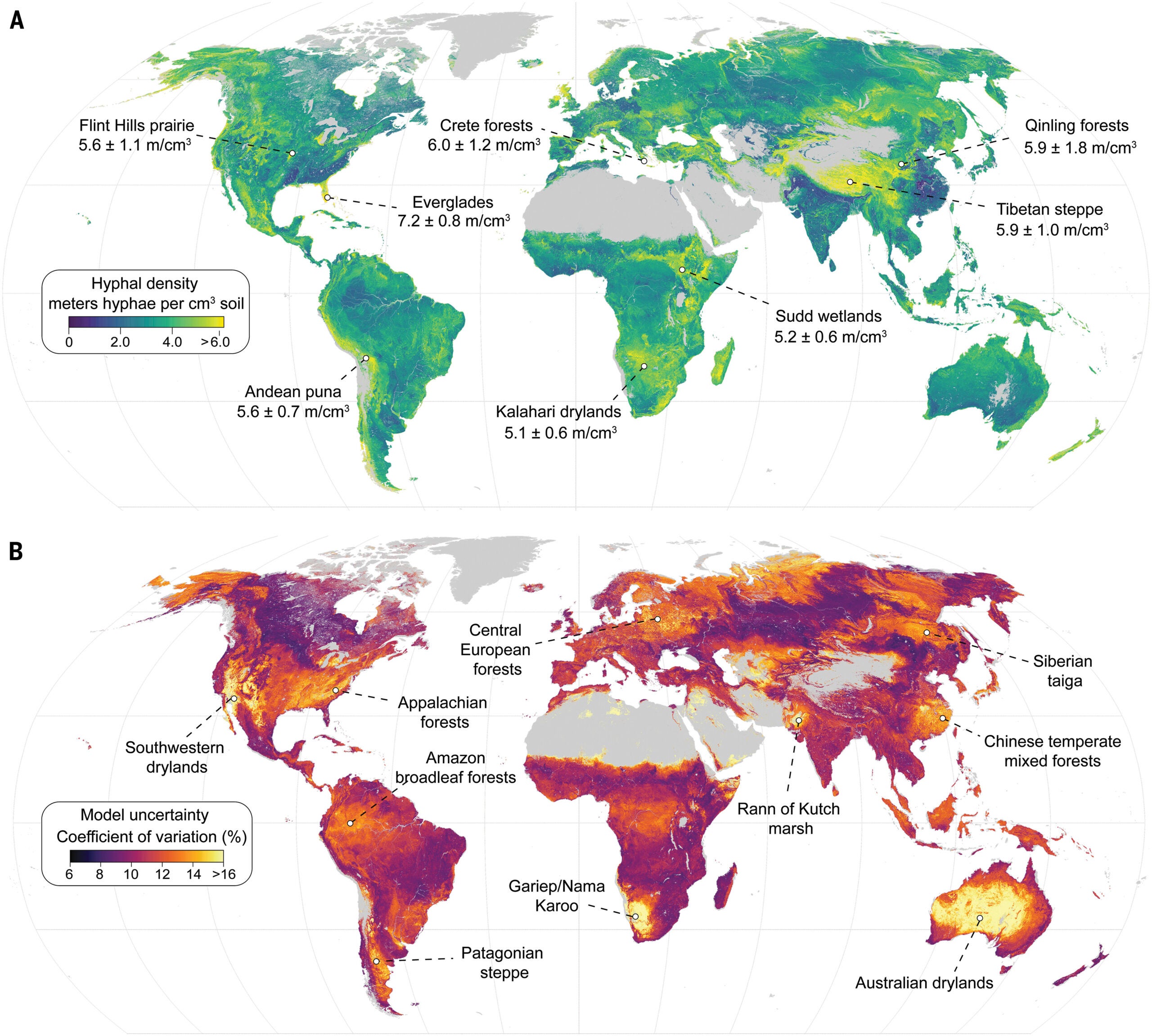
The new analysis, published in Science, offers the first global estimate of the physical reach of arbuscular mycorrhizal fungal networks. This is one of the most widespread partnerships in nature. The researchers calculate that the top 15 centimeters of Earth’s soils hold about 110 quadrillion kilometers of these fungal filaments, known as hyphae, and roughly 300 megatons of carbon in living fungal biomass.
“It is hard to overstate the importance and enormity of these fungi,” said lead author Dr. Justin Stewart of the Society for the Protection of Underground Networks, or SPUN. “There could be up to 10 meters (32 feet) of mycorrhizal network in just a teaspoon of soil.”
The numbers point to an unseen system that helps support much of life on land. Arbuscular mycorrhizal, or AM, fungi form symbiotic partnerships with more than 70 percent of terrestrial plant species. Plants supply them with carbon, while the fungi help deliver nutrients and water from the soil.
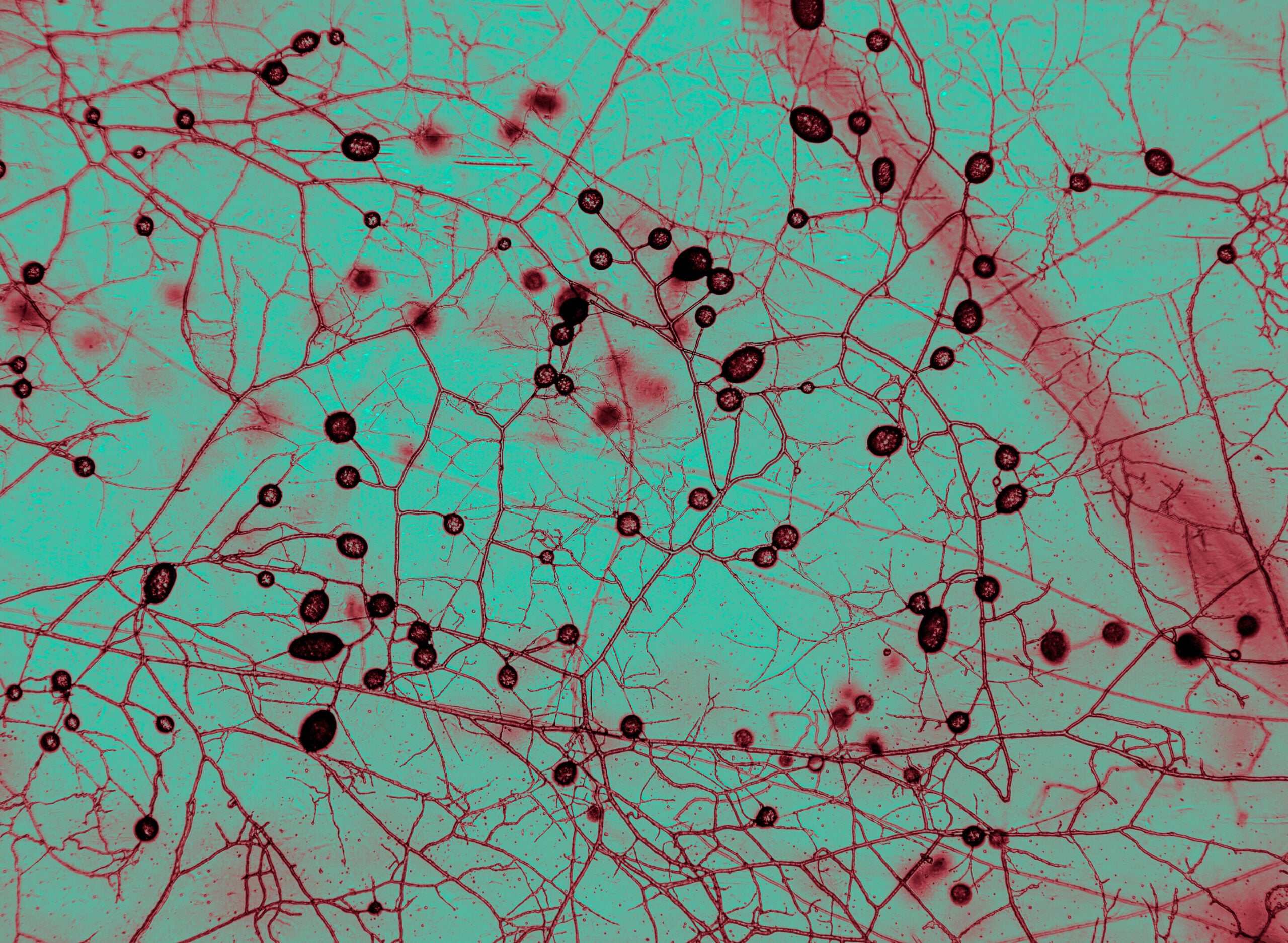
These fungi have shaped life on land for more than 450 million years. Their hyphae extend beyond roots, increasing root foraging area by as much as 100 times. They can also provide up to 80 percent of a plant’s phosphorus and 20 percent of its nitrogen.
Often compared to a circulatory system, these fungal networks move carbon, water, and nutrients through underground ecosystems. The study estimates that AM fungal networks transport about 4 billion tons of carbon dioxide equivalent into soils each year. This is roughly 11 percent of all human-related carbon-dioxide emissions.
That does not mean the fungi erase those emissions on their own. But it does place them among the major biological routes by which carbon enters soils. Some of it can remain for long periods through fungal remains and carbon-rich compounds that bind to minerals.
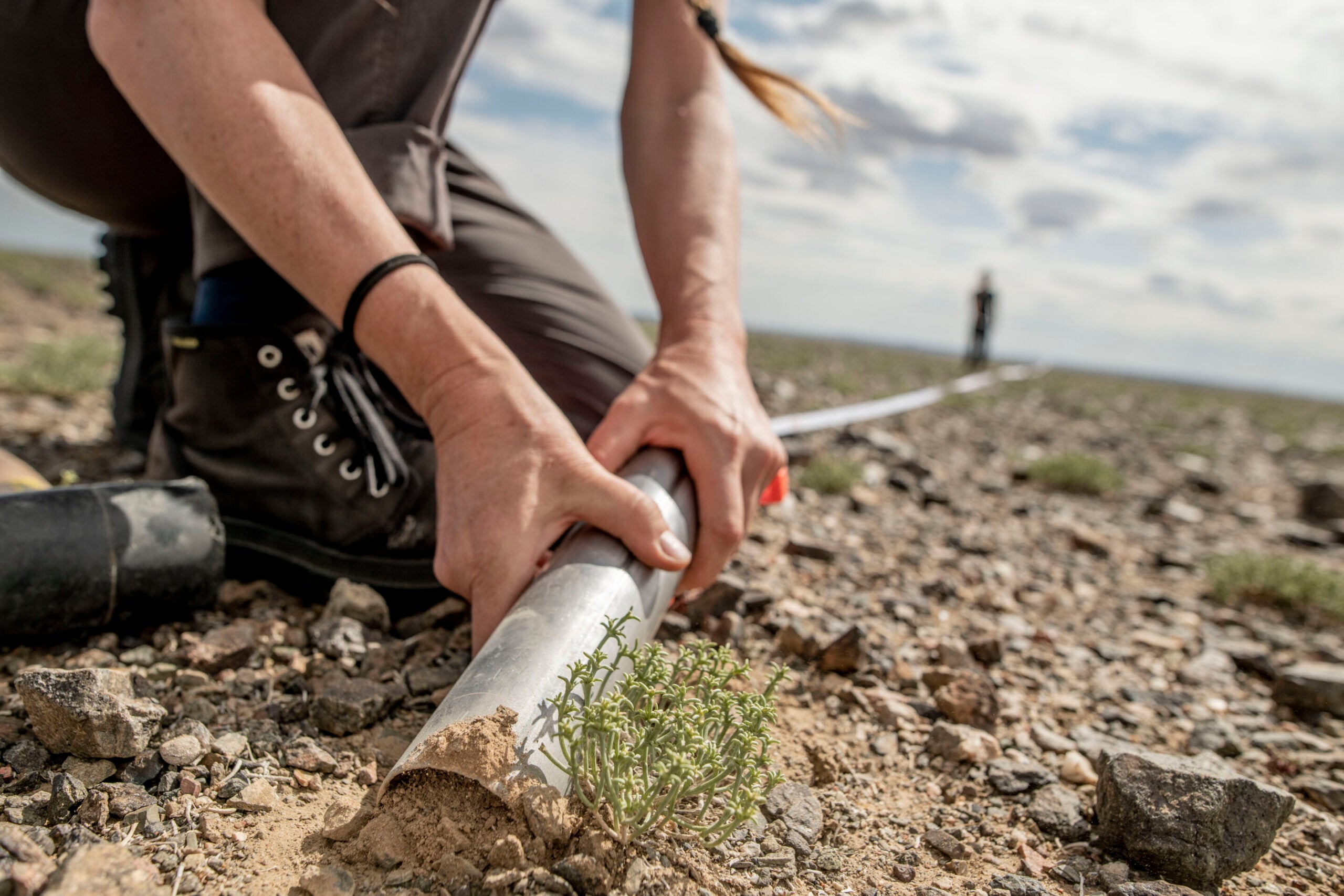
To build the map, the researchers compiled more than 4,000 unique measurements of AM hyphal density from over 16,000 soil cores. These samples were collected across nine of the world’s 14 global biomes and 100 ecoregions. They then trained machine-learning models to predict fungal density across unsampled areas. The researchers used climate, soil chemistry, vegetation, and other environmental data for predictions.
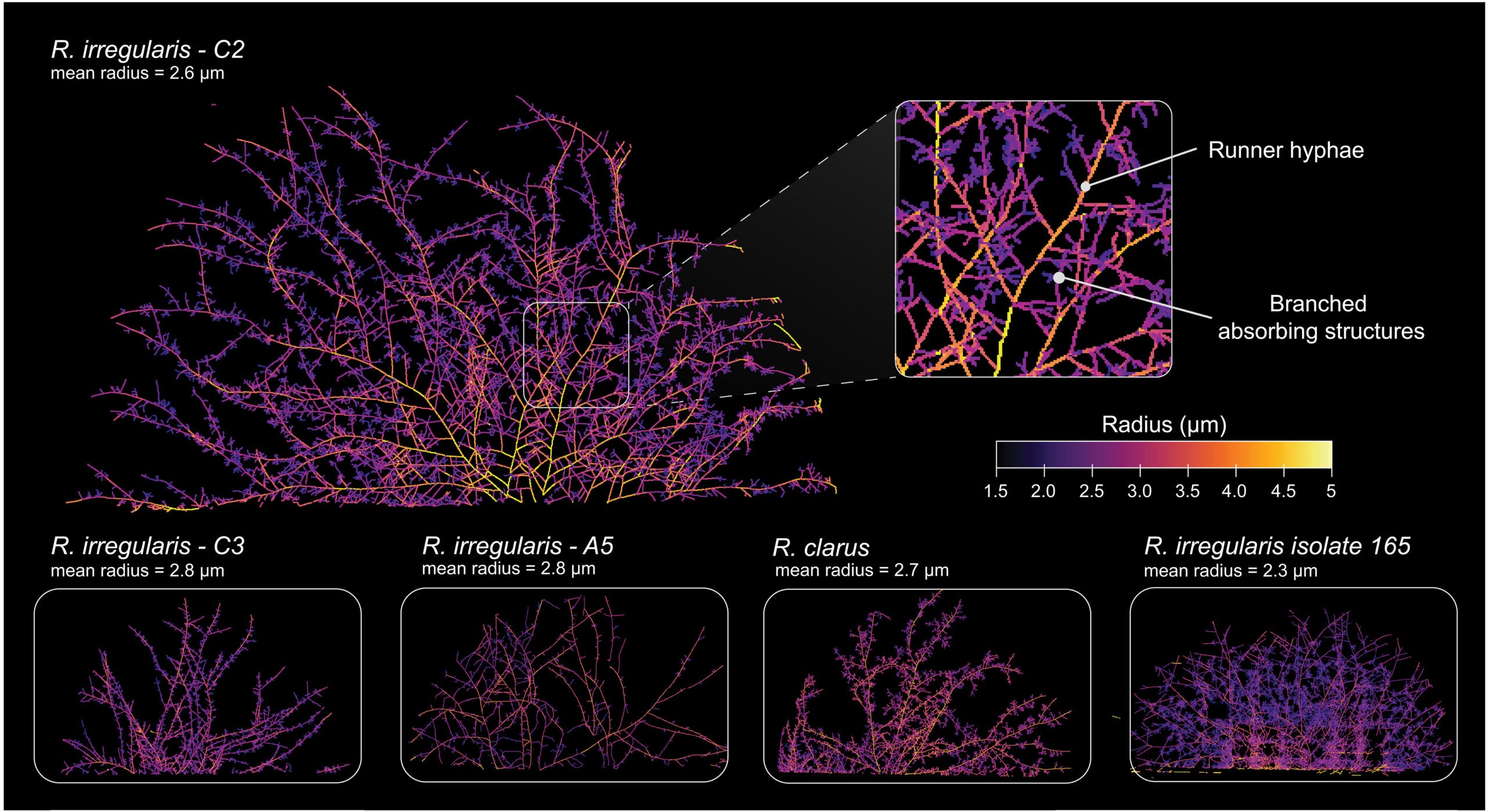
The team also worked with the Physics of Behavior group at the Dutch research institute AMOLF, which used robotic imaging to measure more than 300,000 widths from living fungal hyphae in the lab. Those measurements helped the researchers convert length estimates into biomass.
“With the emergence of new technologies in high-resolution imaging, machine-learning and robotics, we are starting to reveal what has long been hidden under our feet,” said co-lead author Dr. Corentin Bisot, an AMOLF biophysicist. “We are learning how the complex bodies of network-forming fungi transport nutrients and help regulate the climate.”
One of the clearest patterns in the study is where these fungal networks are most concentrated. Grasslands stood out as the strongest reservoirs of AM fungal infrastructure, containing an estimated 40 percent of global AM fungal biomass.
The densest areas included the Sudd flooded grasslands of South Sudan, the Everglades in Florida, and the Tibetan Plateau. Prairie and steppe ecosystems also ranked high.
That matters because grasslands are not usually the first ecosystems people associate with global climate regulation. Tropical forests tend to dominate the public imagination. But the new research suggests grasslands, despite lower aboveground plant productivity overall, channel remarkable amounts of carbon belowground through their fungal partners.
The study found that AM hyphal densities were predicted to be about 39 percent higher in montane grasslands than in tropical moist broadleaf forests. Wild grasses were also associated with the highest hyphal densities among plant groups in the researchers’ dataset.
The authors say this likely reflects the dense root systems of grasslands and the dominance of plant species that partner with AM fungi. It also adds urgency to conservation concerns. Grasslands are among the least protected ecosystems on Earth and are being converted into farmland faster than forests.
Last year, some of the same researchers reported that 95 percent of biodiversity hotspots for arbuscular mycorrhizal fungi lie outside protected areas. The new maps add another layer, showing not just where fungal diversity may be high, but where the physical fungal infrastructure itself appears especially dense.
The study also raises concern about what happens when these systems are disrupted.
Across observed field data, hyphal densities in cropland soils were, on average, 47.3 percent lower than in noncropland soils. In broad terms, the research predicts that large-scale agricultural lands are associated with about 50 percent lower network densities.
The biggest predicted reductions appeared in drylands and tropical broadleaf forest regions converted to cropland. The authors note that they could not directly model specific farming practices or land-use intensity, so more work is needed to tie particular methods to fungal decline. Still, they point to likely pressures. This includes fertilizer inputs and fungicides, both of which can reduce the carbon plants send to fungal partners or directly suppress fungal growth.
If those networks thin out, soils may lose some of their ability to cycle nutrients, resist stress, and store carbon.
For Dr. Toby Kiers, an evolutionary biologist and executive director of SPUN, the findings should shape how climate and conservation policy are built. “Fungi have been ignored in climate and conservation for too long. Now is the time to change that trajectory.”
The analysis also includes uncertainty maps, and the authors stress that many parts of the world remain poorly sampled. Tropical rainforests, deserts, and deeper soils still need more study. Only about 2 percent of the team’s database came from soils deeper than 50 centimeters. So the global estimates were limited to the top 15 centimeters to stay conservative.
“Mycorrhizal fungi have shaped life on earth for hundreds of millions of years, but we still understand too little about how the infrastructure of these living transport systems is distributed across the planet,” said co-author Dr. Merlin Sheldrake. “This study is an exciting step towards understanding how this planetary circulatory system operates and suggests ways that we can better work with fungi to help address many of the unfolding challenges of our times, from food security to climate change.”
The new maps give governments, land managers, and conservation planners a clearer baseline for where underground fungal systems may be strongest and where they may be under pressure. That could help target grassland protection, restoration work, and future soil monitoring.
The findings also sharpen questions for agriculture, especially whether farming systems can be managed in ways that maintain healthier mycorrhizal networks while protecting yields.
Just as important, the study highlights major blind spots, showing where more field sampling is needed before the world can fully account for one of its largest living underground systems.
Research findings are available online in the journal Science.
The original story “Earth’s underground fungal network may stretch 110 quadrillion kilometers” is published in The Brighter Side of News.
Like these kind of feel good stories? Get The Brighter Side of News’ newsletter.
The post Earth’s underground fungal network may stretch 110 quadrillion kilometers appeared first on The Brighter Side of News.


Leave a comment
You must be logged in to post a comment.