Crowds rise, voices sharpen, and a match can turn on a single kick. Now a team at Bielefeld University wants to know exactly what those moments do to the body.
Its Football Fever Study, launched for the 2026 FIFA World Cup, is recruiting supporters of all national teams to track how match events affect heart rate and stress levels. The project uses smartwatch data to follow what happens during games, then compares those bodily changes with what is unfolding on the pitch.
The appeal is broad by design. Anyone using a device from one of 13 supported brands can take part. The study records heart rate, stress, movement and sleep automatically through the watch, and the researchers say the data are collected anonymously and in line with data protection rules.
That reach has widened quickly. When the study opened on 28 May, only Garmin devices were compatible. Since then, the team has added 12 more brands: Apple Watch, Google Pixel Watch, Samsung Health, Withings, Fitbit, Oura, Polar, Amazfit, Coros, Whoop, Xiaomi Mi Fitness and Wahoo.
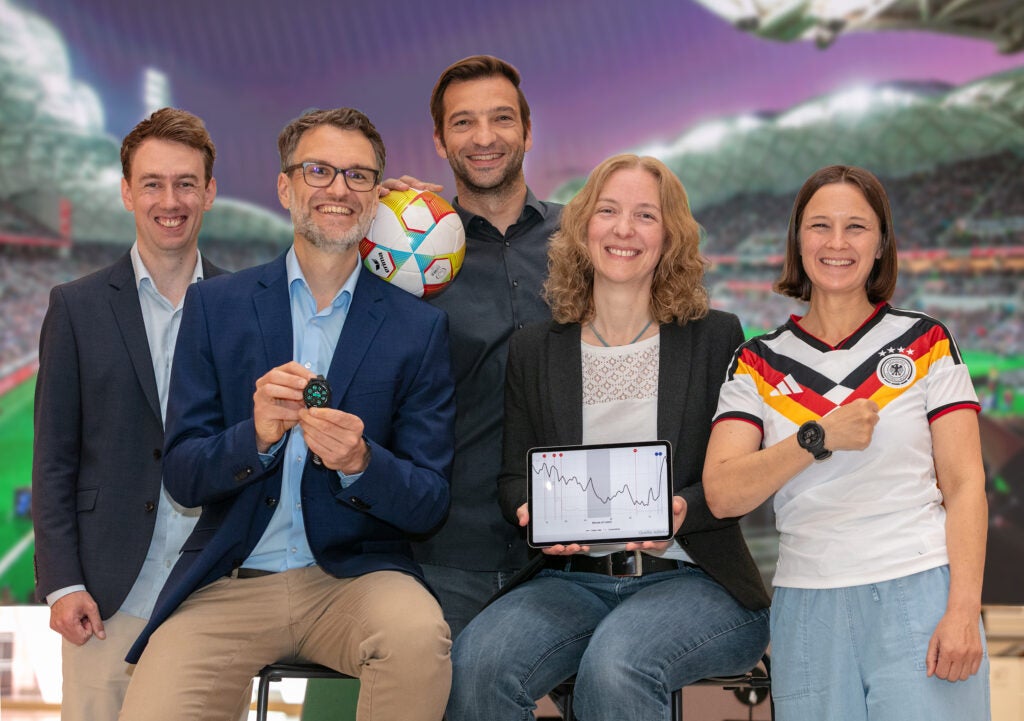
The researchers say they are especially eager to hear from supporters who are not yet well represented in the data. Participants from Eastern and Southern Europe, as well as Turkey, are currently underrepresented.
“We want to include as many fans as possible, regardless of the nation they support and the smartwatch they wear. More participants lead to more robust data, and that increases the study’s explanatory power,” said Professor Dr Christian Deutscher, co-project leader at Bielefeld University’s Faculty of Psychology and Sports Science.
That emphasis on breadth matters for a World Cup project. A tournament like this draws very different kinds of emotional investment, from lifelong supporters who plan their days around matches to casual viewers pulled in by a single knockout game. By opening the study to fans of every national side, the team is trying to capture football stress in more than one setting and more than one kind of crowd.
The project also does not require fans to sign up before the opening whistle.
“Anyone who wants to watch a few matches can still take part. Even individual games give us valuable data,” said Professor Dr Christiane Fuchs, co-project leader and head of the Data Science group at the Faculty of Business Administration and Economics.
That detail may make the study more practical than many fans expect. Someone does not need to commit to the full tournament. Watching only a handful of matches, or even just one, can still contribute usable information.
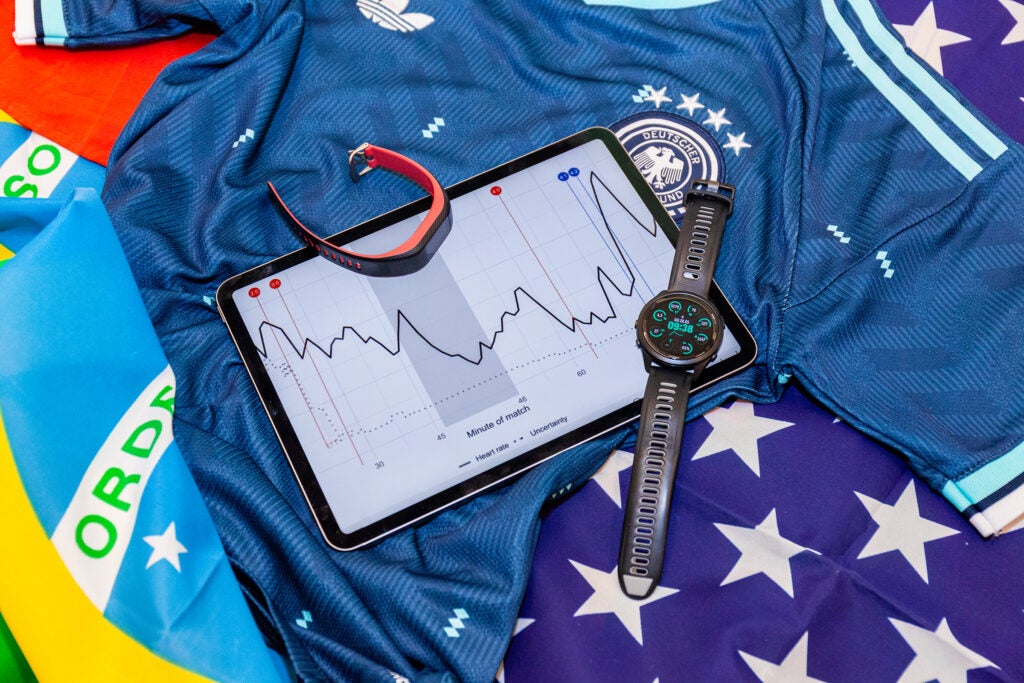
The study focuses on signals many smartwatches already collect in the background. Heart rate is the most intuitive one, but it is not the only measure. The researchers are also gathering data on stress, movement and sleep.
That combination could help show whether football’s emotional spikes are limited to the 90 minutes of a match or linger longer. A tense evening kickoff, for instance, might leave traces not just in pulse readings during the game, but also in sleep afterward. The movement data may add another layer, especially when comparing supporters in a stadium with those watching from home.
The team plans to post initial results on the study website during the tournament, especially after matches involving the German national team. That gives the project a rolling, public-facing element, with findings expected to emerge while the competition is still going on rather than months later.
The work is based in Bielefeld University’s Focus Area QUAMU, which brings together research on the quantification of uncertainty. Its cooperation partner for the World Cup Fever Study is Bielefeld’s Wissenswerkstadt, or Knowledge Hub.
Even so, this is not a study starting from scratch.
A predecessor project during the 2025 DFB Cup Final offered an early look at how sharply football moments can register in the body. That study followed 229 fans of DSC Arminia Bielefeld and found a direct link between match events and vital signs.
The numbers were striking. Fans attending the match in the stadium averaged 94 heartbeats per minute. Those watching on television averaged 79. After goals, pulse readings among people in the stadium were up to 36 percent higher.
Those results hint at the kind of contrast the World Cup project may be able to explore on a larger stage. A domestic cup final already produced a measurable difference between being there and watching at home. A World Cup, with its national loyalties, wider audiences and higher emotional stakes, may reveal even stronger patterns, or more variation between groups of fans.
The international scope could also make the data richer in another way. A tournament spreads stress unevenly. A favorite expected to win creates one kind of strain; an underdog hanging on late creates another. Penalty shootouts, red cards and stoppage-time goals may leave very different physiological fingerprints. The study is designed to capture the body’s response as those moments happen.
That does not mean a smartwatch can explain everything about fandom. But it may show, in unusually concrete terms, how quickly sport moves from spectacle into biology.
The study could help researchers understand how emotional events in sport affect the body in real time, not just through memory or self-reporting after the fact. By linking match moments to heart rate, stress, movement and sleep, the project may offer a clearer picture of how people physically experience tension, excitement and uncertainty during major public events.
It also shows how everyday wearable devices can be used in large-scale behavioral research. Because people can join mid-tournament and contribute data from even a few matches, the project lowers the barrier to participation and may broaden who gets represented in the findings.
If the sample grows across different countries and viewing settings, the results could become a useful example of how consumer health technology can capture shared emotional experiences outside the lab.
The original story “World Cup Fever Study tracks how football viewing stress impacts fan’s bodies” is published in The Brighter Side of News.
Like these kind of feel good stories? Get The Brighter Side of News’ newsletter.
The post World Cup Fever Study tracks how football viewing stress impacts fan’s bodies appeared first on The Brighter Side of News.


Leave a comment
You must be logged in to post a comment.