A rocky planet orbiting its star in less than 11 hours appears to reflect much of the light that would otherwise heat it. TOI-561 b remains an intensely hot lava world, but its dayside is cooler than expected for a dark, airless surface. A reflective atmosphere, possibly containing mineral clouds, offers an explanation.
An international team including University of Birmingham astrophysicist Anjali Piette reported the findings in The Astronomical Journal. Led by researchers including Lisa Dang at the University of Waterloo, the study analyzes about 37 hours of James Webb Space Telescope observations. The planet lies roughly 280 light-years from Earth.
The results strengthen earlier evidence that TOI-561 b possesses a substantial atmosphere. They also sharpen a distinction: carrying heat away from the dayside cannot account for all its apparent cooling. The proposed clouds could reflect incoming starlight before the planet absorbs it, although Webb has not directly identified their mineral ingredients.
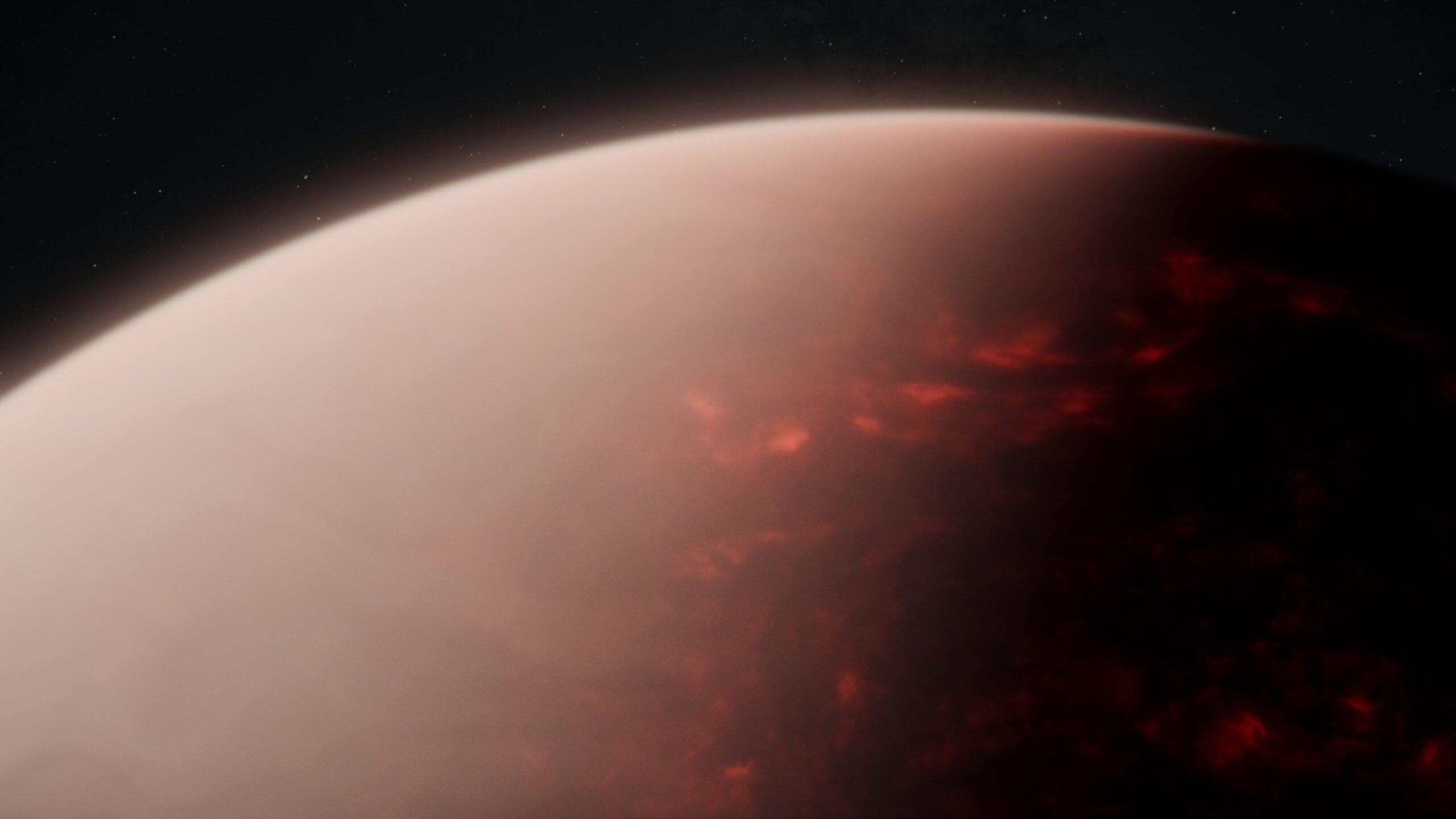
TOI-561 b belongs to a class of planets whose surfaces receive enough energy to melt rock. It is larger than Earth and circles its star on an exceptionally short orbit. The researchers model it as tidally locked, with the same side continually facing its star.
That arrangement creates a strong contrast between the illuminated hemisphere and the darker side. An atmosphere can modify the contrast by moving energy around the planet. Reflective material can also reduce the total energy absorbed, creating a different route to a cooler-looking dayside.
Earlier work examined the planet’s dayside emission during secondary eclipses, when the planet passes behind its star. Those measurements indicated temperatures inconsistent with a dark bare-rock world. However, dayside observations alone left uncertainty about how much cooling came from circulation and how much came from reflection.
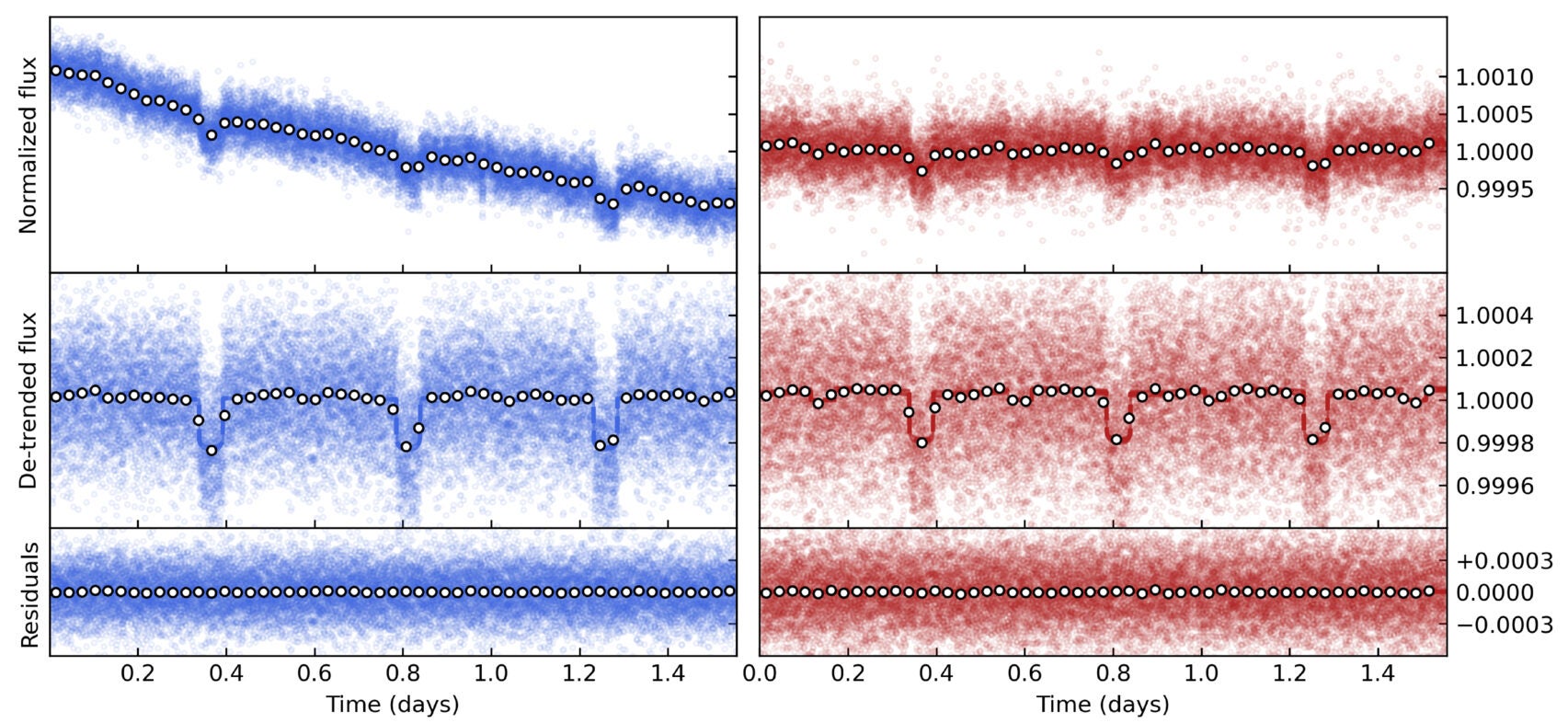
The new study analyzes the full observing sequence from that same Webb dataset, rather than a separate observing campaign. As different portions of the planet rotated into view, the combined brightness of the star and planet changed. This orbital brightness pattern, called a phase curve, supplies information about both hemispheres.
Webb’s Near-Infrared Spectrograph measured the system’s infrared light across wavelengths of approximately three to five micrometers. Astronomers used those measurements to infer how the planet radiates energy. The instrument did not produce a resolved photograph of its surface or cloud cover.
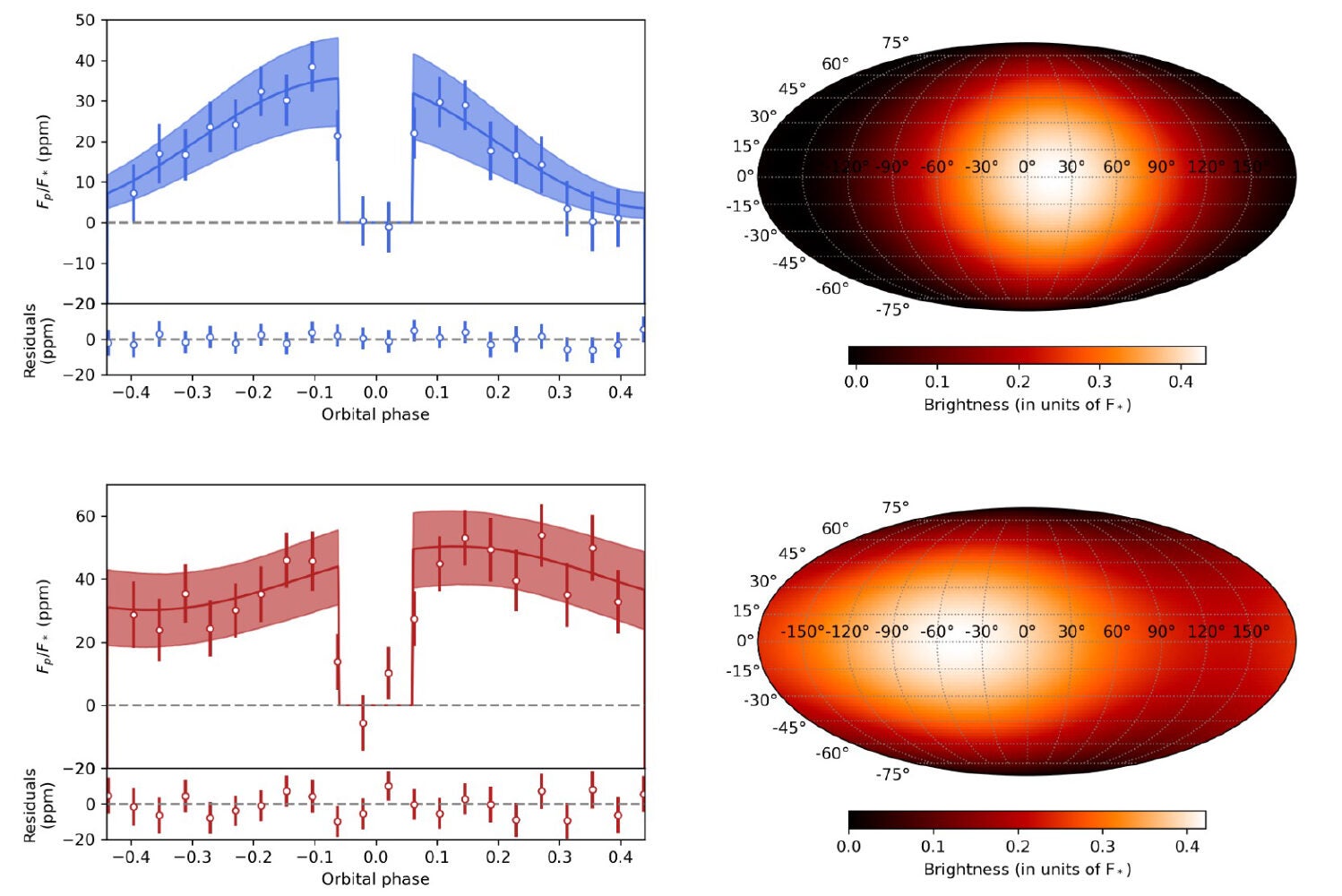
A dark planet with little heat redistribution should have a very hot dayside and a much cooler nightside. Efficient atmospheric circulation would reduce that difference by carrying substantial energy to the darker hemisphere. Measuring both sides therefore helps distinguish explanations that fit the dayside alone.
The nightside emission suggests some heat redistribution, supporting the case for a global atmosphere. Yet it does not account for enough transported energy to explain the subdued dayside emission. Comparisons with climate simulations instead favor a planet that also reflects a large fraction of incoming starlight.
A simplified energy-balance interpretation puts that fraction at roughly three-quarters, comparable to the reflectivity associated with Venus. This is an inferred estimate, not a direct measurement of every wavelength the planet reflects. More detailed models likewise favor high reflectivity, although the exact value depends on the modeling assumptions.
The combined picture differs from a simple dark rock radiating away absorbed heat. Both atmospheric circulation and reflected starlight appear important. That combination helps explain why the dayside looks cooler without requiring the nightside to carry the entire missing energy budget.
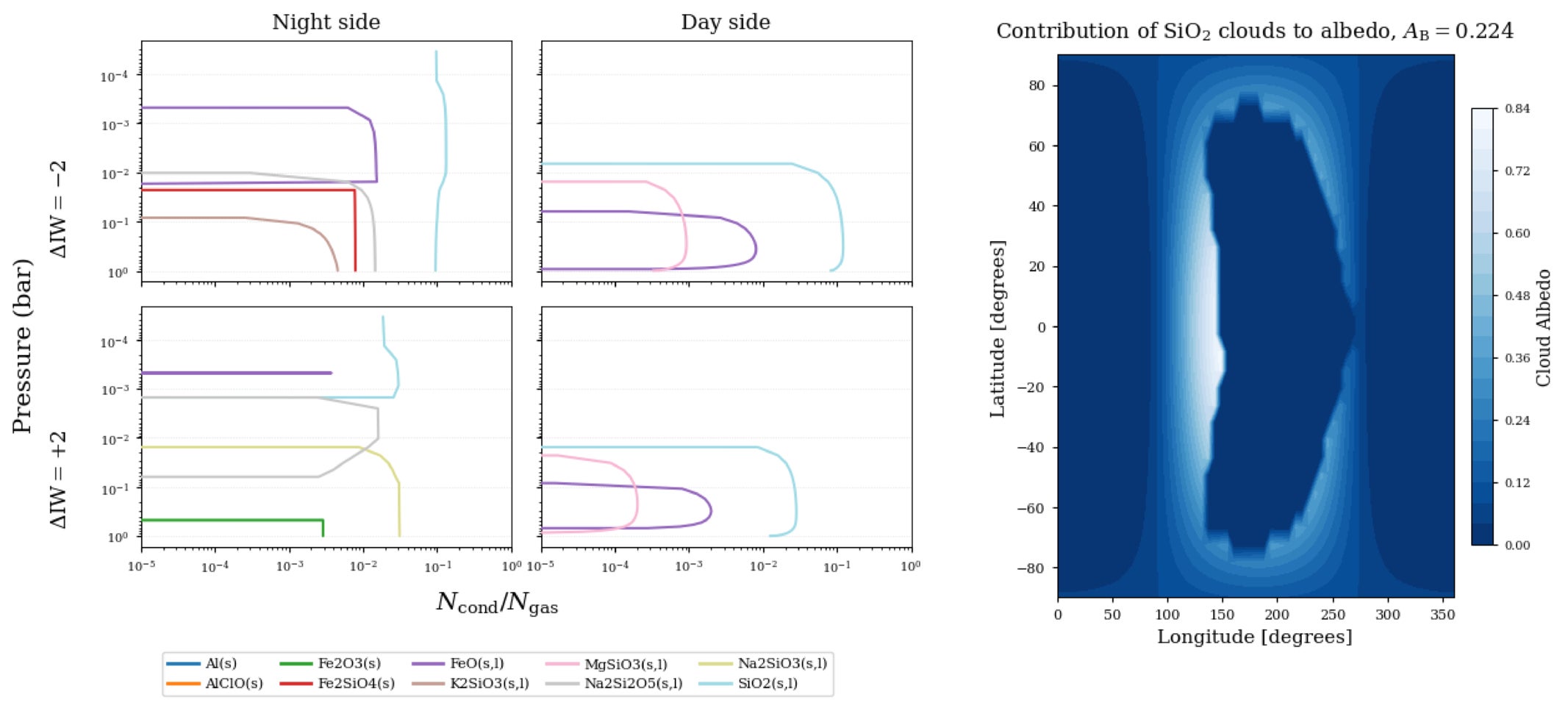
The researchers investigated whether mineral clouds could provide the required reflectivity. On such a hot planet, rock can vaporize from the molten surface and supply material to the atmosphere. Where temperatures permit, some of that material could condense into particles.
Silicon dioxide and magnesium silicate emerged as possible cloud ingredients. These compounds contain familiar rock-forming elements, but their proposed setting is far removed from Earth’s weather. The clouds would consist of mineral particles rather than ordinary droplets of liquid water.
Using climate-model output, the team examined where silicate condensation might occur. One illustrative calculation allowed silicon dioxide clouds near the boundary between the illuminated and darker regions. Reflecting sunlight there could cool the atmosphere enough to encourage additional cloud formation.
That feedback makes reflective clouds a plausible explanation, rather than establishing their presence beyond doubt. The calculations examine selected atmospheric scenarios, and the observations do not uniquely determine the gases or particles involved. Clouds or haze remain candidates for the high reflectivity inferred from the planet’s energy budget.
The “sunscreen” comparison describes that reduction in absorbed starlight. It does not mean the planet has become temperate or suitable for life. TOI-561 b remains an extreme environment even if reflective clouds substantially alter its atmospheric temperatures.
Small planets orbiting very close to their stars receive intense radiation capable of driving atmospheric escape. Over billions of years, that process should make substantial gas envelopes difficult to retain. Evidence for an atmosphere on TOI-561 b therefore raises questions about its history as well as its present climate.
One possibility is that the planet began with an unusually large reservoir of volatile material, substances that can become atmospheric gases. Another is that gases stored in its interior were later released. Exchange with a magma ocean could help replenish an atmosphere that would otherwise be depleted.
Those explanations remain hypotheses, and several processes could operate together. Atmospheric escape might be less efficient for some compositions, or the planet might have moved inward relatively late. The study does not establish which history produced the atmosphere inferred today.
Carbon dioxide is one possibility for its composition, while a sulfur-rich atmosphere provides another direction for investigation. Comparisons with Venus or Jupiter’s volcanic moon Io offer ways to frame those possibilities. They do not amount to a confirmed inventory of gases on TOI-561 b.
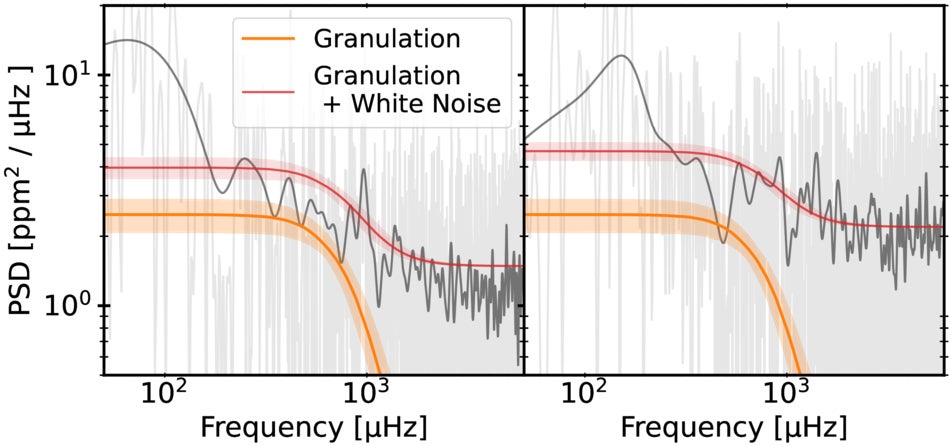
The analysis also had to separate planetary brightness changes from variability in the star. Convection produces shifting bright and dark structures on stellar surfaces, a phenomenon called granulation. Modeling that variability helped the team extract the much smaller planetary signal.
Nevertheless, the two spectrograph detectors did not yield perfectly matching interpretations. Remaining differences could reflect atmospheric processes, stellar variability or instrumental effects. In particular, some models predict more nightside emission than observed at shorter wavelengths, leaving an unresolved mismatch.
Observations with Webb’s Mid-Infrared Instrument could test the result across a complementary wavelength range. Measurements around carbon dioxide’s strong 15-micrometer feature could help distinguish atmospheres rich in that gas from alternatives. A new phase curve could also independently check temperatures and heat redistribution.
Such observations would move the question beyond whether the planet’s energy budget suggests an atmosphere. They could help reveal what that atmosphere contains and whether mineral clouds explain its reflectivity. For now, TOI-561 b offers a case of a lava world whose inferred atmosphere appears more reflective and persistent than expected.
These resources explain earlier TOI-561 b observations, comparable planets and the methods behind atmospheric research.
NASA’s Webb Detects Thick Atmosphere Around Broiling Lava World
This account explains the earlier dayside analysis of TOI-561 b, based on the same observing campaign examined in the new phase-curve study. (NASA, December 2025)
NASA’s Webb Hints at Possible Atmosphere Surrounding Rocky Exoplanet
Research on 55 Cancri e provides another example of evidence for an atmosphere on an intensely heated rocky planet. (NASA, May 2024)
Cheops shows scorching exoplanet acts like a mirror
Observations of the Neptune-sized planet LTT 9779 b provide context for reflective mineral clouds in very hot planetary atmospheres. (European Space Agency, July 2023)
Thermal emission from the Earth-sized exoplanet TRAPPIST-1 b using JWST
This study illustrates how thermal-emission measurements test atmospheric hypotheses on a different rocky exoplanet. (Nature, March 2023)
Atmospheres of Rocky Exoplanets
This review explains the formation, evolution and observational study of atmospheres around rocky worlds beyond the solar system. (Annual Review of Astronomy and Astrophysics, April 2022)
Research findings are available online in The Astronomical Journal.
The original story “Venus or volcanic Io? Lava planet TOI-561 b’s reflective mineral clouds puzzle astronomers” is published in The Brighter Side of News.
Like these kind of feel good stories? Get The Brighter Side of News’ newsletter.
The post Venus or volcanic Io? Lava planet TOI-561 b’s reflective mineral clouds puzzle astronomers appeared first on The Brighter Side of News.


Leave a comment
You must be logged in to post a comment.