A heartbeat can become the most noticeable sound in a room designed to suppress almost everything else. At Orfield Laboratories in Minneapolis, extraordinary quiet strips away the background noise that usually competes with breathing and other bodily sounds. The experience highlights a distinction that runs through the science of silence: a quiet environment does not guarantee a quiet mind.
The laboratory describes its anechoic chamber as absorbing 99.99% of sound. Guinness World Records lists a background measurement of negative 24.9 A-weighted decibels, recorded on November 19, 2021. The often-repeated figure of negative 9.4 decibels belongs to an earlier measurement in the chamber’s record history.
Those numbers describe an acoustic environment, not a neurological state. Evidence from brain imaging, mouse experiments, and human perception studies addresses different parts of that relationship. Together, the findings suggest that silence deserves careful study, while offering less support for sweeping claims that it repairs or resets the brain.
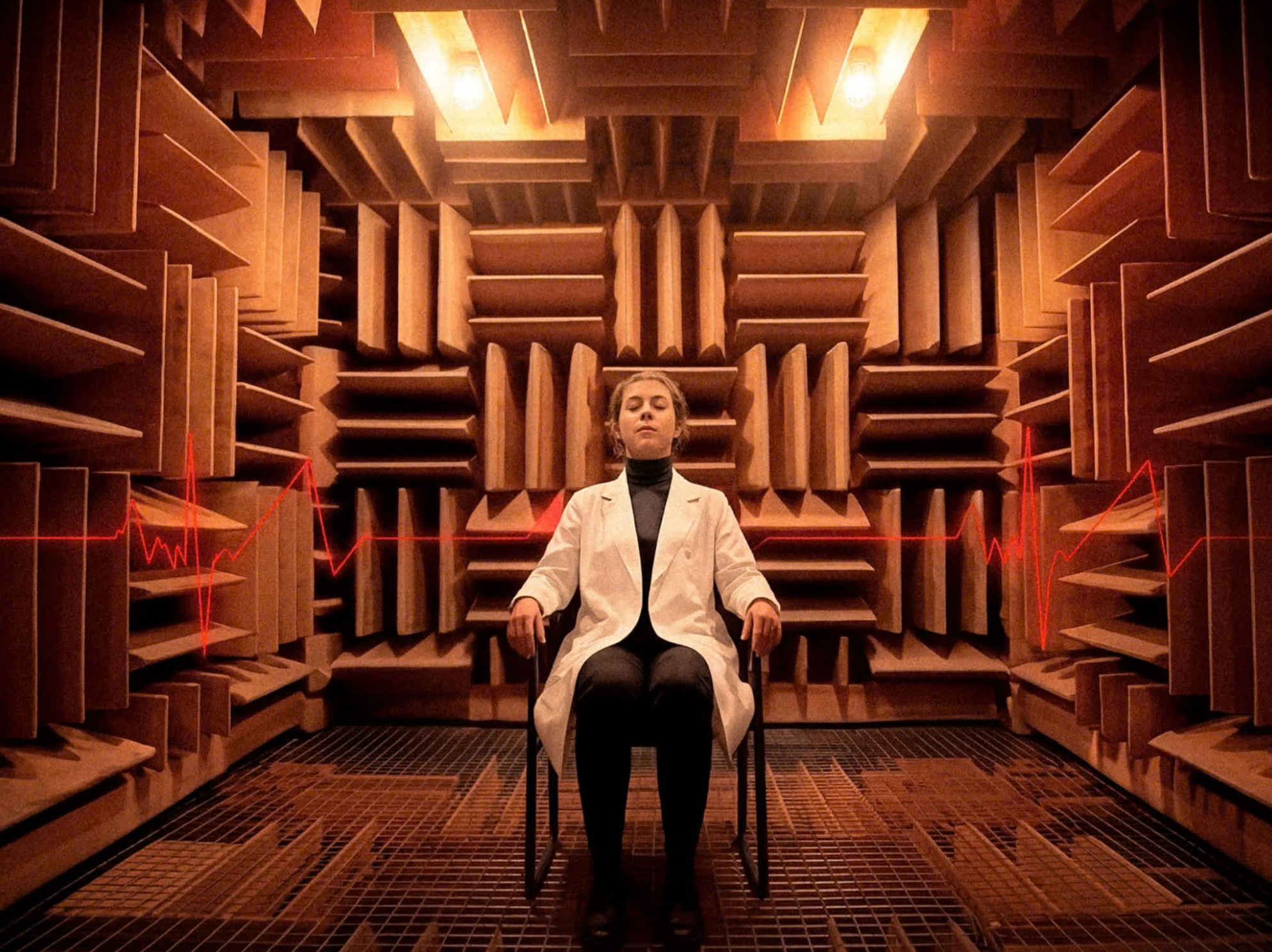
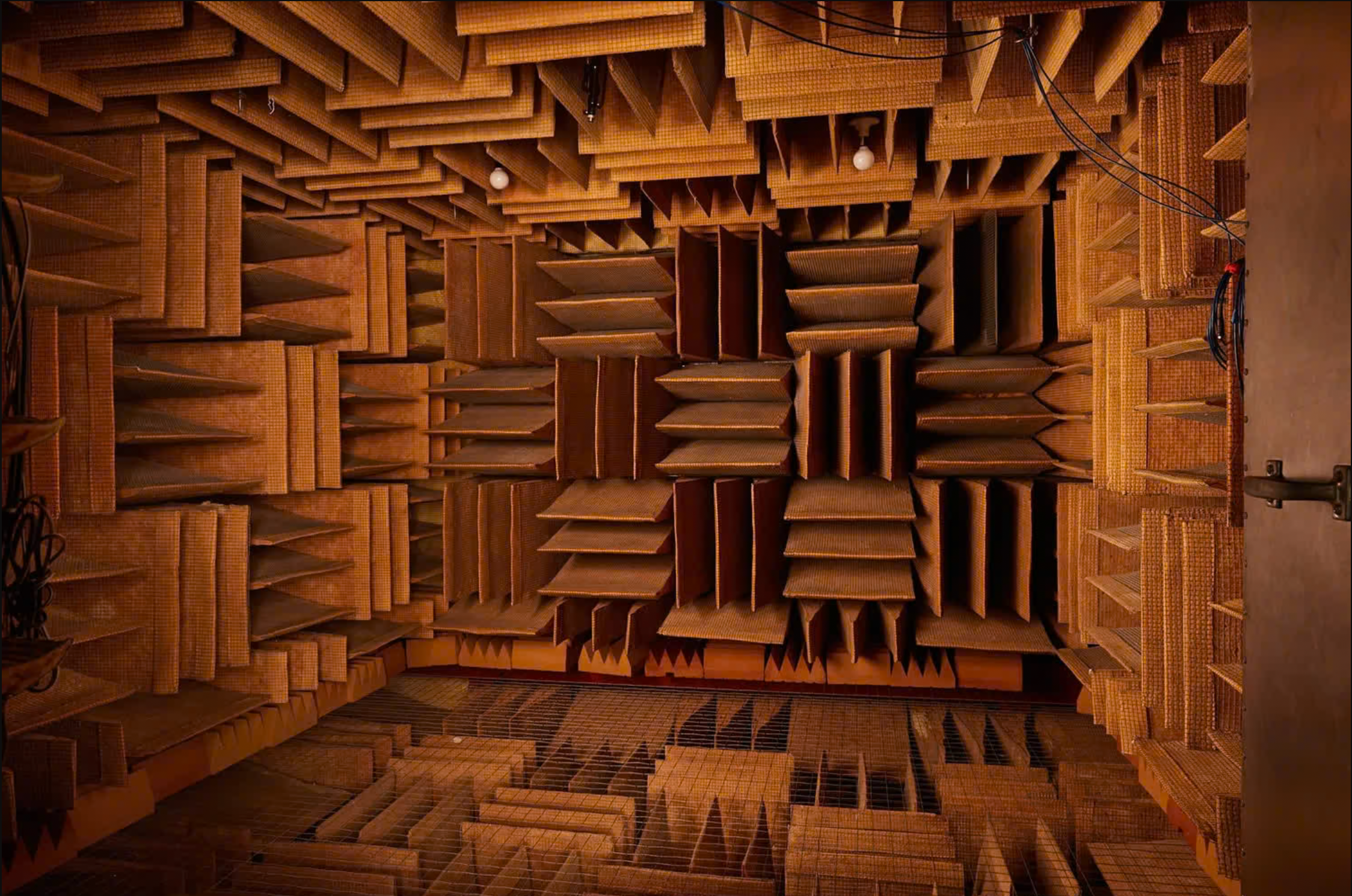
An anechoic chamber controls sound through isolation and absorption. Orfield’s facility uses nested structures, vibration isolation, insulation, and deep fiberglass wedges to reduce incoming noise and reflected sound. Its purpose includes measuring sounds produced by equipment under exceptionally quiet conditions. Removing echoes also makes the room acoustically unfamiliar.
A negative decibel reading does not mean negative sound energy or the complete absence of vibration. Decibels express a ratio relative to a reference level. For airborne sound pressure, zero decibels corresponds to a conventional reference near the threshold of human hearing under specified conditions. Measurements can fall below that reference without violating physics.
The distinction matters because silence has several meanings. An engineer may describe a measured background level, while a listener describes an experience. Someone can notice breathing in a room with extremely low ambient noise. The room remains exceptionally quiet even though the person inside continues producing sound.
Sound travels as mechanical disturbances through matter. In air, pressure variations move through the gas and can eventually reach the ear. Liquids and solids also transmit sound, although their properties change how those disturbances travel. NASA’s sound education materials emphasize this dependence on a transmitting medium.
An ideal vacuum cannot carry ordinary airborne sound because it lacks the material needed to transmit those pressure waves. Quantum fluctuations do not change that requirement. They are not equivalent to acoustic waves moving through air, and their existence does not establish that someone could hear a vacuum.
Likewise, microscopic thermal motion should not be confused with every movement producing an audible noise. Hearing depends on the frequency and strength of disturbances reaching the auditory system. Silence therefore need not require every atom in the universe to stop moving. For human experience, the relevant question concerns detectable sound and how the brain responds when it diminishes.
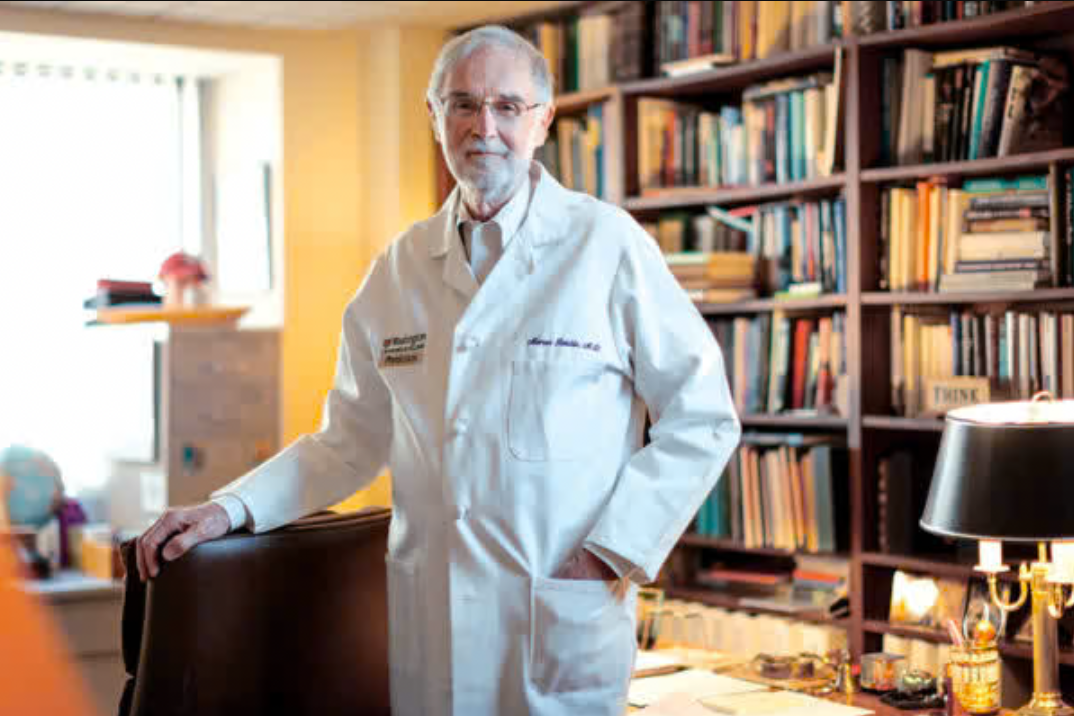
A landmark 2001 paper helped establish that the brain maintains organized activity during rest. Marcus Raichle and colleagues at Washington University School of Medicine examined brain circulation and metabolism using positron-emission tomography. Their findings, published in Proceedings of the National Academy of Sciences, supported a baseline mode of brain function.
The team connected that baseline with regions that repeatedly showed reduced activity during demanding tasks. This helped establish the framework behind what became known as the default mode network. The finding challenged the idea that meaningful brain activity occurs only when someone follows an external instruction. Resting activity was structured enough to warrant explanation.
However, the experiment was not a test of silence as a treatment. Reduced task demands and reduced sound are separate conditions, even when they occur together. A person can rest while hearing background noise, or concentrate intensely in a quiet room. The default mode framework cannot, by itself, establish that removing sound improves memory or creativity.
This distinction also limits explanations of the anechoic chamber experience. Noticing a heartbeat does not reveal which brain network has become more active. Describing quiet as an opportunity for inward attention is reasonable, but proving its neural effects requires measurements. Subjective impressions and brain imaging answer related, rather than interchangeable, questions.
A separate study led by Imke Kirste examined auditory exposure and adult hippocampal neurogenesis, the production of new neurons. Published online in 2013 in Brain Structure and Function, it compared animal-house background noise with silence, white noise, mouse pup calls, and Mozart piano music. The experimental exposures lasted two hours daily.
The results were more specific than the claim that silence simply grew brain cells. All tested conditions except white noise increased precursor-cell proliferation at an early measurement. After seven days, however, only silence remained associated with increased numbers of labeled cells. The silent condition also produced more newly generated cells carrying a neuronal marker than the comparison condition.
The authors described an increase in newborn immature neurons. That does not establish improved intelligence, repaired brain damage, or better memory, even in the animals studied. It also provides no demonstrated prescription for humans. The experiment measured a cellular response in mice, rather than a clinical benefit in people.
The mechanism remained uncertain. Silence was an unusual sensory condition for these laboratory animals, rather than simply an ordinary period of relaxation. That leaves an important question about what drove the response. Reduced stimulation, novelty, and other features of the experimental setting require careful separation before broader conclusions follow.

Human experiments offer another way to investigate silence without assuming a health benefit. In a 2023 PNAS paper, Johns Hopkins investigators Rui Zhe Goh, Ian Phillips, and Chaz Firestone adapted auditory illusions to silent intervals. Across seven experiments, participants experienced gaps embedded in background sounds. The researchers tested how those gaps affected judgments of duration.
Silent intervals produced timing distortions analogous to those caused by sounds. The authors interpreted this as evidence that silence can become an object of auditory perception. That conclusion concerns how people experience an absence of sound. It does not mean silence contains acoustic energy or that perceiving it necessarily improves brain health.
Research on wakeful rest addresses a different outcome: remembering recently learned information. Some experiments find better later recall after a low-stimulation rest period than after a distracting task. Yet results vary with the task, participants, and timing. A review by Markus Martini and Pierre Sachse emphasized these qualifications rather than a universal resting benefit.
The remaining challenge is to identify what quiet contributes independently of rest, expectation, and reduced distraction. An anechoic chamber, a pause after learning, and a mouse’s sound-isolation box create very different conditions. Future experiments must separate those conditions before silence itself can receive credit for a measurable benefit.
These resources provide context on auditory perception, resting brain activity, and the limits of memory research.
The original story “This is what 10 minutes of silence can do to the human brain” is published in The Brighter Side of News.
Like these kind of feel good stories? Get The Brighter Side of News’ newsletter.
The post This is what 10 minutes of silence can do to the human brain appeared first on The Brighter Side of News.


Leave a comment
You must be logged in to post a comment.