A loss of joy can quietly reshape a person’s life. Activities that once brought meaning begin to feel distant or empty. This experience, known as anhedonia, remains one of the most difficult symptoms of depression to treat.
A new study led by researchers at Lund University, in collaboration with psychiatric services in Region Skåne, offers a possible new path forward. The research suggests that a drug long used for Parkinson’s disease may help restore motivation and pleasure in people with depression.
The medication, pramipexole, is not new. Doctors have prescribed it for years to treat movement disorders. Now, scientists are exploring its potential to address one of depression’s most stubborn and painful features.
Anhedonia affects how people experience reward, motivation, and emotional connection. It can dull excitement, reduce interest in relationships, and make even simple routines feel overwhelming.

For many, this symptom persists even after other signs of depression improve. Traditional antidepressants often fail to directly target this loss of pleasure.
“Anhedonia is one of the most debilitating symptoms of depression, and something on which current antidepressant therapies often have only a limited effect,” said Daniel Lindqvist, a researcher at Lund University and senior consultant in psychiatry.
This gap has pushed researchers to look beyond standard treatments. Instead of focusing only on mood, scientists are now targeting the brain systems that control reward and motivation.
The study used an approach known as drug repurposing. This method tests whether existing medications can treat new conditions.
Pramipexole works by stimulating dopamine receptors in the brain. Dopamine plays a key role in how people feel pleasure and motivation.
Because Parkinson’s disease affects dopamine systems, the drug helps restore movement. Researchers suspected it might also help restore emotional response in people with anhedonia.
“By studying unusual conditions and treatments, we sometimes uncover solutions that were not originally intended,” Lindqvist said.
This idea formed the basis of the clinical trial.
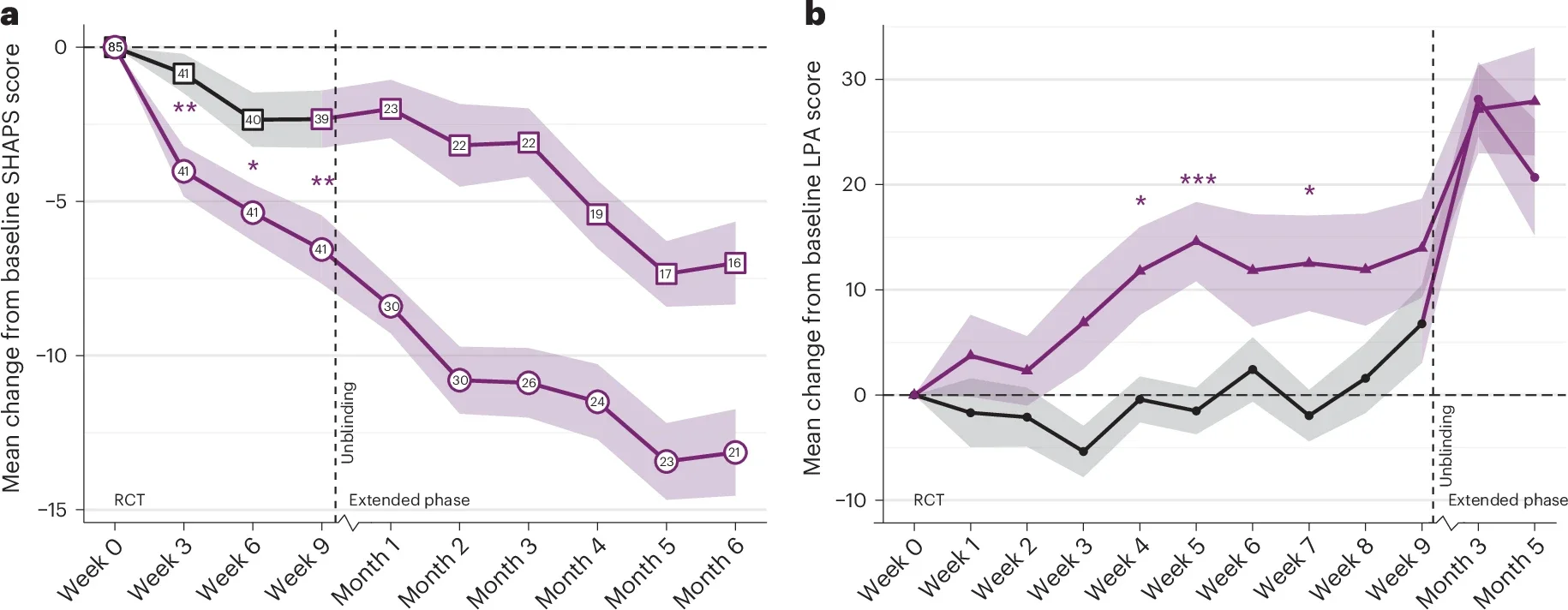
Researchers enrolled patients with depression who showed clear signs of anhedonia. All participants continued their usual medications during the study.
They were randomly assigned to receive either pramipexole or a placebo for nine weeks. This design ensured that any differences could be linked to the drug itself.
By the end of the trial, patients taking pramipexole showed stronger improvements in their ability to experience pleasure.
“Those treated with pramipexole for anhedonia showed a more pronounced improvement compared with the placebo group,” Lindqvist said.
The results were not short-lived. Patients who continued treatment maintained these gains during a six-month follow-up period.
To understand how the drug works, researchers used advanced imaging techniques. They relied on high-resolution 7 Tesla functional MRI scans to study brain activity.
The scans focused on the brain’s reward system, which plays a central role in motivation and pleasure.
“We found that pramipexole was linked to a positive effect on the brain’s reward system and increased physical activity in everyday life,” said Filip Ventorp, a postdoctoral researcher at Lund University.
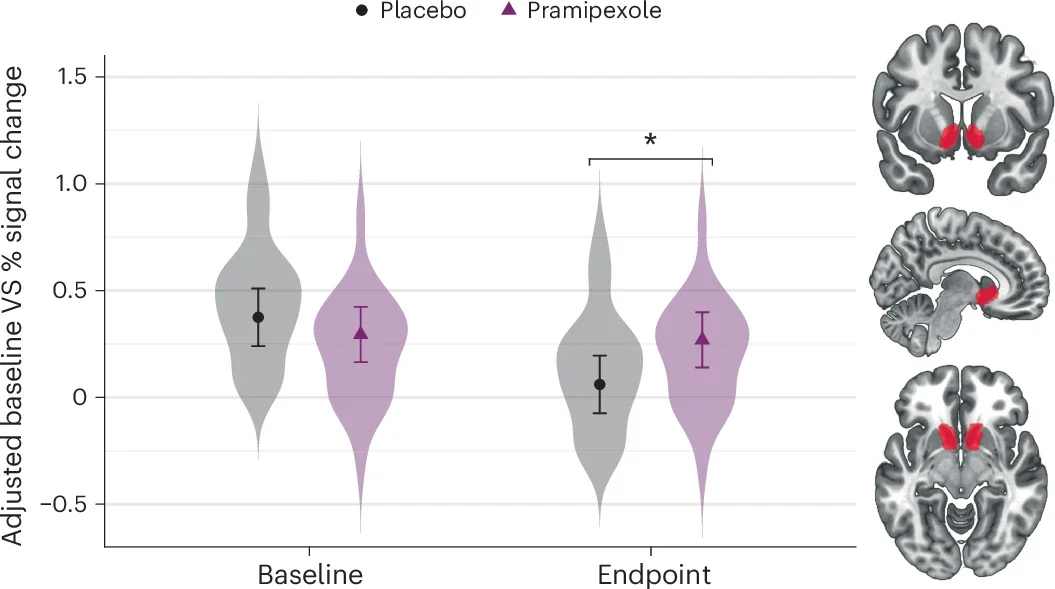
These findings support the idea that the drug helps restore function in dopamine pathways. When these pathways work better, people may feel more motivated and engaged with their surroundings.
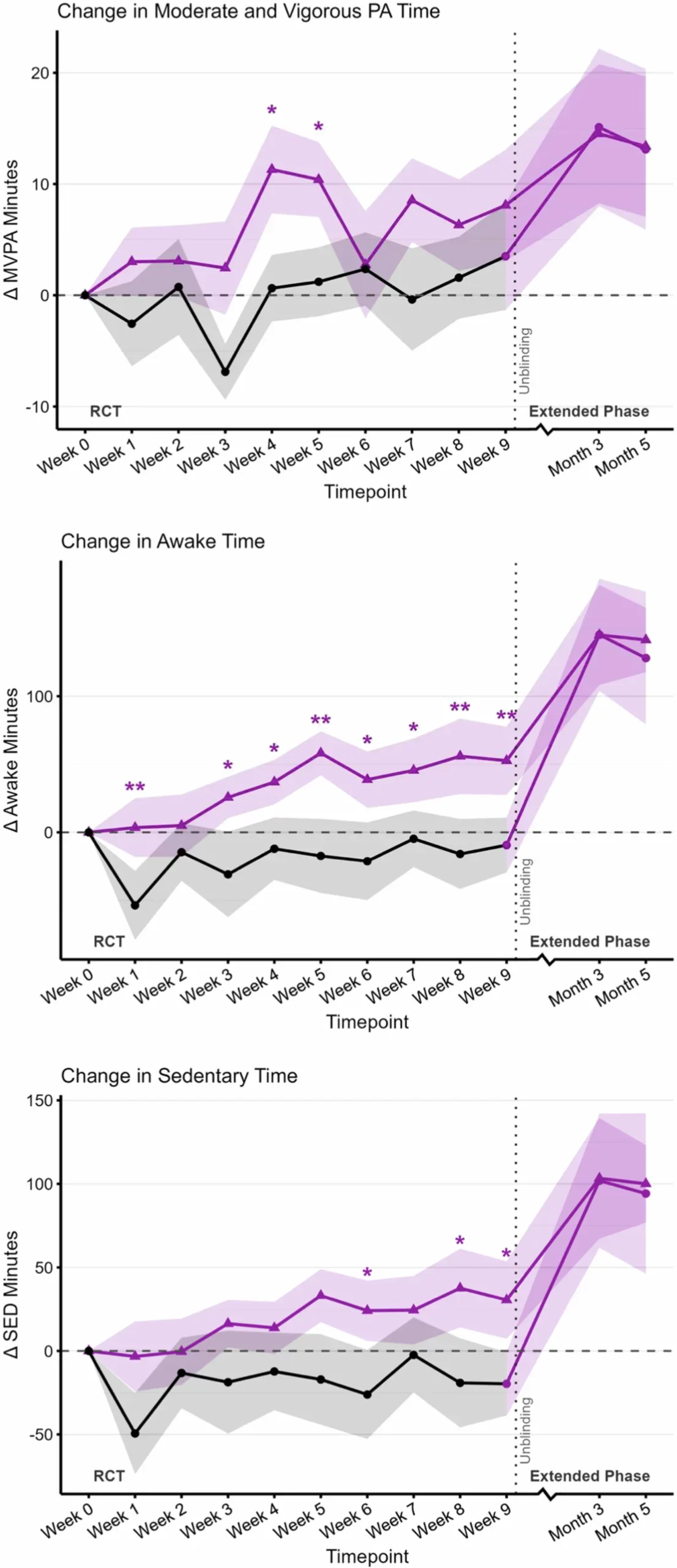
The study did not rely only on self-reported symptoms. Researchers also tracked participants’ daily activity using wearable monitors.
Patients taking pramipexole showed increased movement in everyday life. This included simple activities such as walking or completing daily tasks.
This change matters. Increased activity often reflects improved motivation and energy. It also suggests that patients were not just feeling better, but also behaving differently.
The connection between brain activity and real-world behavior strengthens the case for pramipexole as a targeted treatment.
Most participants tolerated the treatment well. Few dropped out during the trial, which suggests that the regimen was manageable.
Common side effects included sleep disturbances, nausea, and dizziness. These were usually mild and could be managed by adjusting the dose.
Researchers did note the importance of monitoring certain risks. These include daytime fatigue and changes in impulse control.
“Although most participants in our study tolerated the drug well, it is important to monitor any side effects,” said Marie Asp, a psychiatric researcher at Lund University.
Overall, the balance between benefits and risks appeared favorable, especially for patients with treatment-resistant symptoms.
This study reflects a broader shift in mental health research. Instead of treating depression as a single condition, scientists are focusing on specific symptoms.
Anhedonia represents one such target. By addressing it directly, treatments may become more effective for certain patients.
The findings also highlight the limits of current antidepressants. While they help many people, they often do not fully restore emotional engagement.
By targeting dopamine systems, pramipexole offers a different approach. It focuses on the biology of reward rather than general mood regulation.
Although the results are promising, researchers emphasize the need for further study. Larger trials will help confirm the findings and clarify long-term safety.
Scientists also want to better understand which patients benefit most. Not everyone with depression experiences anhedonia in the same way.
Future research may combine imaging, behavioral data, and genetic information to refine treatment strategies.
This work could lead to more personalized care, where therapies are matched to specific symptoms and biological patterns.
For people living with anhedonia, even small improvements can feel meaningful. Regaining interest in daily life can restore a sense of identity and connection.
This study suggests that an existing drug may help make that possible. While not a cure, it offers a new direction for treating a symptom that has long been overlooked.
As research continues, the hope is that more targeted therapies will emerge. These treatments could help people not just survive depression, but truly re-engage with life.
These resources provide broader context on anhedonia, dopamine signaling and reward-focused approaches to treating depression.
Positive affect and reward processing in the treatment of depression, anxiety and trauma: This review examines treatments designed to increase positive emotion and reward responsiveness rather than focusing only on reducing negative symptoms. (Nature Reviews Psychology, 2024)
The brain reward circuitry in mood disorders: This influential review explains how abnormalities in the ventral striatum and related dopamine circuits contribute to anhedonia and other reward deficits. (Nature Reviews Neuroscience, 2013)
Distinct profiles of anhedonia and reward processing and their prospective associations with quality of life among individuals with mood disorders: Researchers show that anhedonia contains distinct reward-processing profiles that can predict later quality of life. (Molecular Psychiatry, 2023)
Plasticity of synapses and reward circuit function in the genesis and treatment of depression: This review explores how changes in synapses and reward circuits may contribute to depressive symptoms and their response to treatment. (Neuropsychopharmacology, 2023)
Major depressive disorder: This comprehensive clinical primer reviews the biology, diagnosis and treatment of major depression, including persistent loss of interest and pleasure. (Nature Reviews Disease Primers, 2023)
Research findings are available online in the journal Nature Medicine.
The original story “Parkinson’s drug helps restore pleasure and motivation in depression patients” is published in The Brighter Side of News.
Like these kind of feel good stories? Get The Brighter Side of News’ newsletter.
The post Parkinson’s drug helps restore pleasure and motivation in depression patients appeared first on The Brighter Side of News.


Leave a comment
You must be logged in to post a comment.