For decades, the recovery of Earth’s ozone layer has stood as one of the world’s greatest environmental success stories. International cooperation helped phase out chemicals that were destroying the protective shield high above the planet, reducing the threat of harmful ultraviolet radiation and lowering the risk of skin cancer.
Now, new research suggests that this success carries an unexpected climate consequence.
Scientists led by the University of Reading have found that future changes in ozone could contribute significantly more warming than previously estimated. Their findings suggest ozone may become the second-largest contributor to additional warming between 2015 and 2050, behind only carbon dioxide.
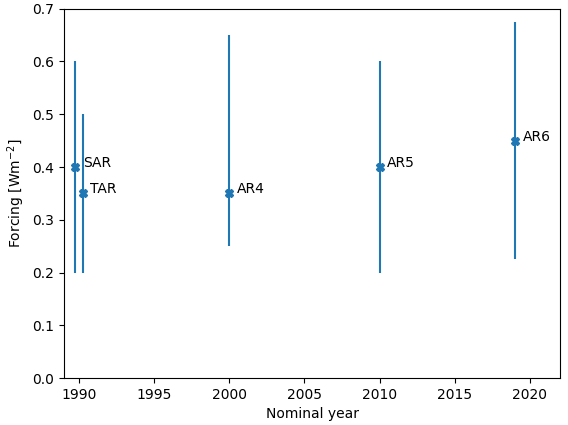
The study indicates that ozone-related changes could trap an additional 0.27 watts of energy per square meter of Earth’s surface by mid-century. That figure represents roughly 40% more warming than earlier estimates suggested and highlights a complex relationship between atmospheric recovery and climate change.
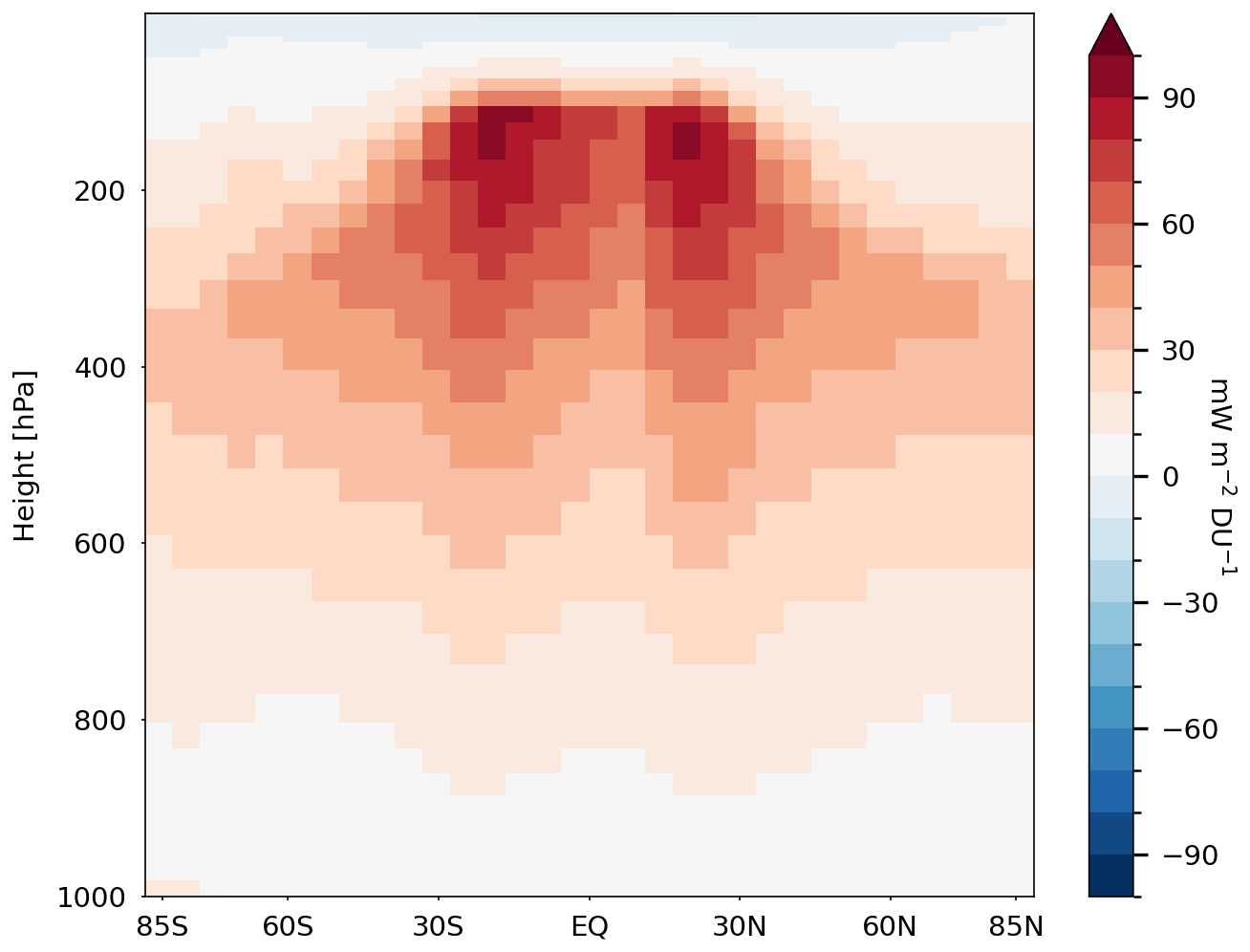
Ozone occupies a unique place in Earth’s atmosphere. High in the stratosphere, it acts as a protective barrier, absorbing harmful ultraviolet radiation from the Sun. Without it, life on Earth would face far greater risks from skin cancer, eye damage and harm to ecosystems.
At the same time, ozone is also a greenhouse gas.
Like carbon dioxide and methane, it traps heat within the atmosphere. This means that while ozone protects life from dangerous solar radiation, it can also contribute to global warming.
About 90% of ozone exists in the stratosphere. The remaining 10% is found closer to Earth’s surface in the troposphere, where it forms through chemical reactions involving pollutants released by vehicles, factories and power plants.
Ground-level ozone is especially problematic because it harms human health, damages crops and contributes to warming.
“Countries are doing the right thing by continuing to ban chemicals called CFCs and HCFCs that damage the ozone layer above Earth,” said Professor Bill Collins of the University of Reading, the study’s lead author. “However, while this helps repair the protective ozone layer, we have found that this recovery in ozone will warm the planet more than we originally thought.”
To understand how ozone may influence future warming, researchers used advanced climate and atmospheric chemistry models to simulate conditions through 2050.
The study examined a scenario known as SSP3-7.0, which assumes relatively limited efforts to reduce air pollution while continuing compliance with international agreements that phase out ozone-depleting chemicals.
These chemicals, including chlorofluorocarbons (CFCs) and hydrochlorofluorocarbons (HCFCs), were once widely used in refrigeration, air conditioning and industrial products. Their gradual elimination under the Montreal Protocol has allowed the ozone layer to begin recovering.
The models projected how both ozone recovery and pollution-driven ozone formation would alter the atmosphere over the coming decades.
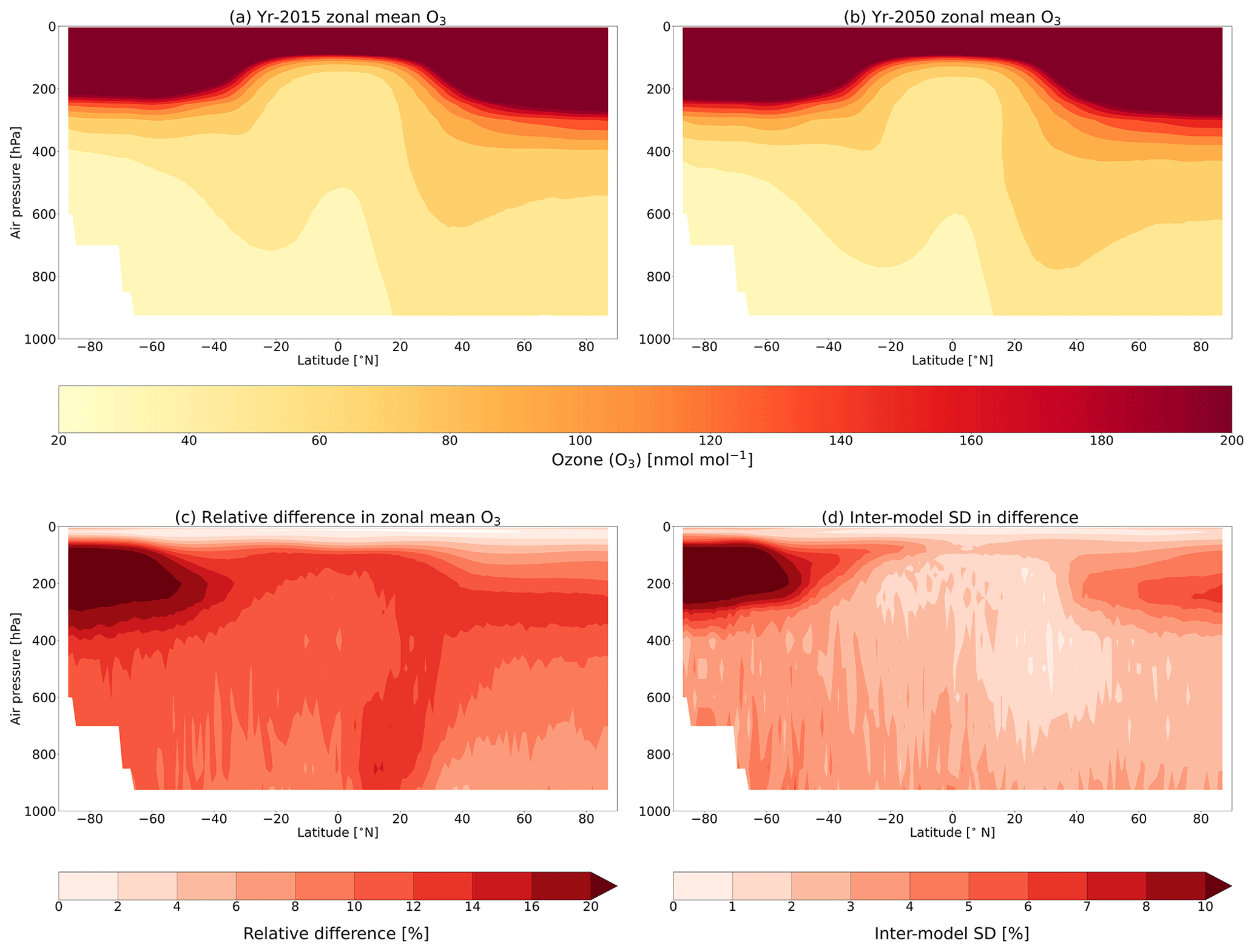
Researchers analyzed seven major climate and chemistry models. Together, the simulations painted a consistent picture: ozone concentrations are expected to rise in both the upper and lower atmosphere.
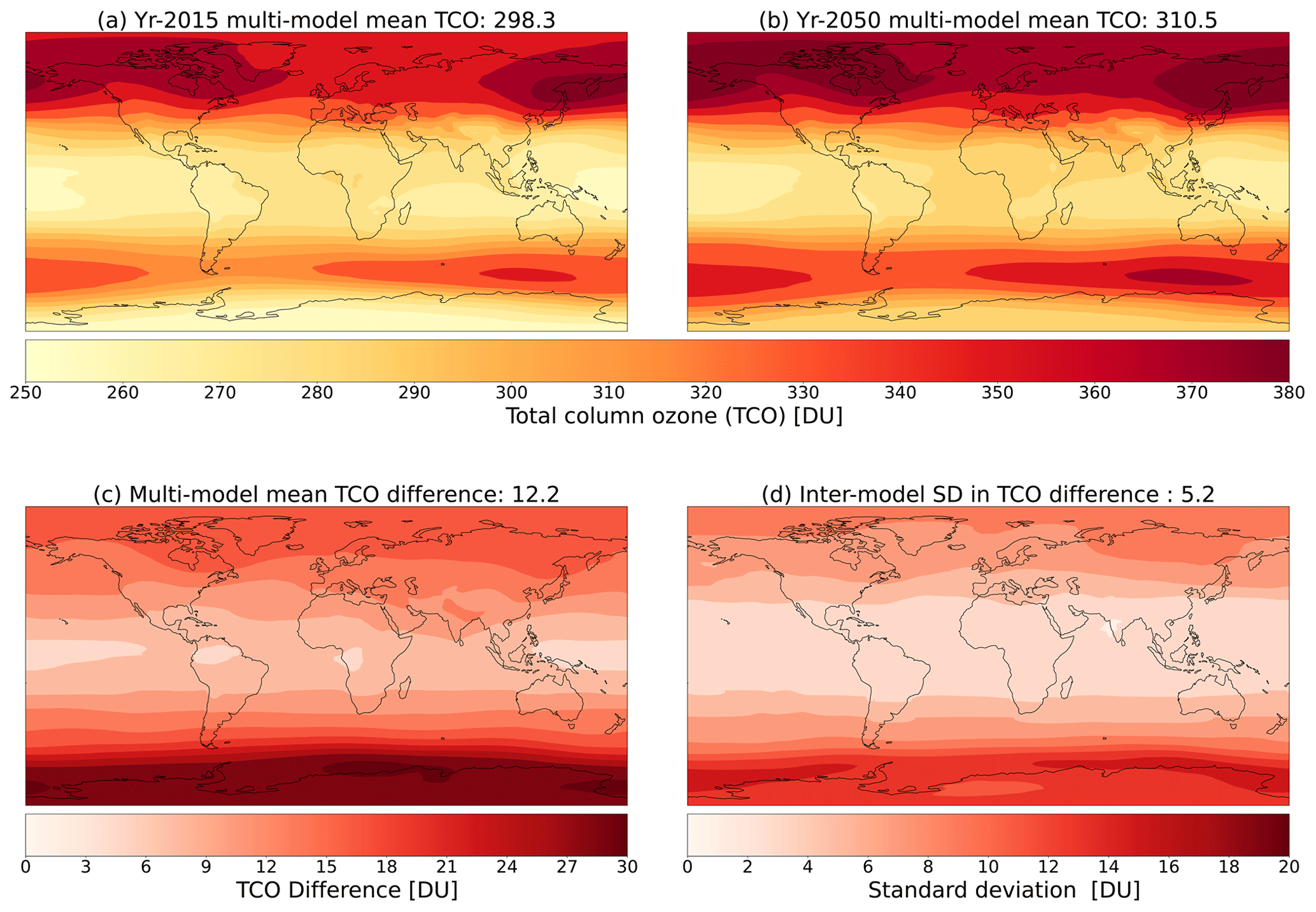
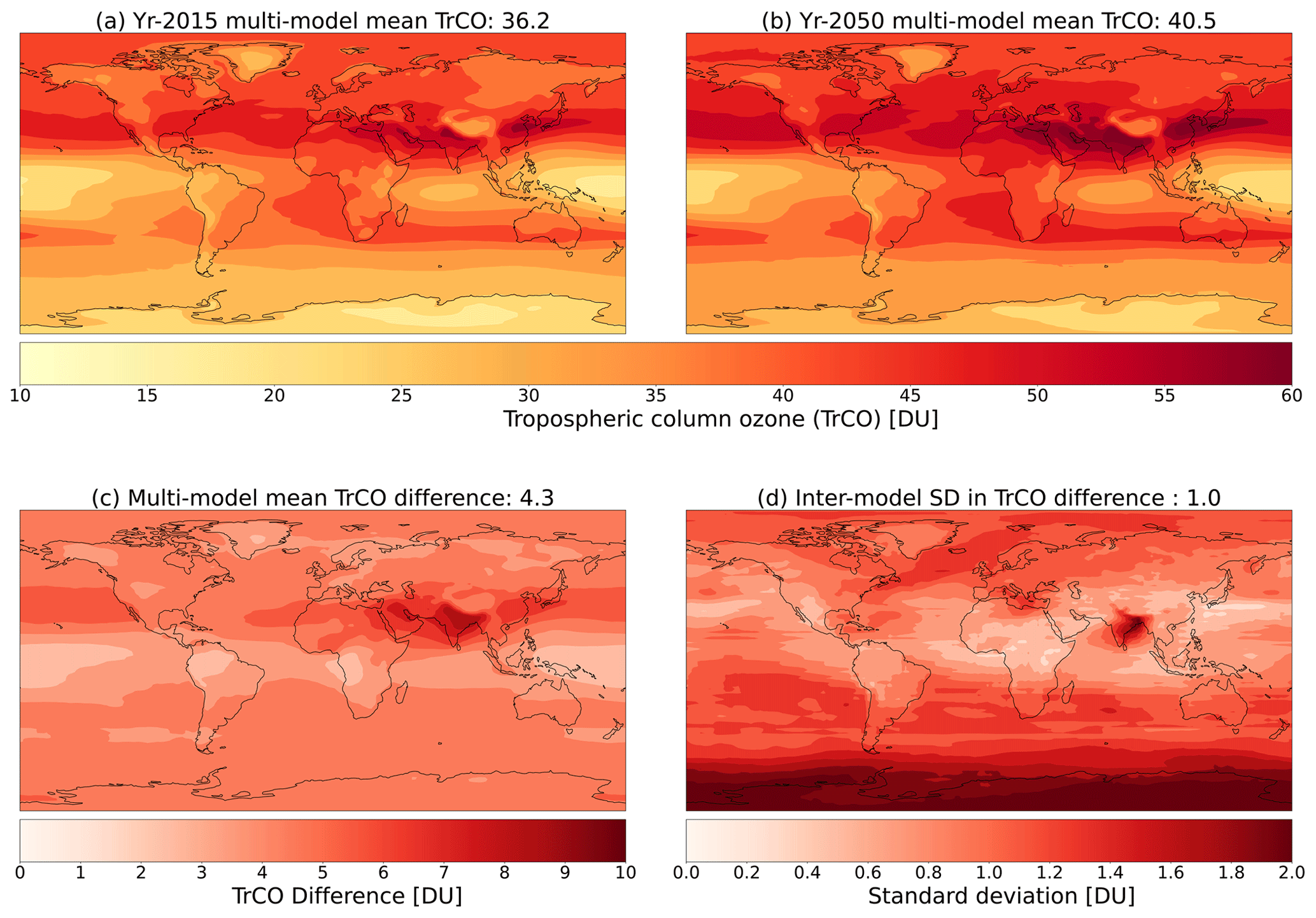
Global total-column ozone increased from an average of 298.3 Dobson units in 2015 to 310.5 Dobson units by 2050. Tropospheric ozone rose from 36.2 to 40.5 Dobson units over the same period.
The largest increases in lower-atmosphere ozone appeared over regions including India, Southeast Asia and the Middle East, where pollution emissions remain significant in the scenario examined.
The research found that future ozone changes would create an effective radiative forcing of approximately 0.268 watts per square meter by 2050.
Radiative forcing measures how much extra energy becomes trapped within Earth’s climate system. Positive values indicate warming.
For comparison, carbon dioxide is projected to contribute about 1.75 watts per square meter of additional warming over the same period.
That places ozone firmly in second place among future warming influences in the study scenario.
The researchers discovered that warming comes from two sources.
The first is the continued recovery of the stratospheric ozone layer. As ozone concentrations increase aloft, more heat becomes trapped.
The second comes from rising levels of ozone near the ground, created by pollution and emissions of ozone-forming gases.
Together, these processes amplify ozone’s climate impact.
“Air pollution from vehicles, factories and power plants also creates ozone near the ground, causing health problems and warming the planet,” Collins said.
One of the study’s most striking findings concerns the climate benefits previously associated with eliminating ozone-depleting substances.
Scientists have long recognized that CFCs and HCFCs contribute directly to global warming because they are potent greenhouse gases. Their removal was therefore expected to provide both ozone protection and climate benefits.
The new analysis suggests the climate gains may be smaller than previously calculated.
As these substances disappear, the ozone layer recovers. That recovery itself contributes additional warming, offsetting much of the cooling benefit gained from eliminating the chemicals.
Researchers estimate that roughly half of future ozone-related warming comes from ozone layer recovery, while the other half comes from increasing lower-atmosphere ozone.
This does not diminish the importance of eliminating ozone-depleting substances. The ozone layer remains essential for protecting human health and ecosystems. However, it does change how scientists assess the climate effects of past environmental policies.
The study found that ozone affects more than temperature alone.
Changes in ozone also influence clouds, atmospheric moisture and Earth’s reflectivity.
The models showed slight reductions in cloud cover and small decreases in surface reflectivity. These changes allowed more solar energy to remain within the climate system.
Researchers also observed increases in atmospheric humidity in parts of the stratosphere.
While these effects were smaller than ozone’s direct warming influence, they contributed to the overall climate response and helped explain why ozone’s future impact appears larger than previous estimates suggested.
The findings also revealed that different methods used to calculate climate forcing can produce different results. The researchers concluded that a measure known as effective radiative forcing provides the most complete picture of ozone’s overall climate influence.
The study highlights the complicated reality of managing Earth’s atmosphere.
One environmental problem can interact with another in unexpected ways. A policy that successfully protects people from harmful ultraviolet radiation may simultaneously influence future warming.
Yet the authors stress that protecting the ozone layer remains non-negotiable.
Without continued ozone recovery, the world would face severe health consequences, including higher rates of skin cancer, cataracts and damage to crops and ecosystems.
Instead, the research points to the need for climate policies that better account for ozone’s growing role in future warming.
As countries continue reducing greenhouse gas emissions, ozone’s influence could become increasingly important in climate projections and policy planning.
These resources provide broader context on ozone’s climate effects, atmospheric recovery and the consequences of the Montreal Protocol.
Historical total ozone radiative forcing derived from CMIP6 simulations: This study reconstructed ozone’s contribution to Earth’s radiative forcing since the 19th century using major climate-model simulations. (npj Climate and Atmospheric Science, 2020)
A large ozone-circulation feedback and its implications for global warming assessments: Researchers showed that interactions among ozone, atmospheric circulation and clouds can substantially influence estimates of climate sensitivity. (Nature Climate Change, 2015)
Montreal Protocol’s impact on the ozone layer and climate: This modeling study examines how international restrictions on ozone-depleting substances have affected both atmospheric ozone and global climate. (Atmospheric Chemistry and Physics, 2023)
Environmental effects of ozone depletion, UV radiation and interactions with climate change: UNEP Environmental Effects Assessment Panel, update 2017: This expert assessment reviews interactions among ozone depletion, ultraviolet radiation, human health, ecosystems and climate change. (Photochemical & Photobiological Sciences, 2018)
Scientific Assessment of Ozone Depletion: 2022: The international scientific assessment summarizes the state of ozone recovery, ozone-depleting substances and their connections with climate. (World Meteorological Organization, 2022)
Research findings are available online in the journal Atmospheric Chemistry and Physics.
The original story “Ozone layer recovery comes with an unexpected climate consequence” is published in The Brighter Side of News.
Like these kind of feel good stories? Get The Brighter Side of News’ newsletter.
The post Ozone layer recovery comes with an unexpected climate consequence appeared first on The Brighter Side of News.


Leave a comment
You must be logged in to post a comment.