Walls normally consume energy indirectly through heating, cooling and ventilation. Researchers have now demonstrated a paper-based wall covering that does something very different: it extracts small amounts of electricity from moisture already present in indoor air.
Engineers at Binghamton University created the wallpaper from arrays of miniature moist-electric generators, or MEGs. Each unit captures water vapor, directs moisture through chemically different regions and uses the resulting ion imbalance to generate electrical current. The system requires no sunlight, wind or external fuel.
The study, published in Advanced Energy Materials, positions the technology as a possible power source for low-energy electronics rather than an alternative to conventional electricity. Sensors, smart-building devices and other Internet of Things hardware could eventually draw power from the same indoor humidity people continuously create through breathing, cooking and bathing.
Moist-electric generators have attracted attention because water molecules in the air contain energy that materials can potentially convert into electricity. Previous devices have used graphene oxide, polymers, hydrogels, protein nanowires and other materials to create electrical gradients after absorbing moisture.
Their power output, however, remains small. Outdoor environments also expose devices to changing temperatures, sunlight, wind and humidity, making a stable moisture gradient difficult to maintain.
Indoor spaces offer a different opportunity. Relative humidity commonly remains within a narrower range, while human activity continuously adds water vapor to the air.
“All previous moist electric-generator devices are for outdoor humidity, because there is a lot of moisture out there that is an excellent energy resource,” professor Seokheun “Sean” Choi said. He argues that the steadier indoor environment is better suited to small devices that need only microwatts or milliwatts of power.
Wallpaper provides another advantage because a wall offers an enormous surface compared with a conventional electronic component. Instead of demanding high output from one tiny generator, engineers can connect many generators across a large area.

The central engineering challenge was preventing absorbed moisture from simply spreading through the material until everything reached equilibrium. Once that happens, the gradient responsible for electricity generation disappears.
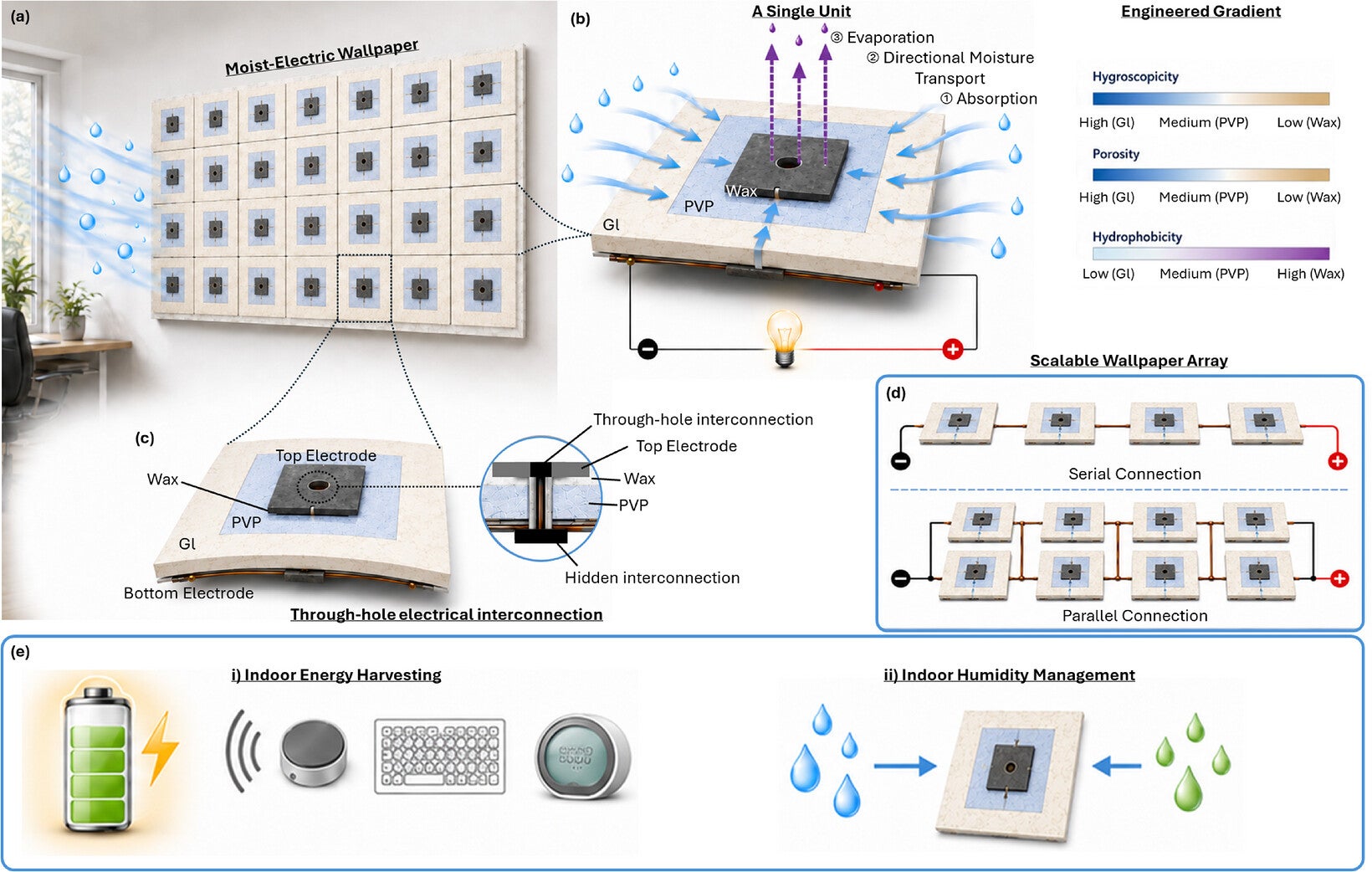
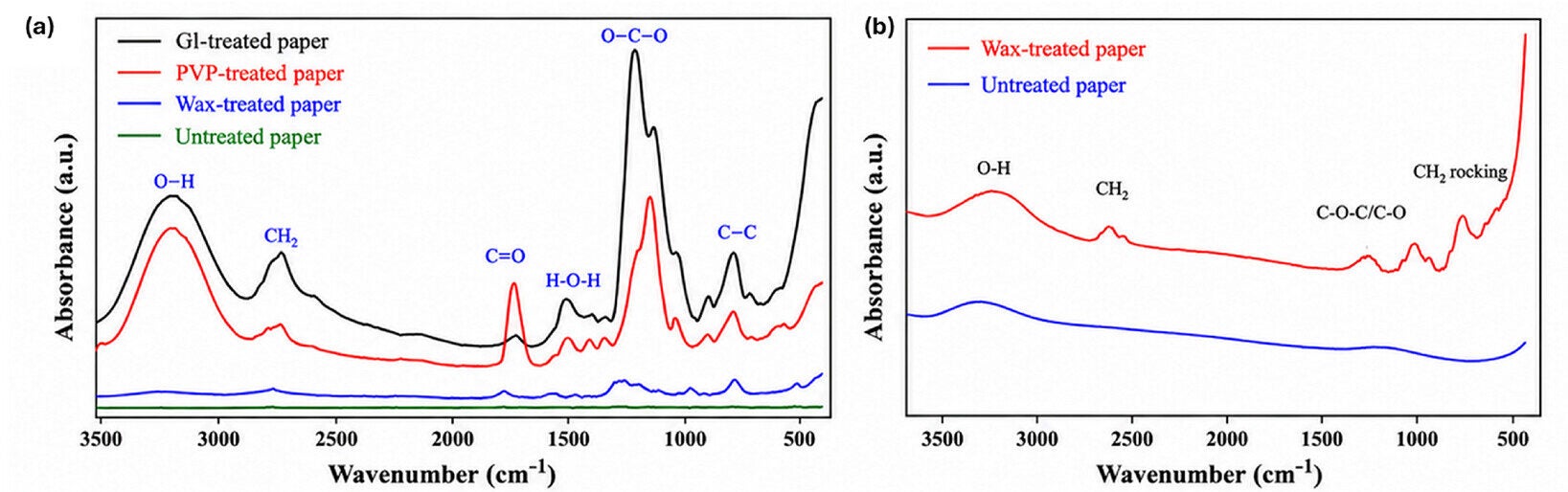
The Binghamton design divides each paper generator into three functional regions. Glycerol around the perimeter acts as a highly hygroscopic material that captures water vapor from room air.
Closer to the center, polyvinylpyrrolidone, or PVP, binds water more strongly and partially fills pores in the paper. Differences in pore size and water affinity encourage moisture to migrate inward.
A wax-treated center provides the exit. The wax makes that region hydrophobic enough to resist liquid water, but the remaining microscopic pores still allow water vapor to diffuse outward and evaporate.
That creates a continuing cycle of absorption, inward transport and evaporation. As water interacts with oxygen-containing chemical groups in the paper, glycerol and PVP, mobile ions develop an asymmetric distribution that produces an electrical potential between electrodes.
The authors propose that protons carry much of this current, although they acknowledge that additional measurements are needed to establish the precise contribution of different ions.
At 80% relative humidity, one generator produced an open-circuit voltage of approximately 0.34 volts. Its peak power density reached about 2.2 microwatts per square centimeter when calculated using the electrode area.
The entire generator occupies more space than its electrode, however. When power was calculated across the complete four-square-centimeter footprint, peak density was closer to 0.55 microwatts per square centimeter.
Output declined as humidity fell, but the device continued operating at lower humidity levels. Experiments spanning relative humidity levels from 20% to 80% produced sustained voltage for more than 90 minutes at each condition.
Blocking different parts of the generator helped confirm how it worked. Sealing the glycerol region largely eliminated output because moisture could no longer enter effectively. Blocking the wax-covered evaporation region allowed an initial voltage, but the signal gradually declined as internal moisture equalized.
Scaling the idea required more than making a larger sheet. Hundreds or thousands of visible electrical connections would make functional wallpaper impractical for ordinary rooms.
Choi’s team instead laser-drilled small holes through the paper and filled them with conductive material. These vias connect electrodes on the visible surface with printed wiring hidden on the back.
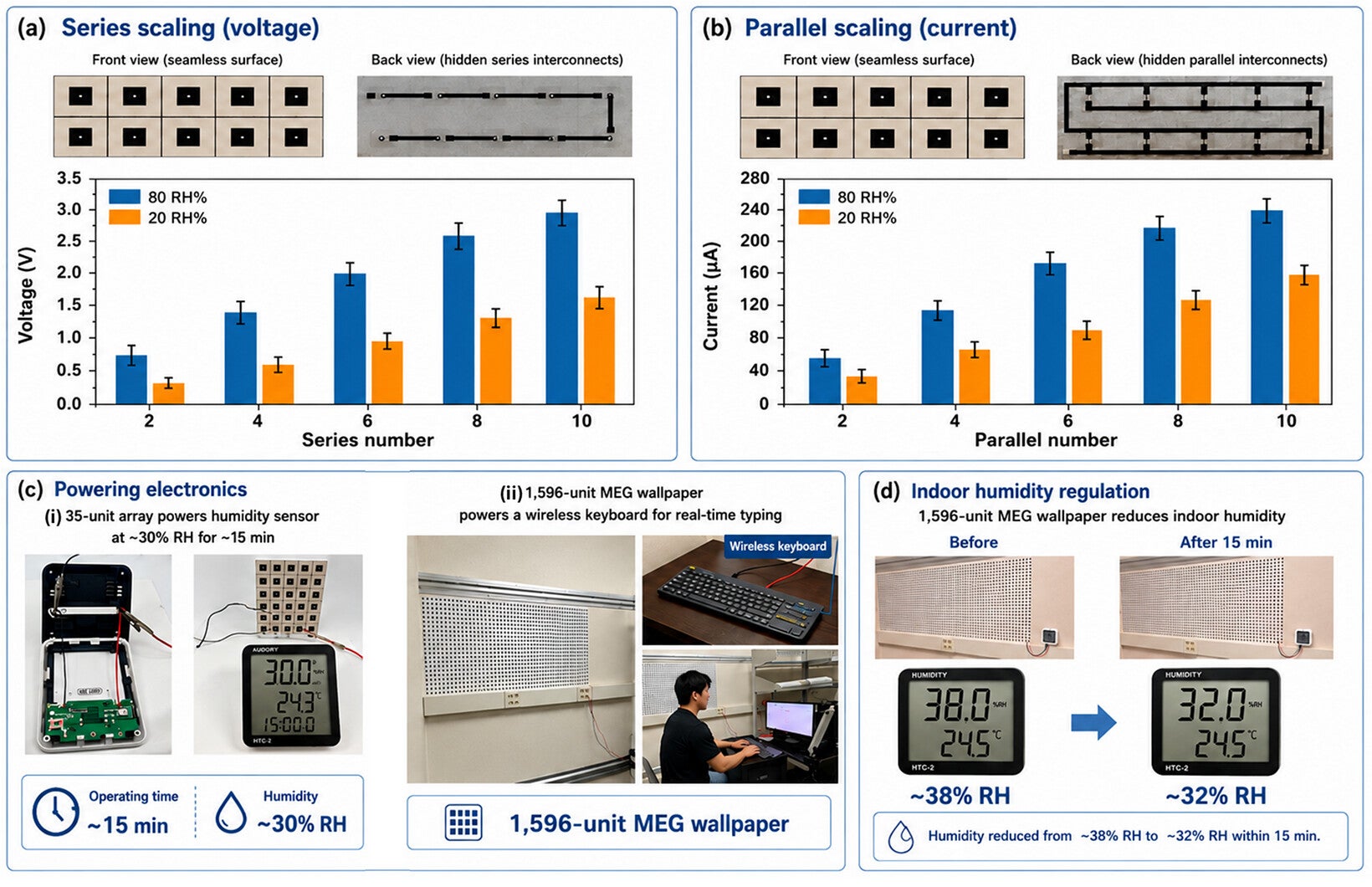
Series connections increased voltage, while parallel connections increased current. Ten devices in series generated about 2.9 volts at 80% humidity, demonstrating that the individual units could be combined predictably.
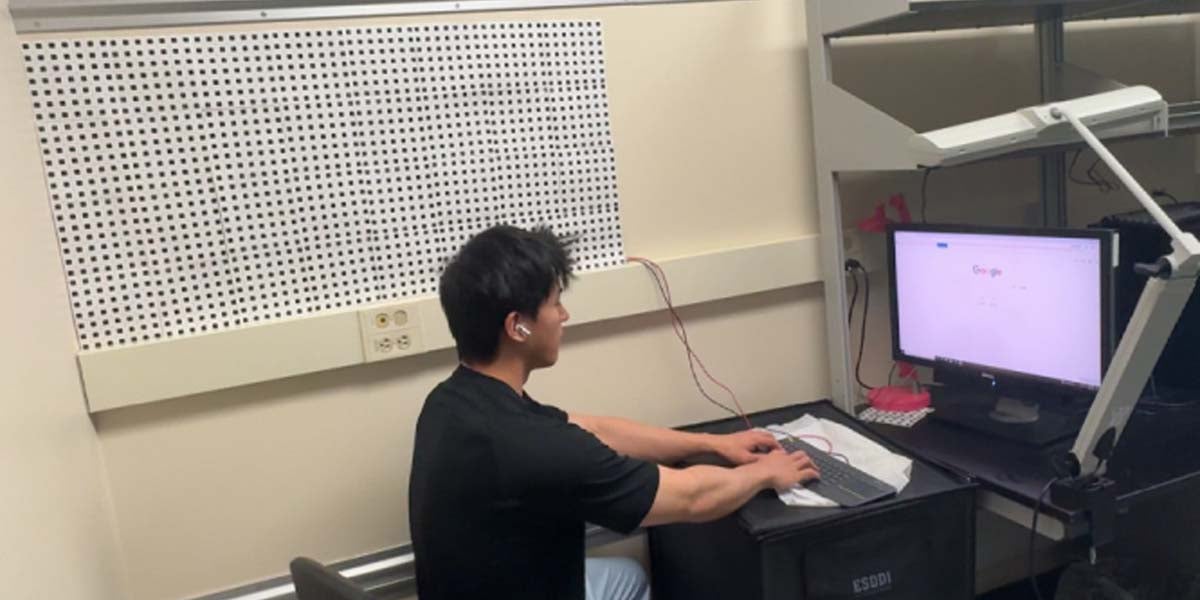
A larger test used 1,596 generators arranged into a wall-mounted array. At approximately 38% relative humidity, the system produced about 3.5 volts and repeatedly recharged a capacitor that supplied bursts of power to a wireless keyboard.
A smaller 35-unit version also powered a commercial humidity sensor for about 15 minutes at roughly 30% relative humidity.
Those demonstrations do not mean an electrically powered house can be wrapped in energy-generating paper. The output remains suited to devices with very small energy requirements.
The same water-absorbing properties produced a second effect. In a closed test chamber, a 28-device array reduced relative humidity from roughly 75% to 50% within about four minutes.
When researchers moved moisture-loaded wallpaper into very dry conditions, it worked in reverse. Relative humidity increased from about 15% to 20% as stored water gradually returned to the air.
A wall-scale demonstration produced a smaller effect, reducing room humidity from about 38% to 32% over 15 minutes. The researchers caution that this test captured only an initial response and does not show how much humidity the material could regulate continuously in an occupied building.
The technology therefore remains a proof of concept. Longer testing must determine whether repeated swelling and drying damages the paper, graphite wiring or conductive vias. The team also needs to establish whether glycerol gradually migrates through the material during operation lasting days or months.
For now, the work demonstrates a different vision of smart buildings. Instead of treating walls as passive surfaces, future interiors could potentially use their vast area to harvest small amounts of energy, sense their surroundings and help moderate indoor humidity at the same time.
These studies and resources provide recent context on moisture-electric generators, printable devices and the challenges involved in extracting useful electricity from atmospheric water.
Advances in Humidity-Driven Energy Harvesting: A Review of Mechanisms, Materials, and Scalability Challenges: This recent review examines materials, ion-transport mechanisms, device architectures and the major scalability challenges facing moisture-electric technologies. (Energies, 2026)
High-Power Hydrogel-Based Moisture-Electric Generators: Researchers developed hydrogel-based generators designed to improve electrical output, addressing one of the central limitations of humidity-powered devices. (Energy & Environmental Science, 2025)
A Paper-Based Wearable Moist-Electric Generator for Sustained High-Efficiency Power Output and Enhanced Moisture Capture: Earlier work from the Binghamton team demonstrated paper-based moisture harvesting with engineered gradients for wearable electronics. (Small, 2024)
Sustainable Moisture Energy: This broad review explains how materials can extract electricity from atmospheric moisture and assesses the physics and practical prospects of the field. (Nature Reviews Materials, 2024)
Fully Printed Planar Moisture-Enabled Electric Generator Arrays for Scalable Function Integration: Printed planar arrays demonstrated how multiple moisture-electric units can be integrated and scaled for more practical electronic applications. (Joule, 2023)
Research findings are available online in the journal Advanced Energy Materials.
The original story “New wallpaper generates electricity from the moisture inside your home” is published in The Brighter Side of News.
Like these kind of feel good stories? Get The Brighter Side of News’ newsletter.
The post New wallpaper generates electricity from the moisture inside your home appeared first on The Brighter Side of News.


Leave a comment
You must be logged in to post a comment.