A broad review of medical evidence is reshaping one of the most heated debates in sports. It does so by targeting the claim that has powered many blanket restrictions for years.
After pooling results from 52 studies and thousands of participants, researchers in Brazil reported that transgender women had greater lean mass than cisgender women, but not greater physical capacity. Across the data they examined, they found no meaningful differences in upper-body strength, lower-body strength, or aerobic fitness between the two groups after hormone therapy.
That does not settle the political fight. It does, however, narrow the scientific one.
The paper, published in the British Journal of Sports Medicine, reviewed research on body composition and physical fitness in transgender people receiving gender-affirming hormone therapy. In their analysis, they covered 6,099 individuals overall. This included 2,566 transgender women, 2,646 transgender men, 442 cisgender women and 445 cisgender men. Forty-two studies were included in the meta-analysis.

For transgender women, the central result was striking in its contrast. Lean mass remained higher than in cisgender women, yet the performance measures most often cited in sports arguments did not show an advantage.
“This refutes the logic behind blanket bans on transgender women in sports,” said Bruno Gualano, a physician and researcher at the University of São Paulo in Brazil who co-authored the study. “Most of these policies are based on the assumption that transgender women retain inherent physical advantages and would therefore dominate women’s competitions. The data does not support this idea.”
The review found that transgender women had higher absolute lean mass than cisgender women, but similar relative lean mass. It found no significant differences in upper-body strength, lower-body strength, or maximum oxygen consumption, a standard measure of cardiorespiratory fitness.
The authors also looked at how hormone therapy changed the body over time. In transgender women, one year of therapy was associated with increased fat mass, reduced lean mass, and lower upper-body strength. Over one to three years, the pattern pointed in the same direction, though not every measure could be tracked across every time span.
The paper argues that this matters because sports rules often treat muscle mass as a stand-in for performance. The new review suggests that assumption may be too simple.

The authors wrote that the “convergence of transgender women’s functional performance with cisgender women, particularly in strength and aerobic capacity, challenges assumptions about inherent athletic advantages derived solely from GAHT or residual lean mass differences.”
Not everyone sees the matter as settled. Carlos Alberto Cordente Martínez, a professor of physical activity and sports sciences at the Polytechnic University of Madrid, said the work raises fresh questions in a debate that has often been treated as closed. “At the very least, this should lead us to reconsider certain maximalist positions in the field of competitive sports,” he said in comments to SMC Spain.
The review is among the largest to date, but its own authors make clear that the evidence base is uneven. Study designs varied widely. Only three randomized controlled trials were included, and only a minority of studies statistically adjusted for confounding factors.
Risk-of-bias assessments also found recurring weaknesses, including limited control of confounders and signs of possible publication bias in some comparisons. The certainty of evidence ranged from high to very low depending on the outcome. Many of the transgender women versus cisgender women comparisons were graded low or very low.
Gualano acknowledged those limits directly. “It’s not perfect, but it’s the best scientific evidence available,” he said.
María Miguélez González, an endocrinologist at the Gender Unit of Madrid’s Gregorio Marañón Hospital and co-author of an earlier Spanish review on the same topic, said the new paper adds valuable evidence but still leaves important gaps. “The studies are short in duration, less than three years,” she said. She also pointed to the small number of clinical trials and “the lack of data on elite athletes.”

That missing group matters because the public argument often centers on high-level competition. However, the research base comes mostly from non-elite populations. Participants in the reviewed studies ranged in age from 14 to 41, and only a handful of studies included any kind of athletic population.
The argument over trans participation in women’s sports often assumes a large wave of athletes is reshaping competition. The real numbers are far smaller.
Charlie Baker, president of the NCAA, said in an interview that fewer than 10 transgender athletes were competing within the organization, which oversees more than half a million athletes. Bea Sever, a spokesperson for an association of families of transgender minors in Navarre and the Basque Country, said most transgender people who play sports do not do so in organized settings because they see them as unsafe.
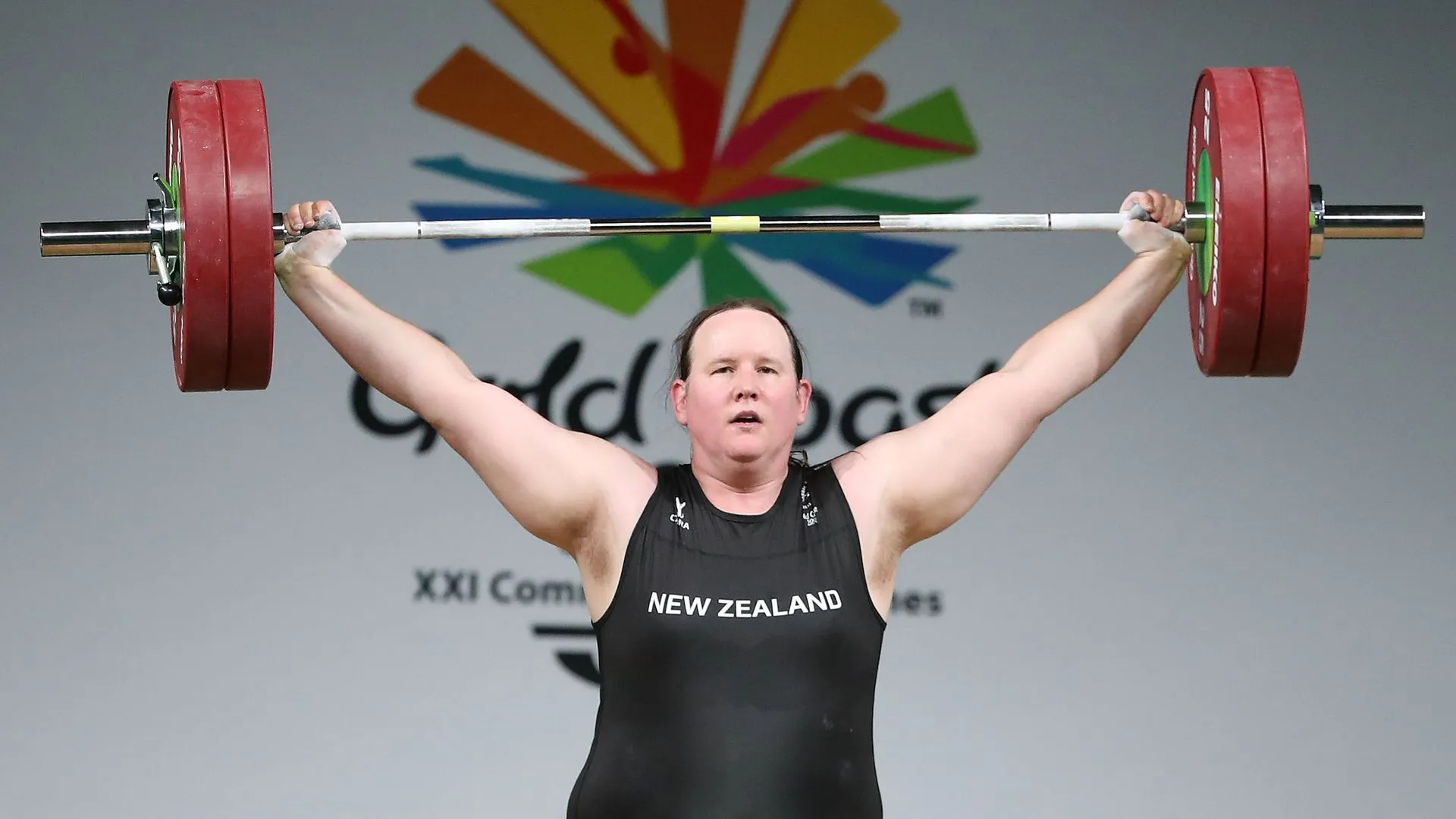
At the Olympic level, the history is even thinner. Only one openly transgender woman, weightlifter Laurel Hubbard, has competed at the Games. She did not win a medal in Tokyo and later retired after intense harassment.
That scarcity sits awkwardly beside the scale of the political response. The International Olympic Committee had moved toward a framework centered on fairness, inclusion and non-discrimination, leaving detailed rules to individual federations. But the issue remains in flux. For example, calls for stricter eligibility standards, including genetic testing, are resurfacing in Olympic discussion.
The study’s authors do not claim that science alone can settle those decisions. Gualano says it cannot.
“Philosophically speaking, I agree that facts alone don’t tell us what we should do,” he said. “It’s the classic ‘is-ought’ problem that Hume pointed out.”
That point runs through the paper and through the broader argument around it. Evidence can test claims about strength, speed, muscle and endurance. It cannot, by itself, dictate values.
The review also examined transgender men. Compared with cisgender men, transgender men had less lean mass and less upper-body strength. Compared with cisgender women, they exceeded cisgender women in upper-body strength, while other comparisons could not be made because the data were too limited.
Those results underline how incomplete the evidence remains across the board. Even in a large review, some outcomes could not be meaningfully pooled. This was especially true for lower-body strength and aerobic capacity in transgender men.
Still, the main conclusion on transgender women is hard to ignore. The available evidence does not show a physical performance advantage over cisgender women after one to three years of hormone therapy.
That leaves sports bodies in a difficult place. If they want to restrict a minority group on biological grounds, the evidence behind those rules will face closer scrutiny than before.
This review gives sports federations, schools and policymakers a clearer scientific baseline. It suggests that higher lean mass in transgender women does not automatically translate into greater strength or aerobic capacity. These are the very measures most relevant to athletic performance.
At the same time, the findings do not close the case. Much of the evidence comes from short-term studies, many outcomes carry low or very low certainty ratings, and elite athletes remain largely absent from the literature. That means the strongest support from this paper is for caution against sweeping claims. It is not for one-size-fits-all certainty.
The study also strengthens the case for sport-specific rules built around actual performance evidence rather than broad assumptions. If governing bodies want to argue that transgender women retain a competitive edge, this review suggests they will need stronger data than the field has produced so far.
Research findings are available online in the British Journal of Sports Medicine.
The original story “New study finds no clear physical advantage for transgender women over cisgender women in sports” is published in The Brighter Side of News.
Like these kind of feel good stories? Get The Brighter Side of News’ newsletter.
The post New study finds no clear physical advantage for transgender women over cisgender women in sports appeared first on The Brighter Side of News.


Leave a comment
You must be logged in to post a comment.