A hole in the Moon’s volcanic terrain may lead to a much larger space hidden beneath the surface. NASA has selected an investigation to find out whether that underground space exists, and how large it might be.
The Planetary Science Institute will lead the project, called Geophysical Instruments for Marius Lunar pit Investigation, or GIMLI. Its target is the Marius Hills Pit, a possible entrance to a lava tube left by ancient volcanic activity.
The investigation will combine radar, seismic measurements, gravity readings and cameras. Together, those instruments could turn an intriguing opening seen from orbit into a clearer picture of the surrounding subsurface.
That picture matters for geology and future exploration. A substantial cave could provide natural shielding from radiation, micrometeoroids and extreme surface temperatures, although the selected project has not yet confirmed one.
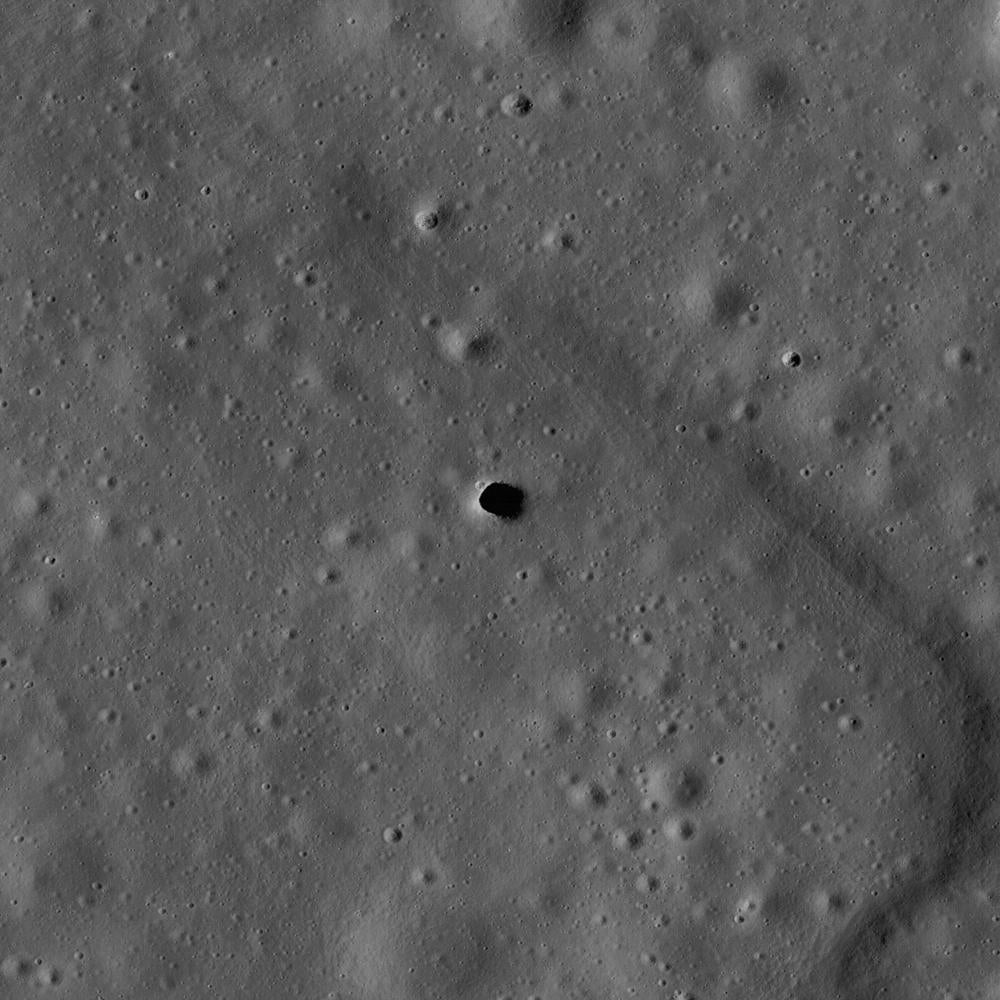
NASA announced the selection on September 30 as part of its Payloads and Research Investigations on the Surface of the Moon program. Known as PRISM, the program selects scientific investigations for delivery through the Commercial Lunar Payload Services initiative, or CLPS.
GIMLI’s instruments will be carried on a commercially provided lander and rover. Nathaniel “Than” Putzig, PSI’s associate director and senior scientist, will lead the investigation.
Orbital observations have already provided evidence that underground caves and lava tubes may exist on the Moon. However, identifying a pit does not automatically establish how far an opening extends beneath nearby ground.
Earlier research using Japan’s SELENE, also called Kaguya, examined radar echoes near the Marius Hills opening. A 2017 study reported patterns that could indicate an intact lava tube, providing a reason to investigate more closely.
Another study, published in Nature Astronomy in 2024, found radar evidence of a cave conduit beneath the Mare Tranquillitatis pit. That finding concerns a different location and does not establish the geometry beneath Marius Hills.
GIMLI will address its target directly from the lunar surface. The central question is whether the visible pit connects to a larger underground void, rather than simply ending below its opening.
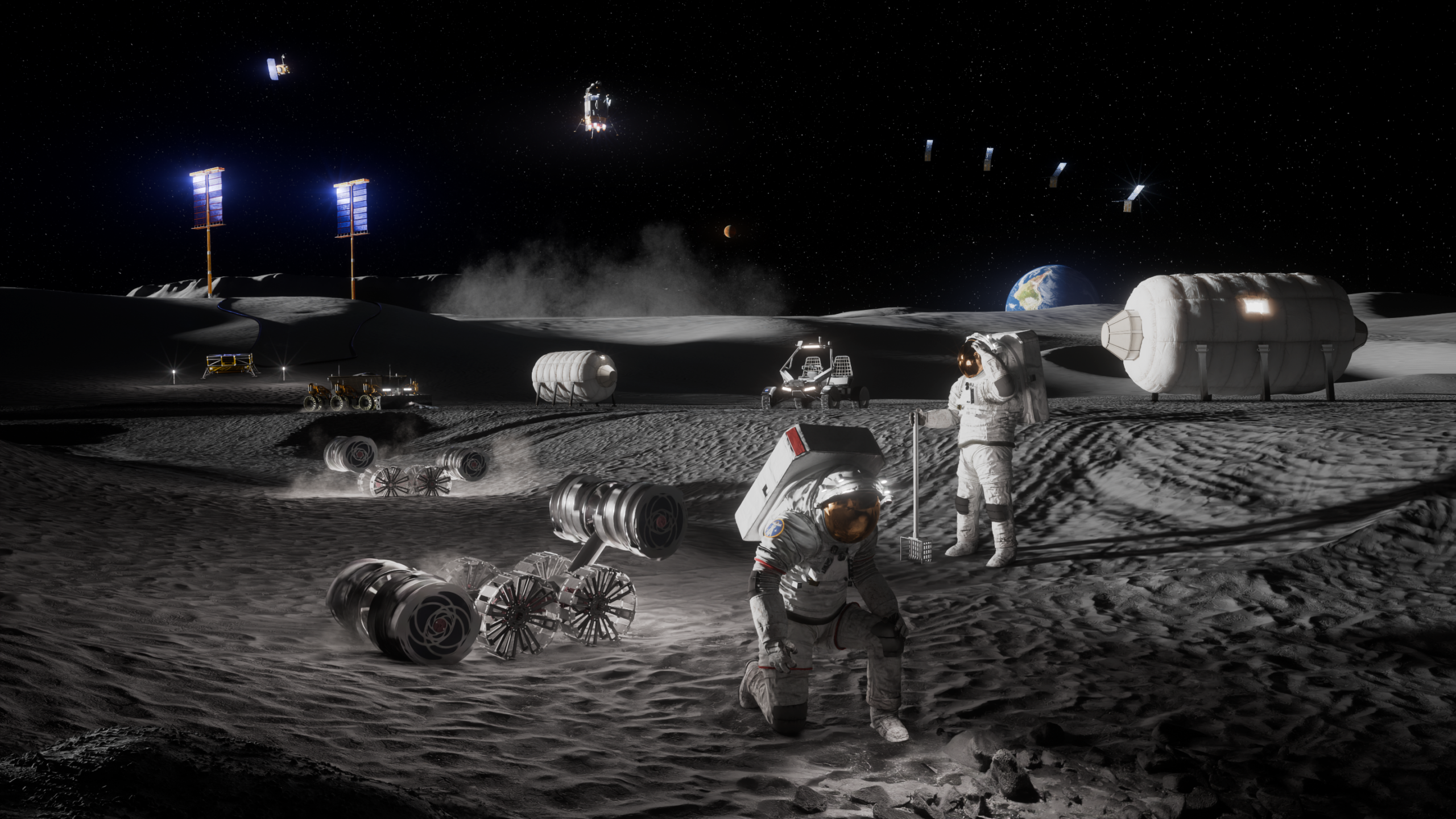
Ground-penetrating radar, seismic sensors and a gravimeter will give the team different ways to examine the subsurface. Cameras will add views of the terrain and the exposed pit walls.
Radar probes underground structures using reflected electromagnetic signals. Seismic measurements investigate how vibrations travel through the ground, while gravity measurements can help constrain the distribution of material below the surface.
Combining these methods should provide a stronger interpretation than relying on a single measurement. The team intends to search for a void extending away from the pit and estimate its size if one exists.
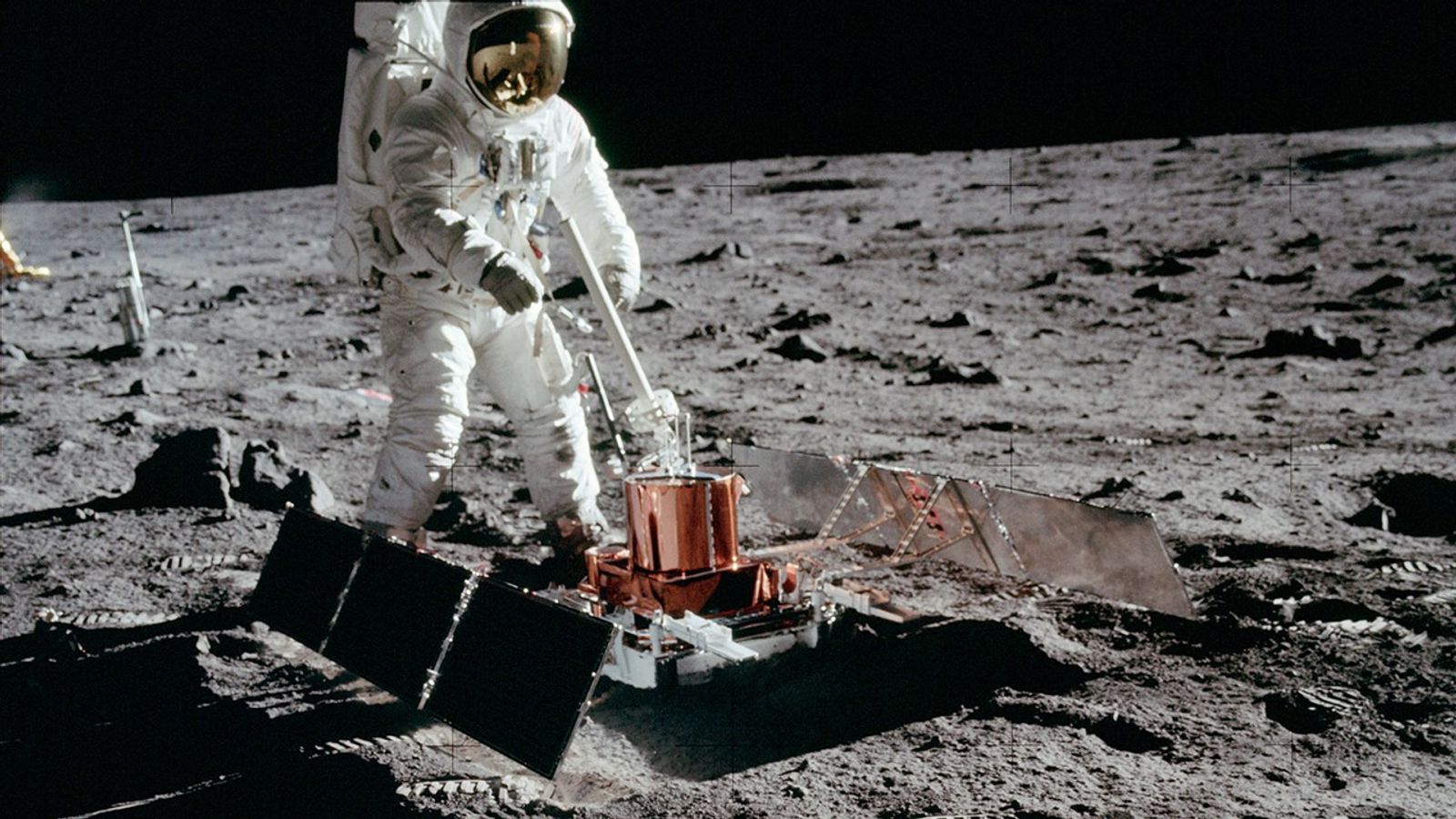
For Putzig, the seismic component also revives an approach used during the Apollo era. Active-source surveys deliberately generate vibrations and measure their passage through the ground, rather than waiting only for naturally occurring events.
“It’s long been a desire of mine to reintroduce intentional active-source seismic methods to planetary science, as it has essentially not been done since the Apollo astronauts conducted the first seismic surveys on the Moon,” Putzig said.
Honeybee Robotics, a Blue Origin company, will build the active-source seismic instrumentation, gravimeter and cameras. It will also provide project management and integrate the instruments onto the lander and rover.
The Norwegian Space Agency will provide the ground-penetrating radar. Honeybee Robotics and PSI will jointly lead surface operations, with collaborators from Boise State University, Johns Hopkins University, the Lunar and Planetary Institute and the University of Oslo.
The appeal of lunar caves begins with the hazards above them. Rock overhead could reduce exposure to radiation and micrometeoroids, while sheltered spaces may experience smaller temperature changes than exposed terrain.
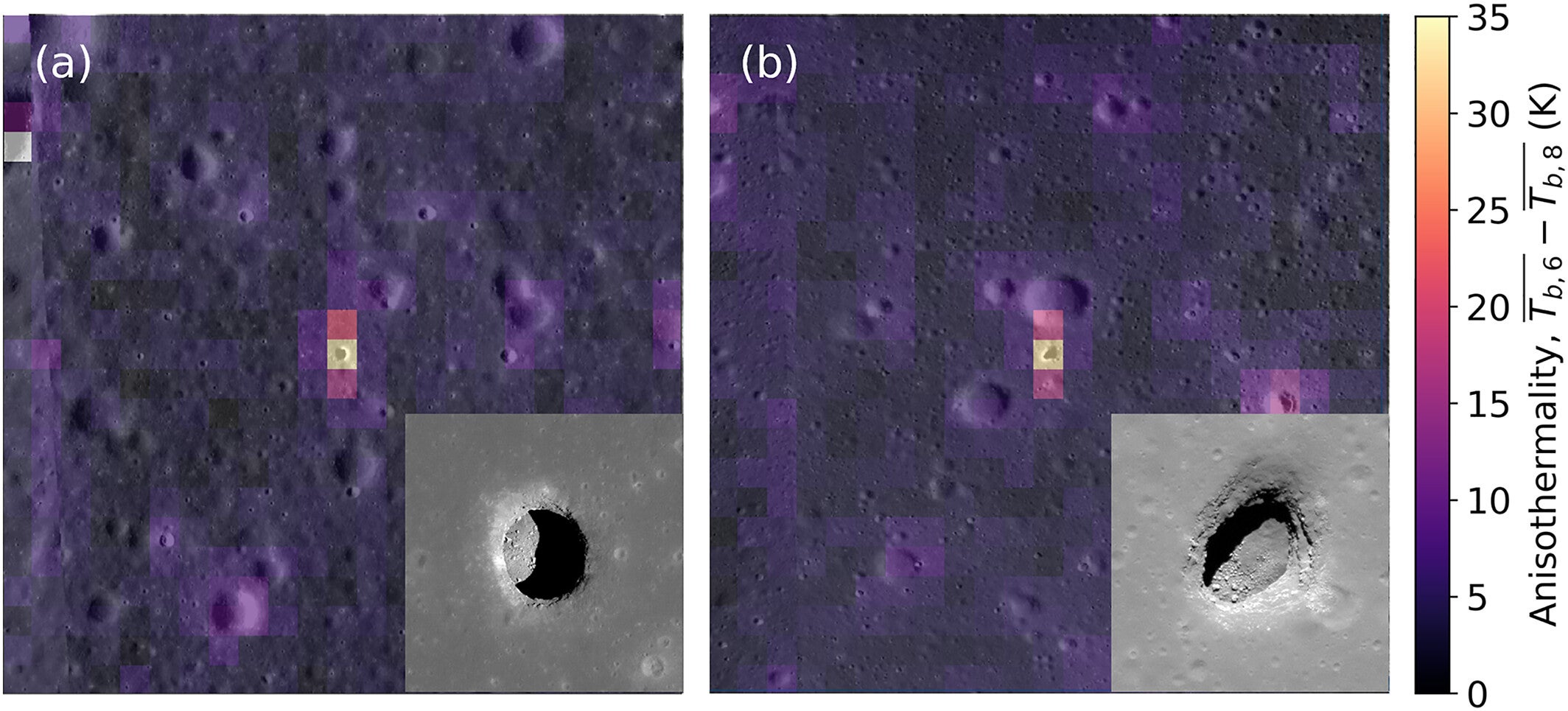
A 2022 study in Geophysical Research Letters examined lunar pit temperatures using orbital observations and thermal models. It found that permanently shaded parts of the Mare Tranquillitatis pit remained near 17 degrees Celsius.
Those results help explain the interest in underground environments. They are not measurements of conditions inside a confirmed Marius Hills cave, and GIMLI must first establish what space exists there.
NASA describes the investigation as groundwork for potential natural shelters supporting a sustained human presence. Detecting a void would provide information relevant to habitat planning, rather than demonstrate that astronauts could immediately occupy it.
The distinction is important because the project is a selected scientific investigation, not a completed cave survey. Its instruments are intended to answer questions that orbital images alone cannot settle.
Even without an underground cave, Marius Hills offers a useful view into lunar geology. Its pit walls expose layers of regolith and lava flows that usually remain hidden beneath the surface.
Studying those layers could help researchers understand how lava moved through the region. They may also reveal whether long intervals separated eruptions, adding detail to the area’s volcanic history.
Subsurface measurements could help explain how the pit itself formed. A negative cave result would therefore still contribute evidence about the structure and history of the surrounding ground.
“Confirming a substantial lava tube would give us an insight into how volcanism operated on the Moon,” said Gareth Morgan, PSI senior scientist and GIMLI’s deputy principal investigator.
Morgan noted that lava tubes are common features of basaltic volcanism on Earth. Identifying comparable structures on the Moon would allow researchers to draw on terrestrial knowledge while investigating lunar volcanic processes.
GIMLI was one of three payload suites selected in the same PRISM announcement. The other investigations address environmental hazards and resources that could affect future lunar operations under NASA’s Artemis and Moon Base programs.
The Lunar Environment Monitoring Station–South Pole, or LEMS-SP, will monitor micrometeoroids and volatile materials in the Moon’s thin outer layer of gases. A short-period seismometer will track seismic events, contributing information about hazards to surface equipment.
Mehdi Benna of the University of Maryland, Baltimore County, leads that investigation. Its autonomous instruments are intended for long-term monitoring.
The Depth Imager with Spectral and Color Optics, or DISCO, will investigate ice in small cold traps. Led by Ariel Deutsch of NASA’s Ames Research Center, it will also study surface stability and disturbance from rocket exhaust.
Together, the selections address practical questions before future crews depend on lunar resources or shelters. For GIMLI, that work begins with determining whether a promising opening really leads somewhere underground.
These resources examine evidence for lunar caves, their environments and the processes that shape potential exploration sites.
Radar evidence of an accessible cave conduit on the Moon below the Mare Tranquillitatis pit: Orbital radar analysis identifies evidence for a cave beneath a pit distinct from GIMLI’s Marius Hills target. (Nature Astronomy, 2024)
Thermal and Illumination Environments of Lunar Pits and Caves: Models and Observations From the Diviner Lunar Radiometer Experiment: Observations and modeling explore the temperatures and lighting within lunar pits and possible caves. (Geophysical Research Letters, 2022)
Detection of Intact Lava Tubes at Marius Hills on the Moon by SELENE (Kaguya) Lunar Radar Sounder: This study reports radar signatures consistent with possible underground lava tubes near Marius Hills. (Geophysical Research Letters, 2017)
Lava tubes on Earth, Moon and Mars: A review on their size and morphology revealed by comparative planetology: A review compares terrestrial lava tubes with candidate structures identified on the Moon and Mars. (Earth-Science Reviews, 2020)
Micro cold traps on the Moon: The analysis examines small cold traps that could preserve water ice, providing context for DISCO’s planned measurements. (Nature Astronomy, 2021)
The original story “NASA plans radar and seismic tests for a hidden lunar cave that could shelter future astronauts” is published in The Brighter Side of News.
Like these kind of feel good stories? Get The Brighter Side of News’ newsletter.
The post NASA plans radar and seismic tests for a hidden lunar cave that could shelter future astronauts appeared first on The Brighter Side of News.


Leave a comment
You must be logged in to post a comment.