A tiny implant placed in a Michigan woman’s brain is now carrying a very big question. Can a fully implanted, wireless device give speech back to people who are losing it?
Doctors at University of Michigan Health have completed the first human implant of Paradromics’ Connexus brain-computer interface. This system is designed for people who can no longer speak clearly because of neurological disease or injury. The participant in the new study struggles to speak because of motor neuron disease.
The early goal is not a dramatic recovery story. Instead, it is something more careful and more important at this stage. The goal is to prove the device can remain safe over time. Also, researchers want to show whether brain signals can be turned into synthesized text and speech, and used to control a computer.
Matthew Willsey, a neurosurgeon and biomedical engineer at U-M Health, led the implant surgery as site principal investigator. Aditya S. Pandey, chair of the health system’s Department of Neurosurgery, also took part in the procedure.
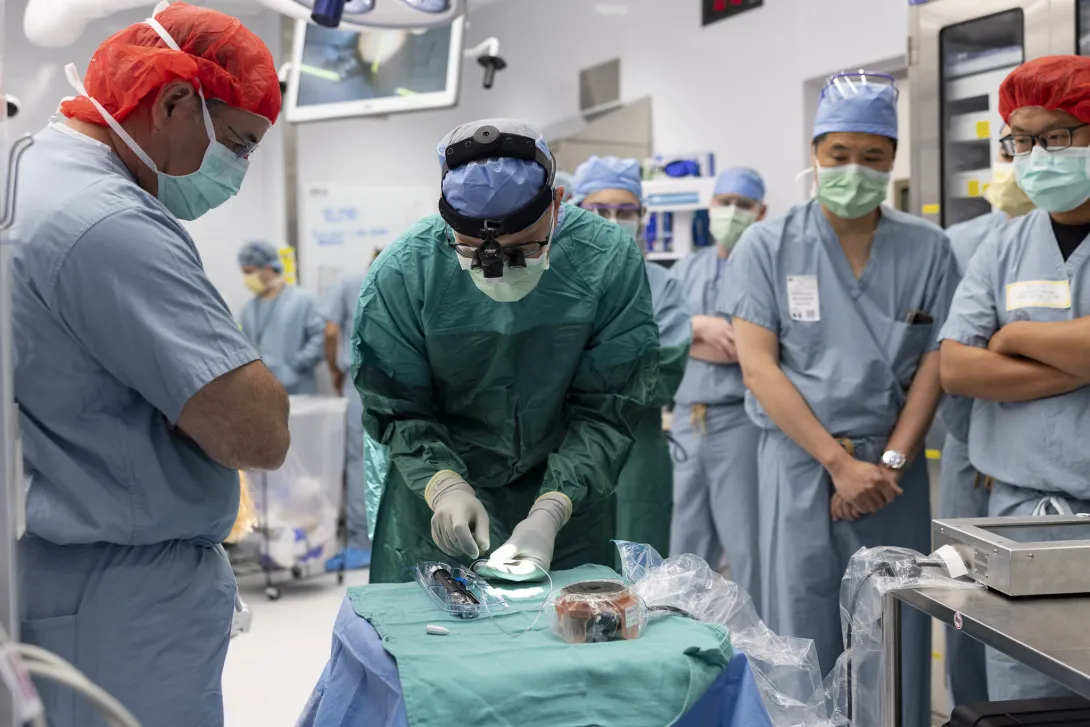
“We are incredibly excited to investigate the potential of this wireless BCI to restore communication for people who have lost the ability to speak due to neurological disease or injury,” Willsey said.
“This has the potential to be a major step forward as we work toward our goal of helping treat people with paralysis who otherwise lack efficient and effective therapies for preserving communication.”
Brain-computer interfaces, often called BCIs, are built to read activity from the brain and translate it into action. In this case, the hoped-for action is communication.
Paradromics’ Connexus device uses 421 microelectrodes to capture signals from individual neurons. Those signals are then sent to a small transceiver in the user’s chest, which passes information to an external receiver. The company says Connexus is one of only a few wireless, fully implantable BCIs being tested in the United States.
That distinction matters. Much of the field’s work has involved systems that depend on wired connections or less complete implantation setups. However, a device meant for everyday use, especially by people whose disease can steadily limit movement and speech, has to function in a way that fits ordinary life more naturally.
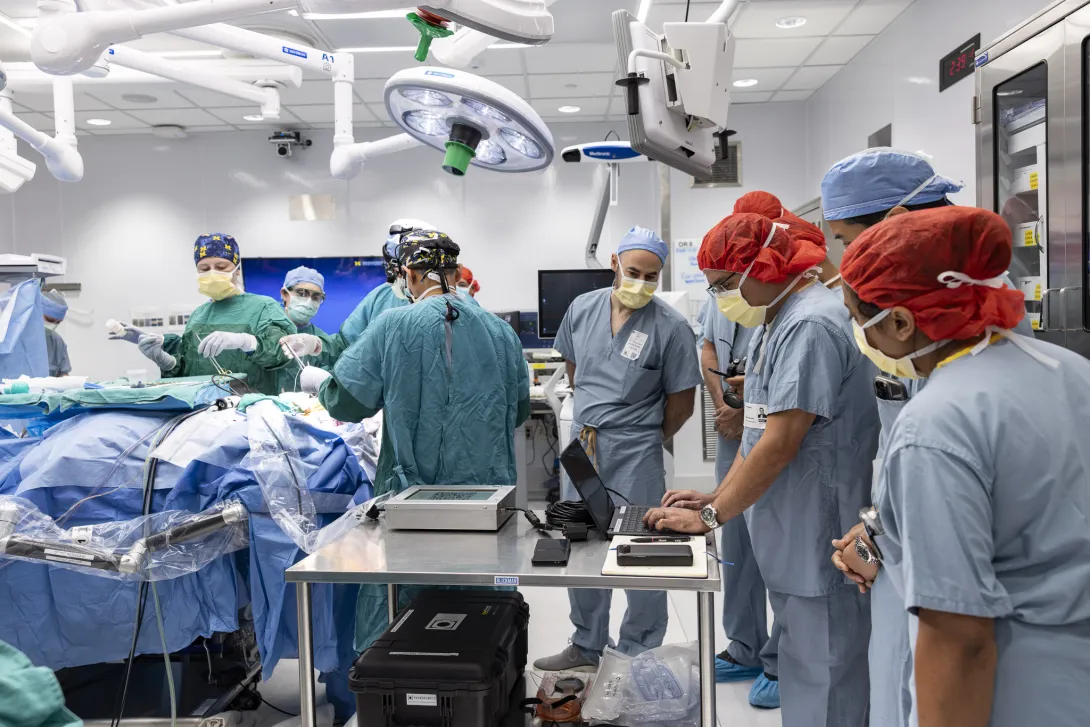
“Our goal is to restore natural communication for people who have lost the ability to speak and help them stay connected with their loved ones,” said Matt Angle, CEO and founder of Paradromics.
“We’re proud to partner with University of Michigan Health on this first-in-human study as we build the foundation for the next generation of clinical BCIs.”
The new implant is part of the Connect-One Early Feasibility Study, a national clinical trial. Michigan Medicine is one of three sites enrolling participants.
At this stage, the study is focused first on long-term safety. That is standard for an early feasibility trial, especially in a field where devices must work inside the body for years. Devices must work for years, not just days or weeks.
But the trial is also asking a more human question. Can the implant help someone who has lost efficient speech communicate through synthesized text and voice? Can it also help that person control a computer by thought alone?
The participant will be followed for six years after the implant. Alongside study visits, she will continue receiving care for motor neuron disease through the Stanford Morris ALS Clinic at U-M Health.
Motor neuron disorders affect the neurons that control movement in the brain, brainstem, and spinal cord. They include amyotrophic lateral sclerosis, or ALS, the most common motor neuron disorder, as well as primary lateral sclerosis, or PLS. For many patients, one of the cruelest losses is the loss of reliable communication.
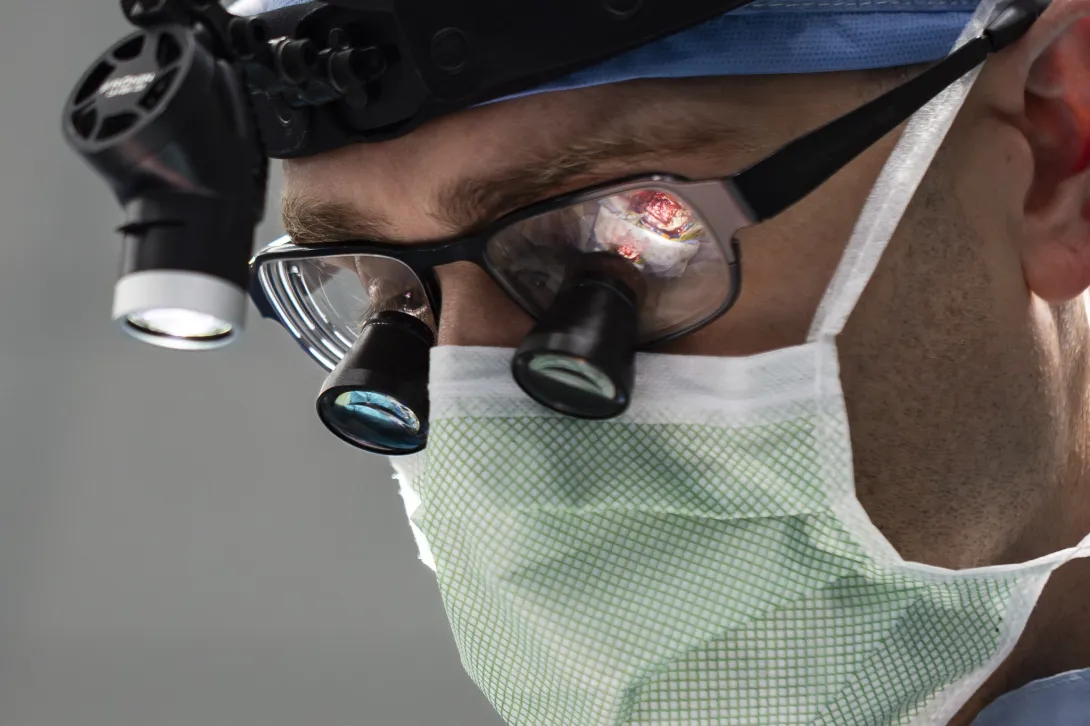
“It is critical to preserve communication for all those living with motor neuron disease to keep individuals connected to their families and friends, and to preserve independence and quality of life,” said Stephen Goutman, director of the Stanford Morris ALS Clinic, associate director of the Scott Pranger ALS Center, and Harriet Hiller Research Professor at U-M.
“We are so fortunate to be able to partner with Dr. Willsey and the incredible neurosurgical team here at U-M Health as they work to bring these devices into the clinic and make motor neuron diseases more livable.”
The implant did not arrive out of nowhere. In June 2025, Willsey and Oren Sagher, director of functional neurosurgery at U-M Health, temporarily implanted the Connexus device in a patient during epilepsy research. That earlier work confirmed that the device could be placed safely in the brain and could record signals.
The U.S. Food and Drug Administration granted Paradromics an Investigational Device Exemption in November 2025. This decision cleared the way for the Connect-One clinical study to begin.
David M. Brandman of the University of California, Davis, is the lead principal investigator for the study. He described the trial as the next stage in a line of work that has been building for years.
“The Paradromics device has incorporated decades of learning from intracortical BCI research, and this study represents the next big step to investigate whether a fully implanted and wireless BCI can restore communication,” Brandman said.
“I’m honored to be leading this study together with Drs. Willsey and Rubin.”
Even with that momentum, the language around the project remains measured. No one is claiming that speech has already been restored. Currently, the study is beginning with one participant at Michigan. Its main job is to find out how the device performs over the long term in a real patient.
That caution is part of what makes the moment notable. BCI research has spent years proving that brain signals can be translated in controlled settings. The harder challenge is building systems sturdy and practical enough for the clinic.
Willsey’s work at Michigan reflects that shift. He opened a new Brain-Computer Interface Clinic at U-M Health in 2025. Furthermore, his lab is also leading a separate clinical trial of another investigational BCI aimed at restoring movement and communication.
“Advances in brain-computer interfaces and neuromodulation are rapidly reshaping what is possible in the treatment of neurological disease,” Sagher said.
“Our clinician-scientists are committed to developing and advancing these technologies and ensuring that patients have access to the most innovative and effective therapies available. When patients come to Michigan Medicine for their care, they should know they are being treated at a center helping define the future of neuroscience and neurosurgical care.”
For patients with motor neuron disease, the practical stakes are immediate. A successful wireless BCI could offer a new way to communicate when speech becomes weak or unreliable. This could help people stay involved in daily decisions, relationships, and care.
For clinicians, the trial will show whether a fully implanted system can be used and monitored over years. Systems must last, not just in short demonstrations. And for the broader field, this study marks a move from proof-of-concept brain decoding toward devices that may one day fit into routine medical care.
The original story “Doctors implant first wireless brain-computer device designed to restore communication” is published in The Brighter Side of News.
Like these kind of feel good stories? Get The Brighter Side of News’ newsletter.
The post Doctors implant first wireless brain-computer device designed to restore communication appeared first on The Brighter Side of News.


Leave a comment
You must be logged in to post a comment.