A thin radio signal survived several screening steps in observations pointed toward K2-155, a star roughly 238 light-years away. It occupied a narrow frequency band, drifted slowly, and appeared only in the telescope beam tracking that system. Those features earned it closer examination, but they did not establish an extraterrestrial origin.
Further checks produced warning signs. The signal appeared strongly in only one polarization channel, while similar features surfaced during observations of three other stars. The researchers consider human-made or instrumental interference more plausible than a transmission from another civilization.
The finding appears in The Astronomical Journal, in a study led by Zi-Qi Li of Beijing Normal University. Its main contribution is a new method for sorting radio observations, tested on existing data from China’s Five-hundred-meter Aperture Spherical Radio Telescope, known as FAST.

The search for extraterrestrial intelligence, or SETI, seeks evidence of technology beyond Earth. In radio observations, one possible clue is a signal concentrated into an extremely narrow frequency range. Natural cosmic radio emissions generally spread across broader bands, while engineered transmitters can produce tightly confined signals.
Motion provides another clue. As Earth moves, and a possible distant transmitter rotates or orbits, their relative motion can shift the received frequency. This Doppler effect can produce a drifting track when astronomers plot frequency against time.
A narrow signal with that drift therefore deserves scrutiny. Yet neither property establishes where it originated. Earth’s transmitters and telescope electronics can produce features resembling those sought in SETI, making verification essential.
Li and colleagues reanalyzed FAST observations of 33 exoplanet systems collected in 2021. The receiver covered frequencies from 1.05 to 1.45 gigahertz. Most target observations lasted about 20 minutes, providing short windows in which to identify and examine possible signals.
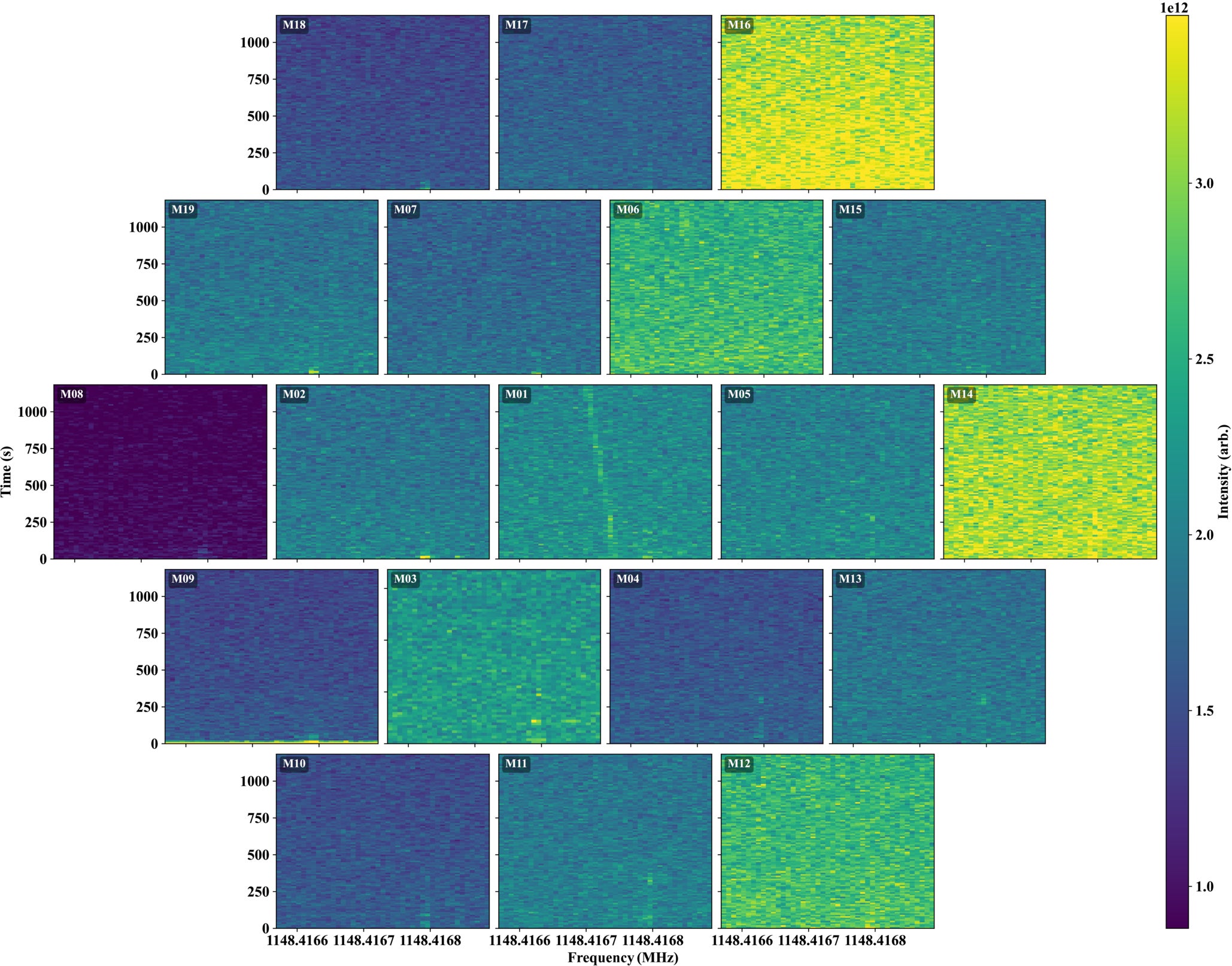
FAST’s receiver observes through 19 beams simultaneously. During these targeted observations, the central beam followed the selected star, while the remaining beams monitored nearby sky positions. That arrangement gave the team simultaneous comparisons for checking interference.

A feature found in several beams can indicate contamination rather than a signal confined to the target direction. The new analysis rejected events with matching counterparts in any of the 18 nonprimary beams.
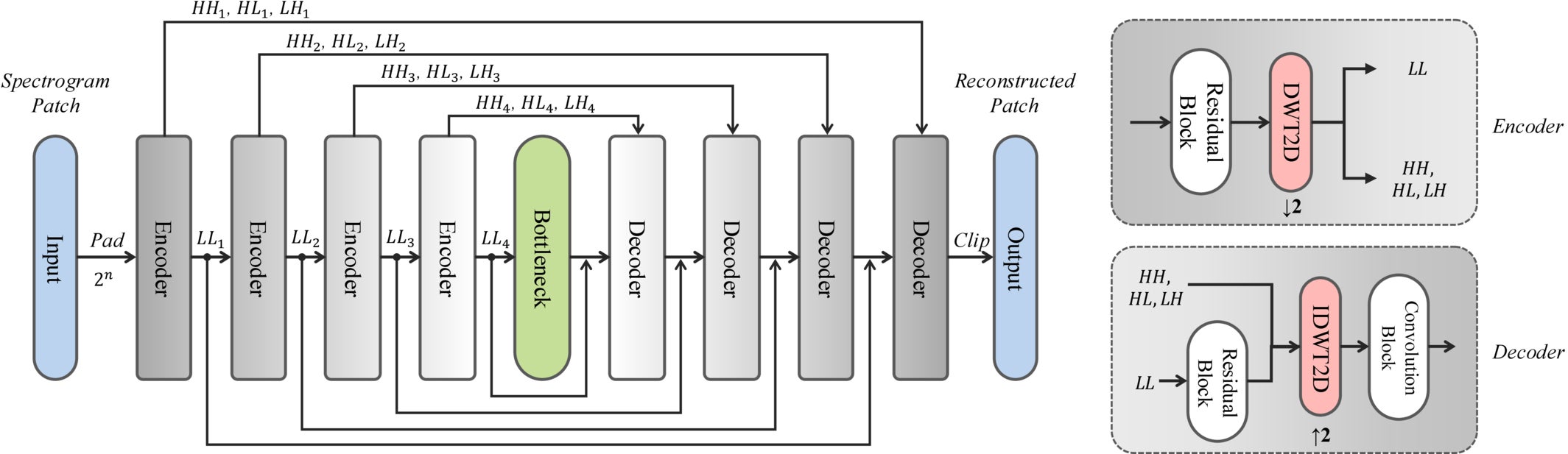
The machine-learning component, called Multiscale Wavelet Net, helped process the frequency-time plots. Wavelet analysis separates structures at different scales, allowing the system to preserve narrow drifting tracks while suppressing other patterns.
For training, the team added synthetic signals and interference to a relatively clean background drawn from real FAST data. The examples included both straight drifting tracks and curved ones. Later processing estimated where each track began and ended, removed duplicates, and checked signal strength against the original observations.
Those raw-data checks mattered because a promising feature in a processed image still needed support in the telescope measurements. Automated selection supplied candidates for examination, rather than conclusions about their origin.
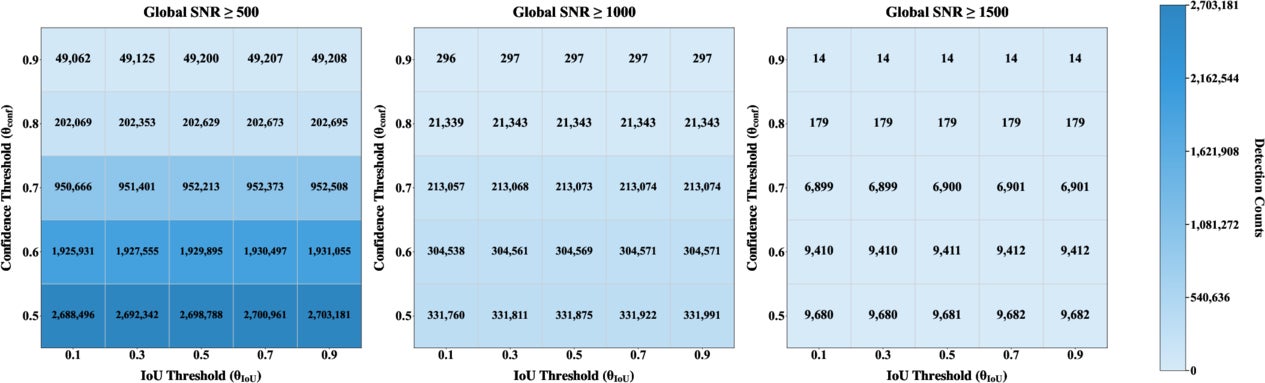
The system produced 139,127 detections at the individual-beam level. These became 6,402 events for comparison across beams, with 803 candidates surviving the multibeam screening. Visual inspection and additional interference checks left two particularly notable narrowband events.
One pointed toward Kepler-438. Earlier work had already identified that signal and ultimately excluded it as interference. Recovering it showed that the new method could find a feature detected by previous analyses, while reinforcing the need for further verification.
The other event, labeled NBS 260108, appeared in the K2-155 observation. The study describes K2-155 as an early M dwarf with three known transiting super-Earths. Its outer planet, K2-155 d, has a radius about 1.6 times Earth’s and an orbital period near 40.7 days.
That planet lies near its star’s habitable zone, making the system an interesting target. This location does not establish that the planet has liquid water or supports life.
The radio feature appeared at 1148.4167 megahertz and drifted downward by approximately 0.038 hertz per second. It was visible in the central beam and absent from the other 18 beams. Its drift was physically plausible for relative motion, so drift alone could not resolve its origin.
The strongest concern came from the two polarization channels, which measure different orientations of the radio signal’s electric field. NBS 260108 appeared strongly in the channel labeled YY and was absent from XX. Such an imbalance can occur with terrestrial or instrumental contamination, although polarization alone is not decisive.
The team then compared observations from the same September 10, 2021 session. Nearby-frequency features dominated by YY also appeared toward K2-18, GJ 9066, and Ross 128. Their strengths and drift rates differed, but their recurrence favored a shared interference explanation.
Other narrow carriers formed regularly spaced patterns near the candidate’s frequency. Similar patterns occurred in 17 of the 33 stellar observations. These features indicated a structured interference environment, although the team could not identify them as the candidate’s specific cause.
The researchers also considered aviation, satellite, navigation, and military transmissions. None provided a definitive explanation matching all the observations. The source therefore remains unclassified, with additional observations needed to identify it.
The authors retain NBS 260108 as a low-priority technosignature candidate for internal follow-up. They explicitly distinguish it from a robust detection. Surviving initial filters does not outweigh the broader evidence favoring contamination.
Future improvements could use raw voltage measurements from FAST’s beams to test source position, motion, and phase consistency. That would provide a stronger physical check than comparing detected signal tracks alone. It would require identifying candidates quickly enough to preserve those measurements.
The study also proposes more precise track fitting and broader testing under different interference conditions. Its lasting result is a more manageable route through crowded radio data, while showing why every intriguing signal still needs careful interpretation.
These studies explain how astronomers search for technological signals, reject interference, and assess the planets motivating their observations.
Conducting high-frequency radio SETI searches using ALMA: This study explores narrowband searches at higher radio frequencies and the capabilities of an interferometer for technosignature detection. (Monthly Notices of the Royal Astronomical Society, 2025)
A deep-learning search for technosignatures from 820 nearby stars: Machine learning reexamines a large radio dataset, illustrating how automated methods identify signals requiring further investigation. (Nature Astronomy, 2023)
Sensitive Multibeam Targeted SETI Observations toward 33 Exoplanet Systems with FAST: The earlier FAST campaign establishes the observations and multibeam screening approach underlying the new analysis. (The Astronomical Journal, 2022)
Analysis of the Breakthrough Listen signal of interest blc1 with a technosignature verification framework: A detailed investigation shows how an initially promising signal can be traced to interference through systematic verification. (Nature Astronomy, 2021)
K2-155: A Bright Metal-poor M Dwarf with Three Transiting Super-Earths: The discovery study describes the planetary system and the assumptions involved in assessing its outer planet’s possible habitability. (The Astronomical Journal, 2018)
Research findings are available online in The Astronomical Journal.
The original story “Comprehensive planetary search detected an unexplained radio signal from K2-155, 238 light-years away” is published in The Brighter Side of News.
Like these kind of feel good stories? Get The Brighter Side of News’ newsletter.
The post Comprehensive planetary search detected an unexplained radio signal from K2-155, 238 light-years away appeared first on The Brighter Side of News.


Leave a comment
You must be logged in to post a comment.