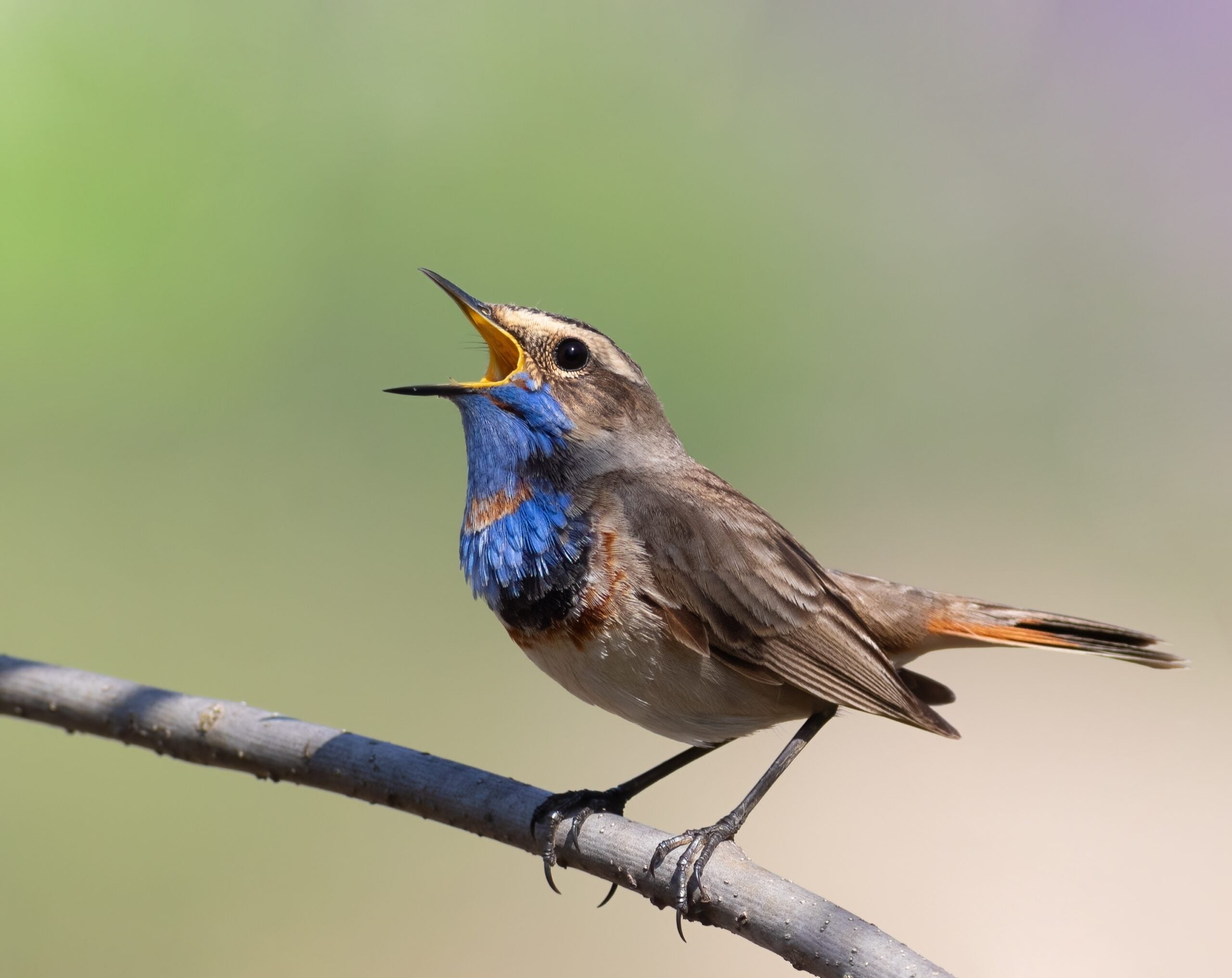
Ancient climate swings may have helped shape the birds you hear outside your window today. A new University of Michigan study suggests that passerines, the vast group that includes songbirds and perching birds, did not evolve their body shapes at a slow and steady pace. Instead, their history appears marked by rare bursts of fast change, often during periods when Earth’s climate shifted sharply.
The study used artificial intelligence and a new statistical model to examine more than 170,000 skeletal measurements from 2,057 passerine species. Passerines are the largest order of living birds, with more than 6,500 species worldwide. They include familiar birds such as sparrows, finches, crows, swallows, wrens and robins.
“This is really important for evolutionary theory because there’s a long history, going back 100 years, that predicts the emergence of new groups, called evolutionary radiations, is often associated with an explosive burst of diversification,” said Jake Berv, lead author of the study and a postdoctoral fellow in the U-M School for Environment and Sustainability.
To understand how these birds changed over time, researchers looked deep into museum collections. Their work relied on Skelevision, an AI tool developed through a collaboration between Brian Weeks’ lab at the University of Michigan and David Fouhey’s lab at New York University.
Skelevision photographs bird skeletons against a background grid, which provides a consistent scale. The system can then measure about a dozen bones across the skeleton with precision. For this study, the team scanned more than 15,000 museum specimens, most from the U-M Museum of Zoology.
Each scan takes only about 45 seconds. That speed matters because natural history collections hold enormous amounts of information. Until recently, much of that information remained difficult to use at large scales.
Weeks said the work shows why museums remain vital to modern science. Specimens collected long ago can now answer questions their collectors could never have imagined.
“It’s also fun to imagine what early collectors would make of how we’re using the specimens they collected,” Weeks said. “I imagine it would blow their minds to learn that a computer has analyzed a photograph of these specimens.”
Bird bodies are not just collections of separate parts. Wings, legs, skulls and perching structures evolve together in complicated ways. A change in one region can affect how the whole animal moves, feeds or survives.
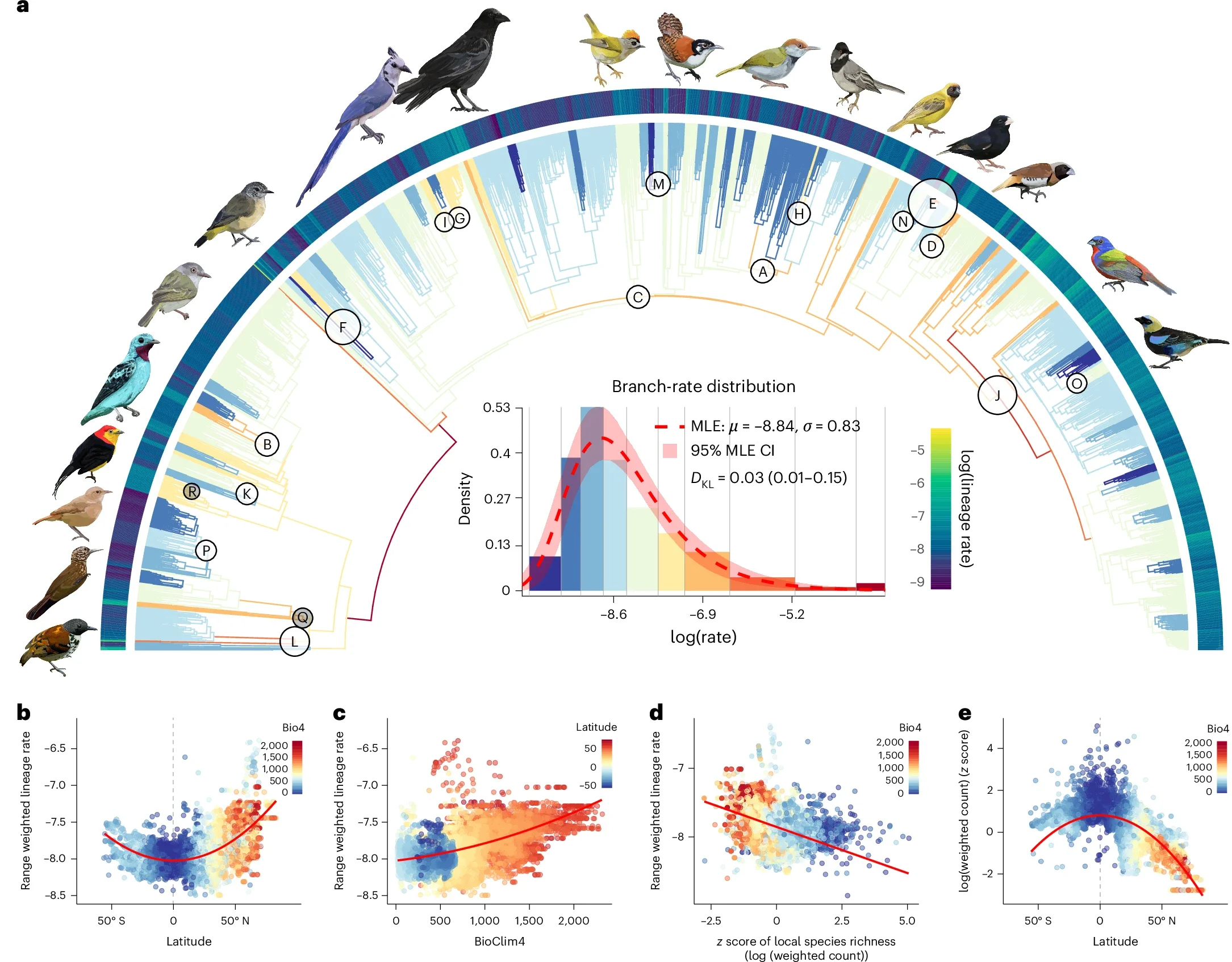
To capture that complexity, Berv developed a statistical method called bifrost. The model allowed the team to study the entire skeleton at once instead of looking at single traits.
“The whole organism is an integrated, complex morphology, and each of the individual pieces is interrelated to every other part in the body,” Berv said.
The model reconstructed about 45 million years of passerine body-shape evolution. It asked what sequence of changes could explain the body forms seen in living species today.
The results revealed a striking pattern. Evolution did not move like a smooth river. It looked more like a landscape shaped by sudden storms, with long calm stretches between rare but powerful events.
The researchers found that passerines experienced rapid changes in body shape around 35 million years ago. That timing aligns with the Eocene-Oligocene transition, a period marked by intense global cooling.
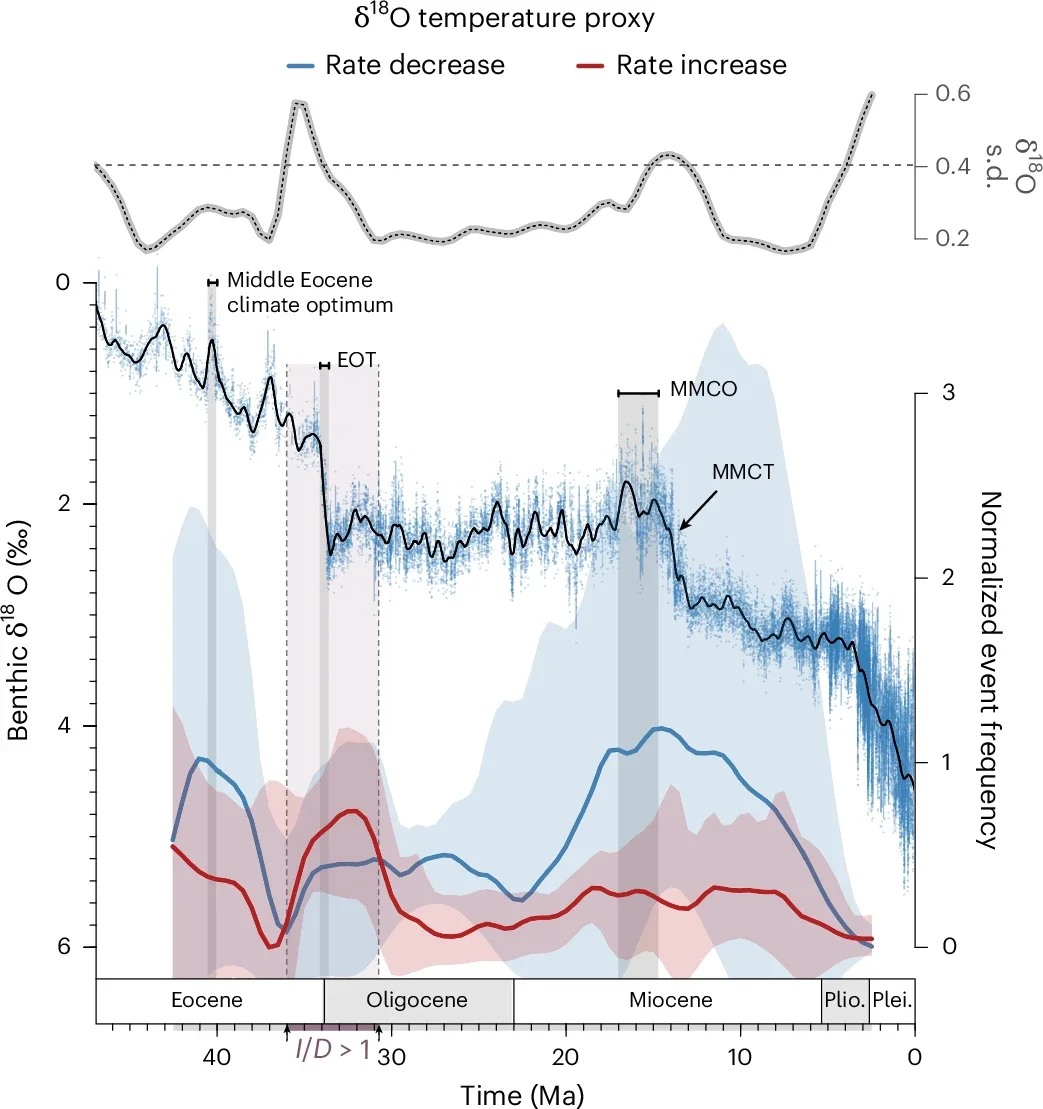
During that ancient climate shift, ecosystems changed across the planet. Forests contracted in some areas. New habitats opened elsewhere. For birds, these changes may have created new ecological opportunities.
“This could be because of a new ecological opportunity, or it could be because a group dispersed to a new continent, resulting in dramatic accelerations in their rate of evolution,” Berv said.
The study also found a cluster of evolutionary slowdowns around 15 million years ago. That period coincided with another major geological and climate event. By then, many bird groups may have already filled available ecological roles, leaving fewer open paths for rapid change.
Weeks said the pattern changed how he thinks about evolution.
“This pattern we found with rare, big increases in the rates of evolution and lots of small decreases in the rate of evolution is really consistent with a pattern where lineages are exploring new ecological space and changing rapidly to take advantage of that opportunity,” he said.
The findings support a long-standing idea in evolutionary theory. New groups often arise through adaptive radiations, when species rapidly diversify into new roles or environments. These bursts can produce a large share of life’s diversity.
In passerines, the bursts appear tied to periods of climate instability. When the world changed, some bird lineages changed quickly too. Their bodies shifted as they adapted to new foods, new landscapes and new ways of moving.
Over time, those bursts slowed. Once lineages filled new ecological space, the pace of change decreased. This cycle may have repeated across the history of passerines.
That pattern matters because it links ancient environmental change to the living birds around you. The shapes of their wings, legs and skulls carry traces of deep climate history.
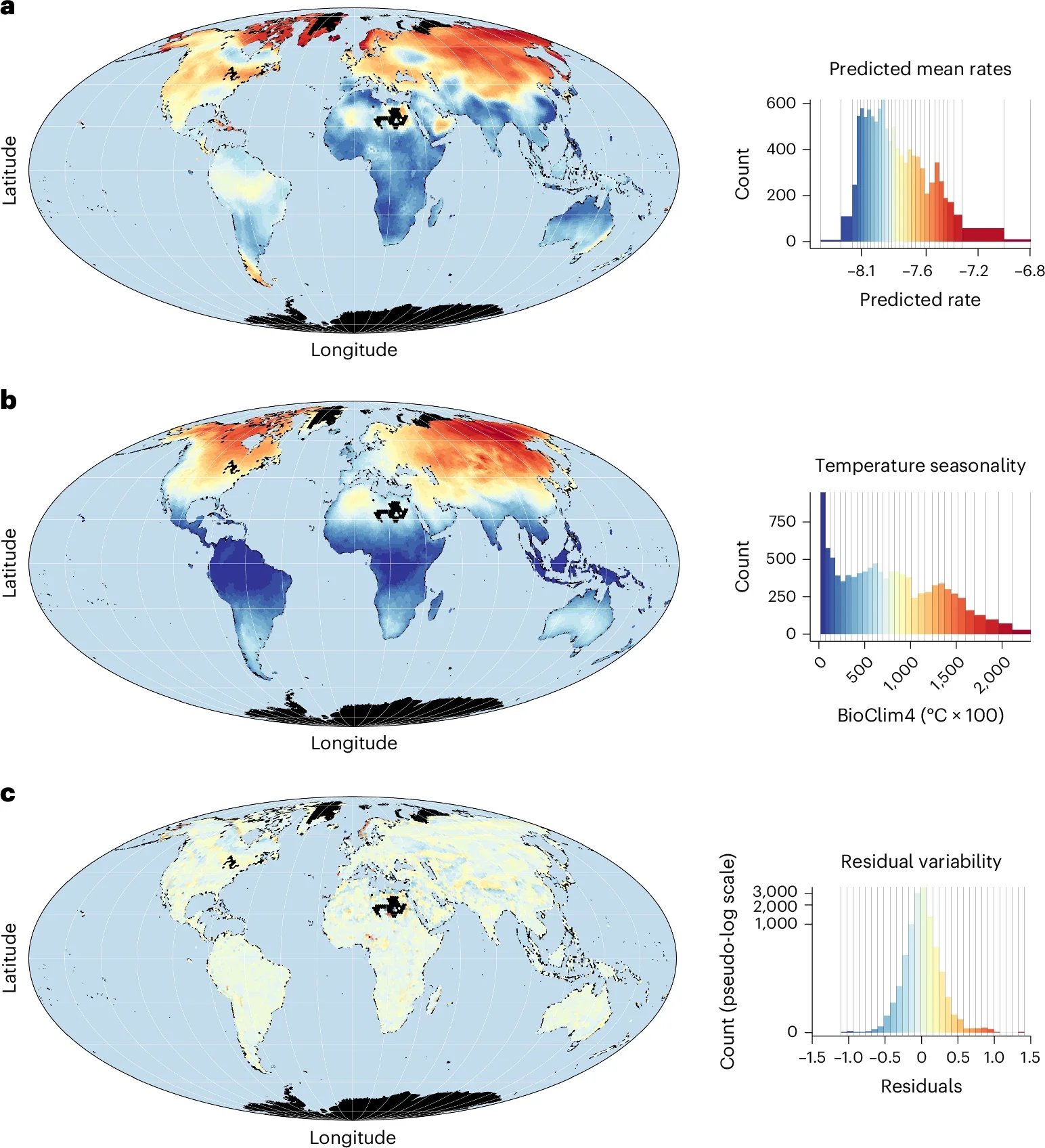
The researchers also made a second discovery. They found that where birds live today predicts their average rate of body-shape evolution.
Bird communities at more extreme latitudes tend to include species that evolved faster in shape. These regions also experience stronger seasonal temperature swings. Near the equator, where climates are often more stable, rates of body-shape change were generally slower.
“It looks like there’s a connection between latitudinal gradients and rates of morphological evolution that has been underappreciated,” Weeks said.
That finding adds a new layer to one of biology’s most famous patterns. Scientists have long known that biodiversity is often highest near the equator. This study suggests that the rate of body-shape evolution may follow a different pattern.
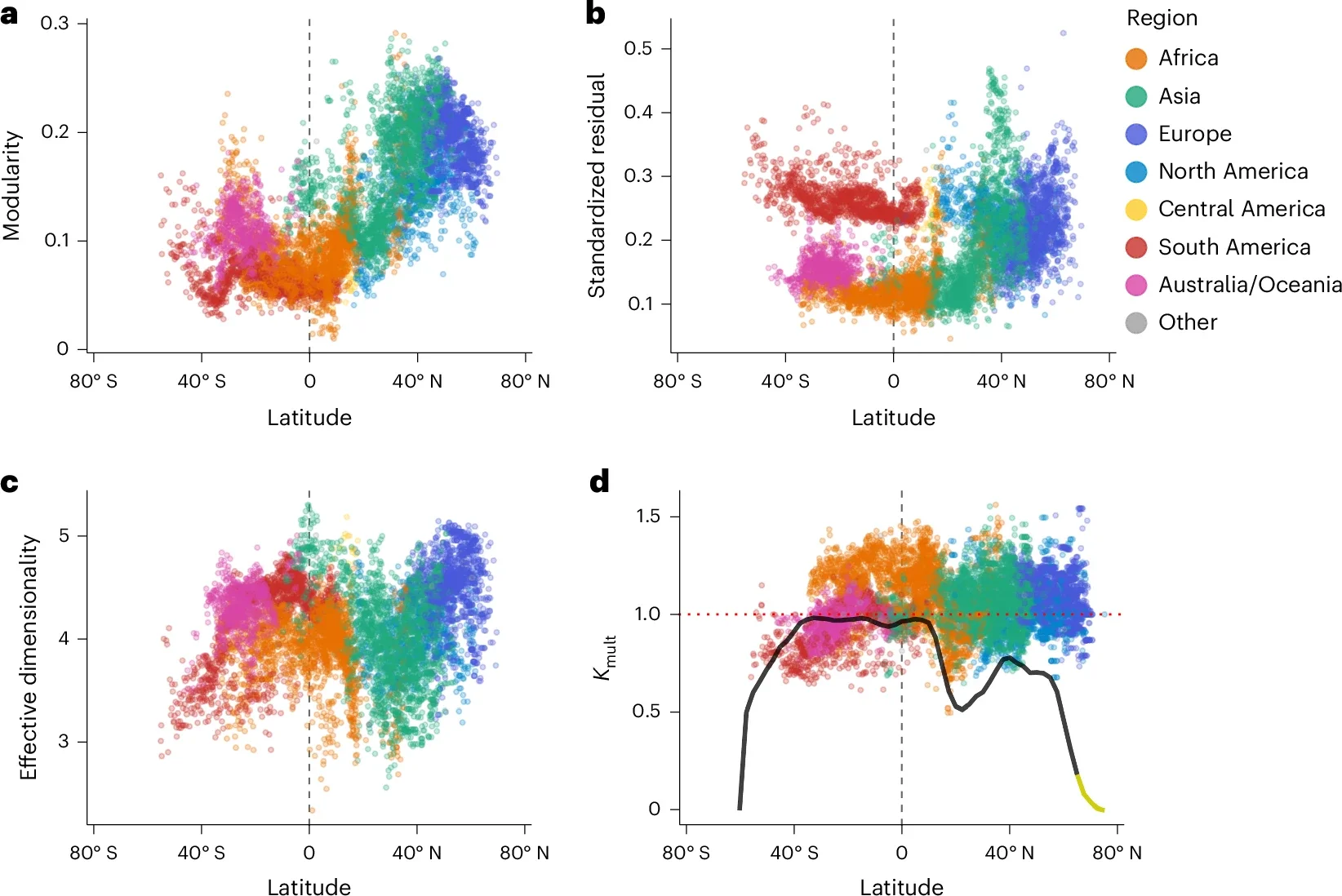
In colder or more seasonal regions, birds may face stronger pressure to adapt. Changing temperatures, food supplies and habitats could reward flexibility in body form.
The study also shows how AI can unlock the value of museum specimens. Bird skeletons collected across generations became the foundation for a global analysis of evolution.
Without those collections, this work would not have been possible. No single researcher could collect enough specimens to study more than 2,000 species in this way.
AI tools made the project faster, but the museum specimens made it possible. Together, they allowed scientists to ask bigger questions about life’s history.
This approach may change how researchers study evolution. Instead of relying only on fossils or DNA, scientists can now use living species and museum specimens to reconstruct ancient changes.
The study does not predict exactly how birds will respond to today’s climate crisis. But it does show that climate and evolution are deeply connected.
“Right now, we’re in this moment in human history where there’s dramatic global climate change, and we don’t know what’s going to happen over even a 10-year period, let alone over a 10-million-year period,” Berv said.
Past climate shifts unfolded over vast stretches of time. Today’s changes are happening much faster. That difference makes the future harder to predict.
Still, the long record of passerine evolution offers a warning and a clue. When environments change, life responds. Sometimes that response brings innovation. Sometimes it brings decline. Not every species can adapt fast enough.
These resources provide recent and directly relevant context on avian skeletal diversity, climate responses and the evolutionary history underlying modern birds.
Skeletal trait measurements for thousands of bird species: This companion dataset describes measurements from 14,419 museum skeletons representing 2,057 passerine species and provides the anatomical foundation for large-scale evolutionary analyses. (Scientific Data, 2025)
Australian birds track climate warming over decades via shifts in bill morphology: Museum specimens from 57 Australian passerine species show that bill dimensions have tracked recent changes in temperature extremes, providing contemporary evidence linking climate and avian morphology. (Communications Biology, 2025)
A new time tree of birds reveals the interplay between dispersal, geographic range size, and diversification: A phylogeny covering more than 9,000 bird species examines how dispersal ability and geographic range helped shape avian diversification through time. (Current Biology, 2025)
Complexity of avian evolution revealed by family-level genomes: Genome data from 363 bird species representing most living families provide a detailed evolutionary framework and reveal episodes of rapid radiation in avian history. (Nature, 2024)
A deep neural network for high-throughput measurement of functional traits on museum skeletal specimens: This paper introduces Skelevision, the computer-vision system that identifies and measures bird bones rapidly from standardized museum photographs. (Methods in Ecology and Evolution, 2023)
Research findings are available online in the journal Nature Ecology & Evolution.
The original story “Climate shifts sparked rare bursts of bird evolution” is published in The Brighter Side of News.
Like these kind of feel good stories? Get The Brighter Side of News’ newsletter.
The post Climate shifts sparked rare bursts of bird evolution appeared first on The Brighter Side of News.


Leave a comment
You must be logged in to post a comment.