The oldest human genome yet sampled from the Americas dates to about 12,800 years ago. Yet the population history reconstructed from that DNA reaches thousands of years further back, offering clues to migrations that left few surviving traces. A genome can preserve clues to older ancestors without recording the location of their migrations.
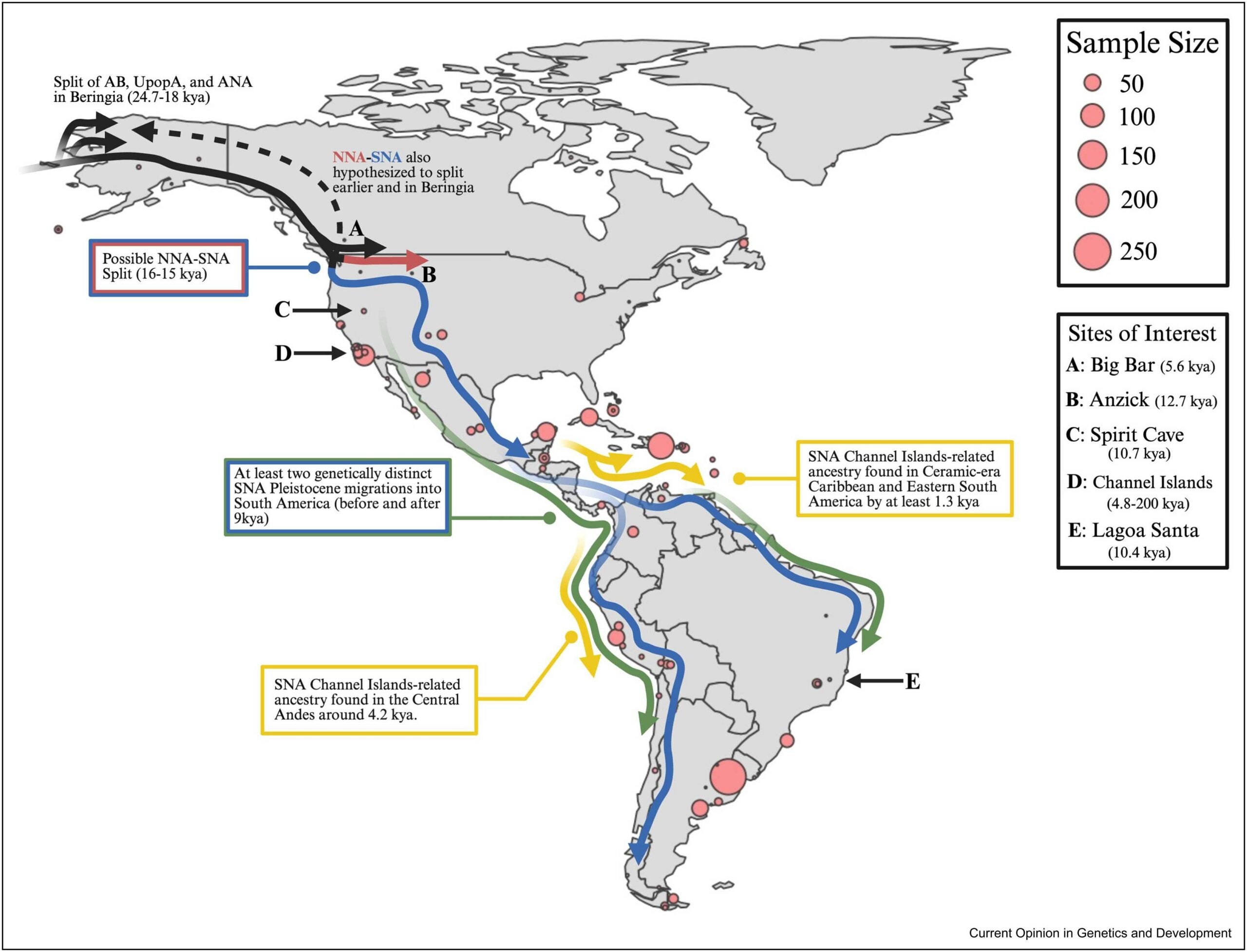
A review led by Bethany Potter at the University of Kansas argues that existing genetic evidence best fits an initial migration between 20,000 and 14,000 years ago. Published online in Current Opinion in Genetics & Development, it compares migration models with archaeological and environmental evidence.
The conclusion concerns the ancestry represented in sampled ancient people and living Indigenous populations. It does not establish the date of the first human footsteps anywhere in the Americas. Earlier arrivals remain possible, particularly because the genetic record is geographically uneven and missing its earliest chapters.
Potter and colleagues Savannah Hay, Archana Singh and Jennifer Raff reviewed published findings rather than collecting new ancient genomes. Their analysis evaluates three broad possibilities: arrival before 25,000 years ago, migration between 20,000 and 14,000 years ago, or entry after 14,000 years ago.
These scenarios span the Last Glacial Maximum and the subsequent retreat of ice sheets. That cold interval created major barriers across northern North America. An interior passage between the Laurentide and Cordilleran ice sheets was unavailable during much of the period relevant to early migration.
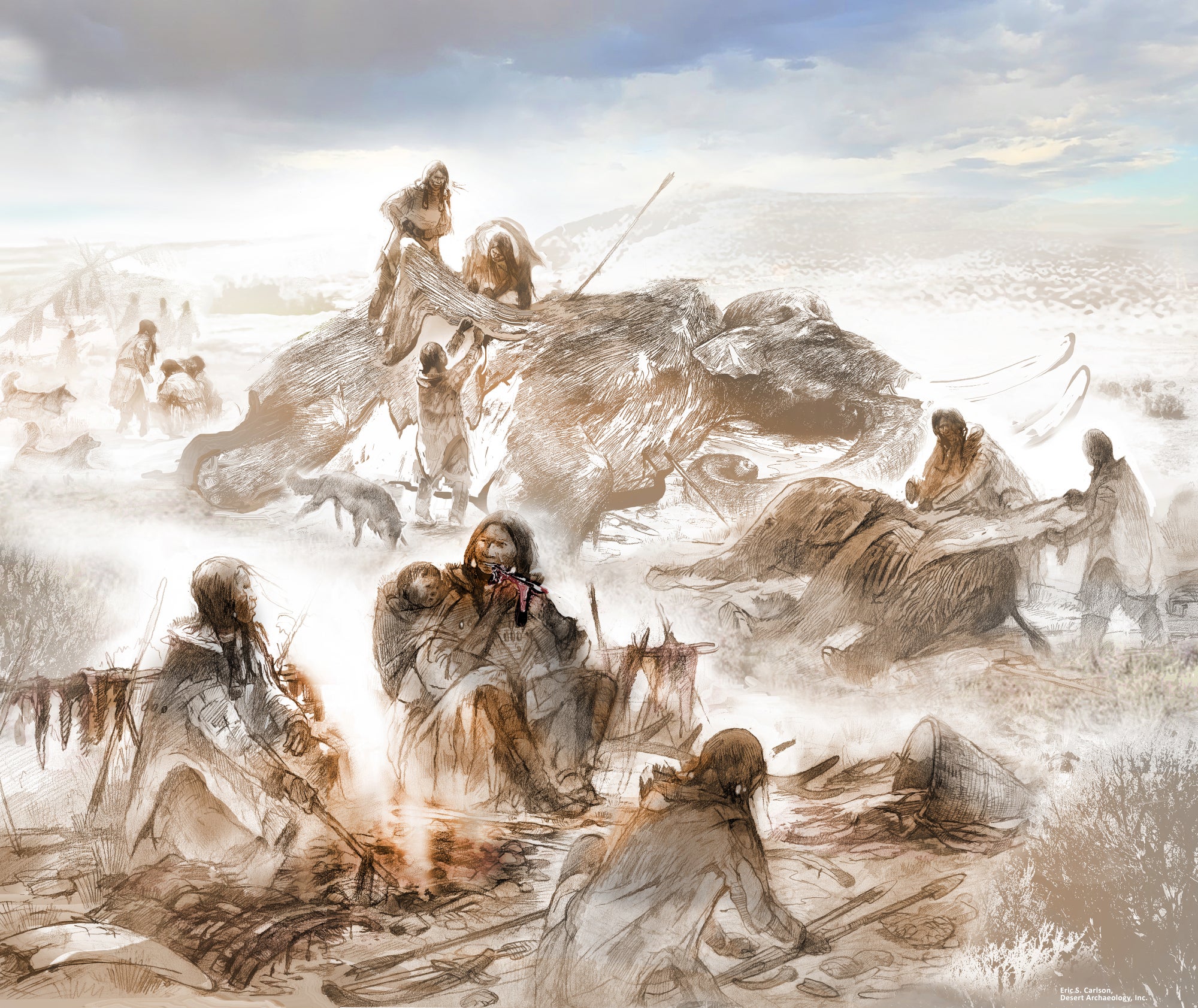
For decades, the prevailing model associated the earliest inhabitants with the Clovis archaeological culture, dating to about 13,500 years ago. It envisioned migration from northeast Asia across Beringia, followed by movement through an inland ice-free corridor.
Archaeological discoveries predating Clovis challenged that sequence. The review asks whether genetic relationships support earlier entry, and whether the environment offered feasible routes. A Pacific coastal route is one possibility for movement before the interior corridor became available.
Ancient DNA has transformed the available evidence since the first ancient human whole genome was published in 2010. The review reports about 257 whole genomes and genome-wide data from 1,204 ancient individuals in the Americas. Even that growing record remains limited across time and geography.
The earliest sampled American genome belongs to the Anzick-1 child, buried in present-day Montana about 12,800 years ago. Researchers infer older population relationships by comparing genetic variation across sampled individuals. Those estimates describe ancestral branching, rather than directly dating a journey or campsite.
Genetic models connect Indigenous American ancestry with populations in ancient Siberia and East Asia. Between approximately 25,000 and 20,000 years ago, groups carrying ancestry from those sources interacted. Their descendants formed a population that later gave rise to several American lineages.
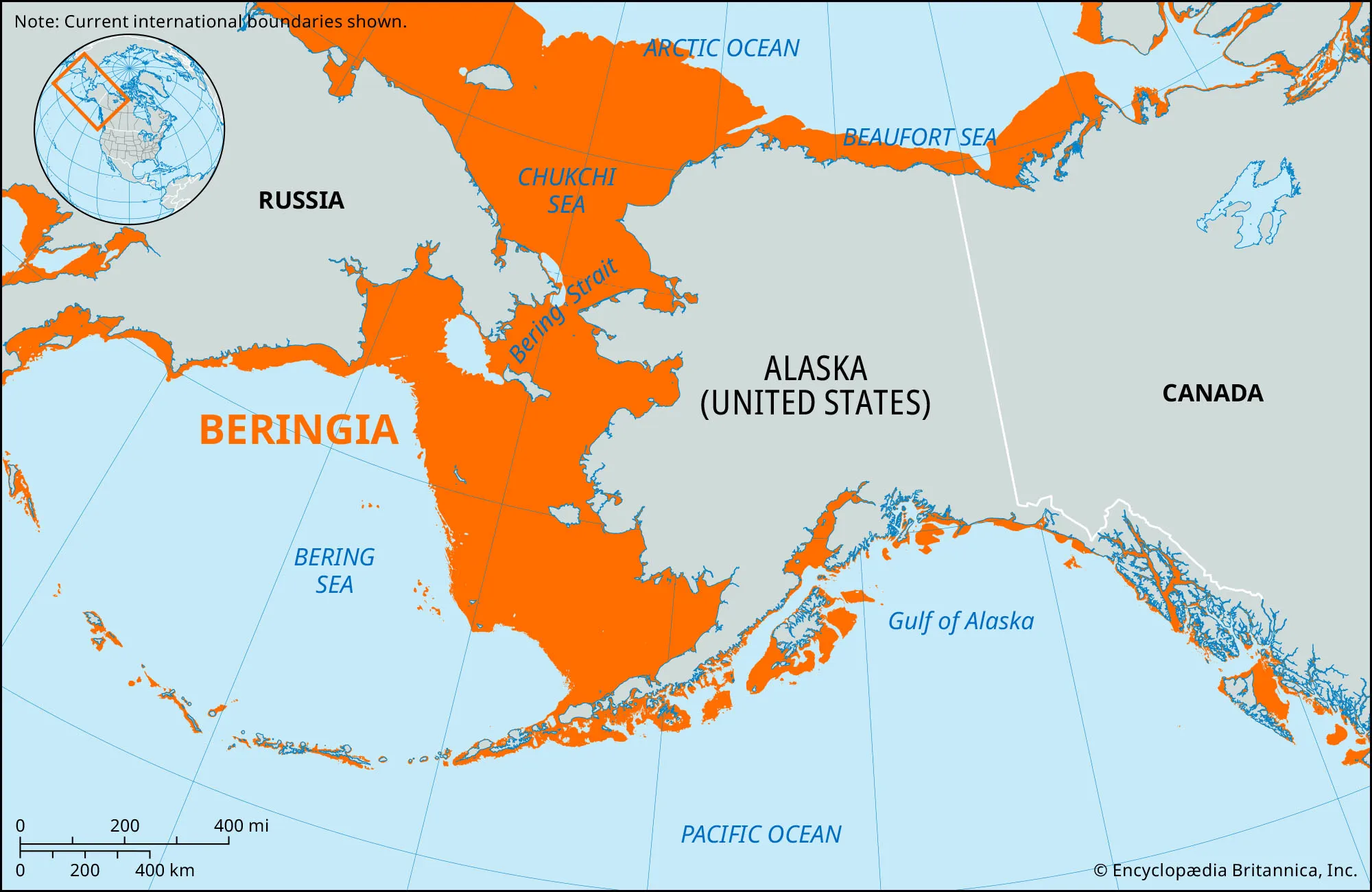
That ancestral population apparently experienced thousands of years of isolation, often called the Beringian Standstill. Its location remains unresolved. Proposed refuges include central Beringia, the East Siberian Arctic Shelf and an area east of Lake Baikal.
Uncertainty about location matters because a genetic split does not automatically mark entry into the Americas. Different populations could become distinct before moving south. The review therefore weighs ancestry estimates alongside evidence of where people could travel and live.
Several reconstructed lineages separated before the inland corridor opened. One study reviewed by the authors places divergence of an ancestral Blood/Blackfoot lineage at roughly 18,000 years ago. Another lineage, represented by an ancient individual from Big Bar, diverged shortly before approximately 15,500 years ago.
Around that latter date, an ancestral population also separated into branches labeled Northern Native Americans and Southern Native Americans. These are analytical names for genetic lineages, rather than descriptions of modern tribal identities. Together, those branches contributed ancestry to most living non-Arctic Indigenous peoples.
The authors favor a split south of the ice sheets at about 15,000 years ago. That interpretation requires people to have reached those regions beforehand. It helps explain why they consider a migration between 20,000 and 14,000 years ago the strongest fit.
A later arrival is still possible under alternative interpretations. It would require the northern and southern branches to have remained reproductively isolated in Beringia for thousands of years. The authors argue that this is less consistent with most genetic evidence, while acknowledging unresolved dates and locations.
Some archaeological evidence suggests people were present earlier than the review’s preferred window. White Sands in New Mexico preserves human footprints associated with dates around 23,000 years ago. Independent dating studies have strengthened the case for their Last Glacial Maximum age.
Those footprints cannot identify how their makers were related to later populations. No American genome sampled so far approaches their age. The absence of matching DNA therefore leaves an unresolved ancestry question, rather than demonstrating that the trackmakers never existed.
The review outlines several ways earlier occupation could fit the genetic record. An early population might remain unsampled, have left no living descendants, or have contributed only small amounts of ancestry. More ancient genomes would be needed to distinguish those possibilities.
“Archaeological and genomic data can work in tandem to reveal subtle details of population history,” the authors write. Archaeology can establish human presence independently of genetic survival. DNA can reveal relationships and population changes that artifacts alone cannot resolve.
The emerging picture involves multiple dispersals rather than one migration followed by simple expansion. Southern lineages spread widely through North and South America. Later movements, mixing and periods of isolation reshaped ancestry across the continents.
The review describes evidence for another southern ancestry stream entering South America around 9,000 years ago. Additional later dispersals contributed to an already complex population history. Such changes help explain why living genetic variation cannot stand in for every ancient population.
Future research also depends on how questions are chosen and whose priorities guide them. The authors emphasize collaboration with archaeologists, tribal historians and descendant communities. They acknowledge that scientific disciplines have limits and that tribal historical knowledge provides other explanations of origins.
The preferred migration window is therefore a working interpretation of the available record. Resolving the earliest arrivals will require evidence that connects ancestry, human activity and landscape history more closely. That evidence may clarify the timing, while revealing additional movements the current models cannot yet capture.
These resources examine ancient ancestry, migration routes, older archaeological evidence and the ethics of studying ancestral remains.
Peopling of the Americas as inferred from ancient genomics: Reviews how ancient genomes reveal founding populations, dispersals and later population changes across the Americas. (Nature, 2021)
The evolutionary history and unique genetic diversity of Indigenous Americans: Investigates Indigenous genomic diversity and evidence of multiple dispersals shaping South American ancestry. (Nature, 2026)
Paleolake geochronology supports Last Glacial Maximum (LGM) age for human tracks at White Sands, New Mexico: Adds geological and radiocarbon evidence supporting the antiquity of the White Sands footprints. (Science Advances, 2025)
Postglacial viability and colonization in North America’s ice-free corridor: Reconstructs when an interior passage could support travelers, helping assess proposed early migration routes. (Nature, 2016)
Ethics of DNA research on human remains: five globally applicable guidelines: Discusses research planning, protection of remains and engagement with communities and other stakeholders. (Nature, 2021)
Research findings are available online in the journal Current Opinion in Genetics & Development.
The original story “Ancient DNA suggests humans reached America far earlier than previously thought” is published in The Brighter Side of News.
Like these kind of feel good stories? Get The Brighter Side of News’ newsletter.
The post Ancient DNA suggests humans reached America far earlier than previously thought appeared first on The Brighter Side of News.


Leave a comment
You must be logged in to post a comment.