Exhaust does not stop changing when it leaves an engine. Reactions in the atmosphere can produce new particles and alter the chemistry of existing ones. In laboratory experiments, aircraft-combustor emissions became substantially more reactive as researchers simulated days of exposure to atmospheric oxidants.
Their oxidative potential per unit particle mass increased six- to sevenfold after aging equivalent to approximately 12 days. Emissions from a marine diesel engine showed a different pattern in the same chemical test. The contrast suggests that freshly emitted exhaust alone cannot describe how particle reactivity develops in the air.
The study, published in Environmental Science Atmospheres, was led by Markus Kalberer’s group at the University of Basel. Alexandre Barth and Battist Utinger were its two first authors. The work examined chemical indicators associated with potential harm, rather than measuring disease or demonstrating a corresponding increase in human toxicity.
Fine particulate matter, commonly called PM2.5, includes particles with aerodynamic diameters of 2.5 micrometers or less. Ultrafine particles are a smaller category, generally below 100 nanometers. Combustion produces particles in these small size ranges, which can enter deep into the respiratory system.
Oxidative stress can occur when reactive molecules overwhelm biological defenses, potentially contributing to inflammation and tissue damage. Particle oxidative potential is a chemical measure intended to help explain that process. It captures aspects of particle reactivity without reproducing every response inside a living lung.
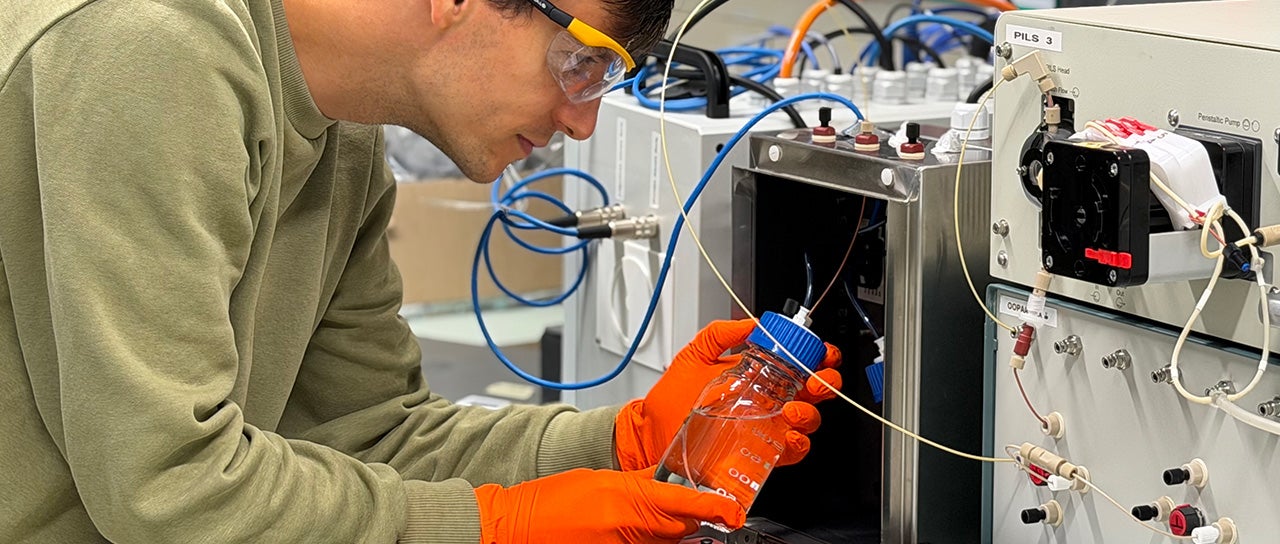
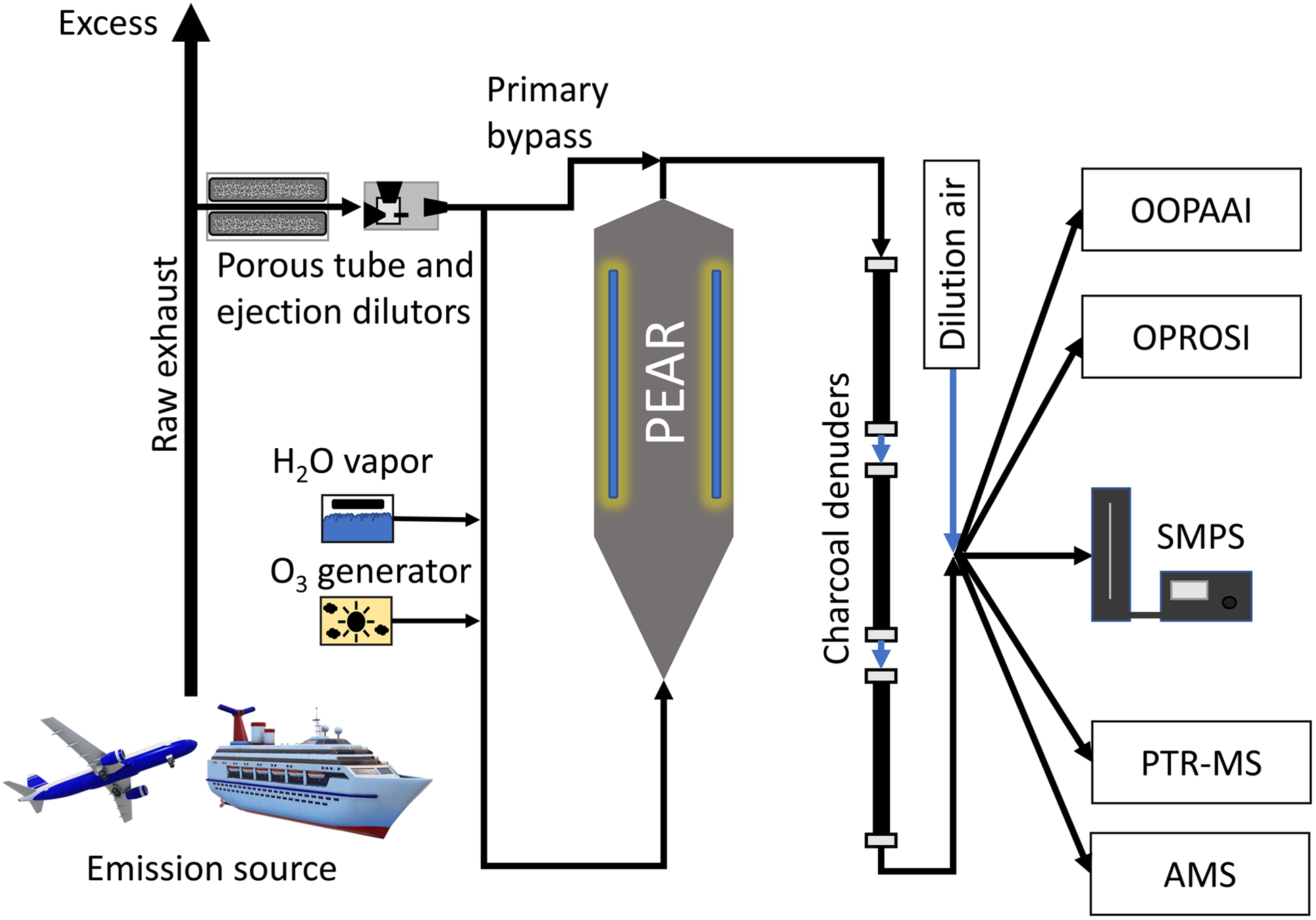
The Basel team used the Online Oxidative Potential Ascorbic Acid Instrument, or OOPAAI. It continuously collects airborne particles into liquid and measures their ability to oxidize ascorbic acid, also known as vitamin C. Results were normalized to particle mass, allowing comparisons of reactivity for a given amount of material.
This distinction matters when interpreting the headline result. A sixfold rise in this assay does not establish a sixfold rise in illness, mortality or damage to lung cells. The paper explicitly calls for direct toxicological studies to confirm implications for specific health outcomes.
The aviation source was a small jet-engine combustion chamber operated at a fixed 7% load. It burned JP-8, a military aviation fuel similar to commercial Jet A-1 but containing specific additives. The experimental source represented aspects of older-generation aircraft-engine emissions rather than the full range of modern aircraft and operating conditions.
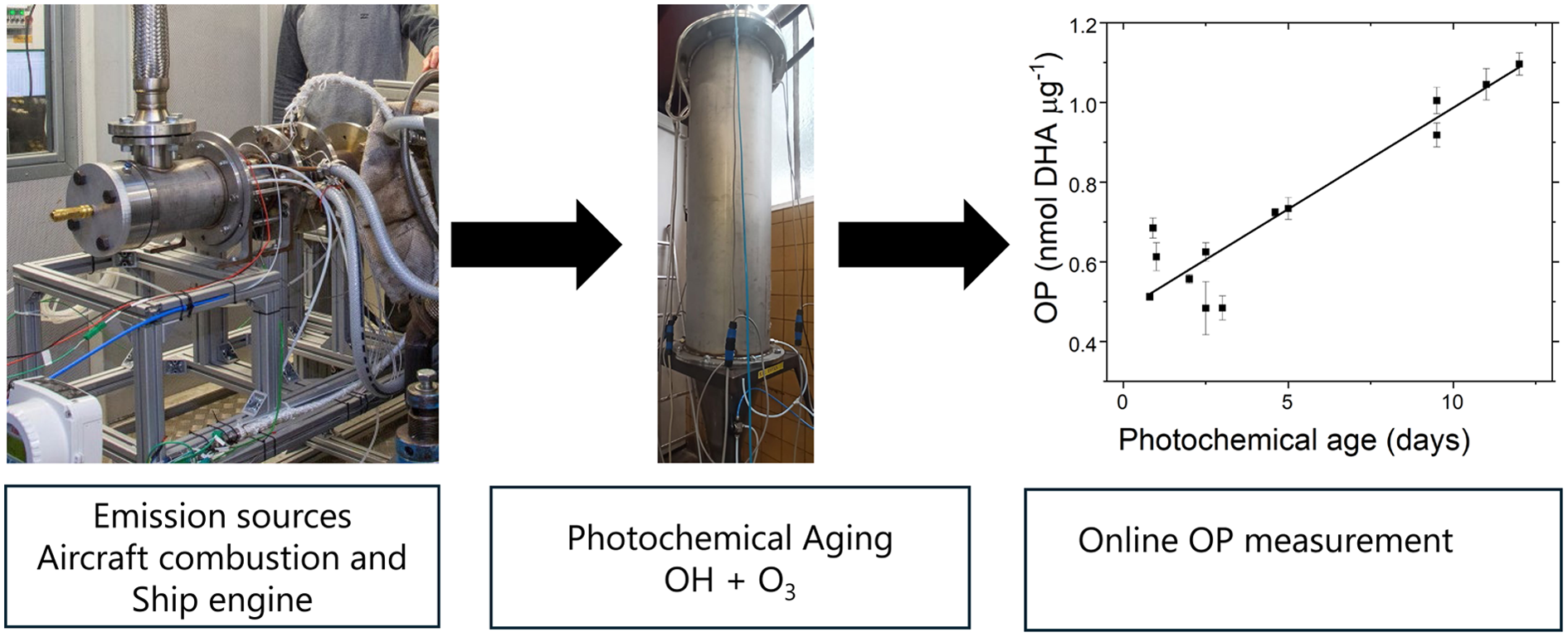
For shipping, the researchers used a four-stroke, single-cylinder marine research engine. It ran on marine gas oil and low-sulfur heavy fuel oil, containing 0.015% and 0.5% sulfur, respectively. Measurements covered changing engine loads, alongside separate aging experiments at a constant load.
After dilution, exhaust either went directly to the instruments or passed through a photochemical reactor. Ultraviolet light, ozone and water vapor generated hydroxyl radicals, important atmospheric oxidants. Their concentrated action simulated approximately one to 12 days of chemical aging during a residence time of about 70 seconds.
Those are equivalent exposure times, not particles left outdoors for 12 days. Atmospheric conditions vary, and the reactor’s high oxidant concentrations can produce different molecular mixtures from ambient air. The authors note that slowly forming compounds may be especially difficult to reproduce accurately.
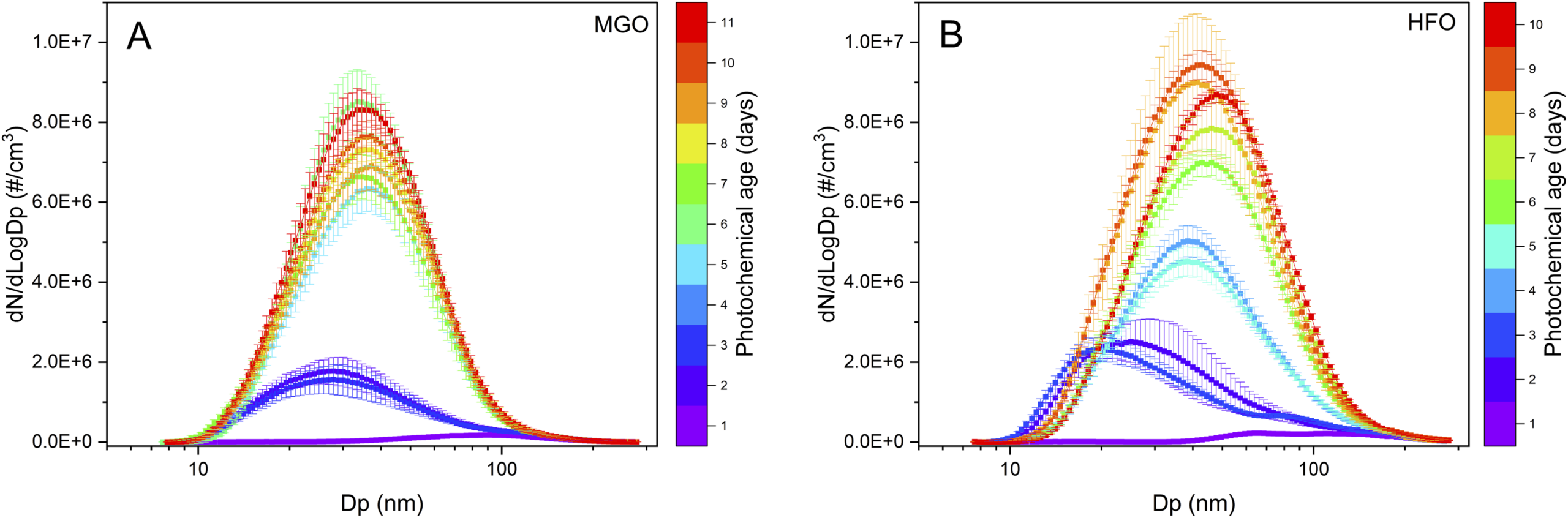
Aircraft emissions showed a clear, roughly linear rise in mass-normalized oxidative potential with increasing simulated age. Aging also increased particle numbers and mass, reflecting the formation of secondary particles from gaseous precursors. Meanwhile, average chemical measurements showed increasing oxygen content in the organic particle material.
The ship-emission comparison gave a more complicated result. At a constant 25% engine load, neither fuel showed a clear age-dependent trend in mass-normalized oxidative potential within experimental variability. Yet the particles became more oxidized, and secondary particle formation increased their mass substantially.
Engine load also influenced fresh ship exhaust. Its oxidative potential per unit mass increased by as much as roughly tenfold across the tested loads. After aging, that relationship disappeared, with values rising at lower loads and falling at higher loads compared with fresh emissions.
Consequently, the findings do not show that ship pollution remains chemically unchanged or harmless. They show that one measure of reactivity did not consistently track aging under the fixed-load conditions studied. Total exposure also depends on particle concentration, which is separate from reactivity per unit mass. The experiments did not measure how weather, atmospheric dilution and overlapping pollution sources would change a person’s eventual inhaled dose.
The researchers also measured particle-bound reactive oxygen species using a separate online instrument. This complementary test targeted hydrogen peroxide and organic peroxides rather than the same chemistry measured by the vitamin C assay. Signals from aged particles increased for both ship and aircraft emissions.
Fresh-exhaust measurements with that second instrument were less reliable. Soot or other exhaust components may have interfered with the assay, sometimes producing slightly negative signals. The authors therefore treated those fresh-emission results cautiously rather than presenting a precise comparison across every condition.
The different responses underline why a single chemical indicator cannot capture every potentially harmful particle property. Metals and organic compounds can contribute differently depending on the test used. Detailed molecular analysis would be needed to identify exactly why the two exhaust sources behaved differently; that characterization was unavailable here.
Online sampling helps capture reactive components that can disappear while collected particles await analysis. The study notes earlier evidence that substantial fractions of oxidative signals can decay over minutes to hours. Rapid measurements therefore reduce one possible source of underestimation, although they introduce their own experimental challenges.
For example, equipment used to remove interfering gases also lost approximately 45% to 55% of particle mass. The team could not determine whether size-dependent particle losses altered the measured reactivity. Such limitations matter when translating controlled experiments into assessments of real atmospheric mixtures.
“Our study shows that it is important to look beyond freshly emitted exhaust particles,” Utinger said. The findings support evaluating atmospheric transformations alongside emission reductions, fuel changes and exhaust treatments. They also indicate that pollution assessments based only on particle mass may miss relevant chemical differences.
The next step is to connect those chemical measurements with biological responses and realistic exposure conditions. For airports, harbors and communities farther downwind, the central question extends beyond what an engine releases. It includes what that exhaust becomes before anyone breathes it.
These resources explore particle measurements, changing exhaust chemistry and the evidence connecting air pollution with health.
An automated online field instrument to quantify the oxidative potential of aerosol particles via ascorbic acid oxidation: Describes the instrument used to track particle reactivity through the oxidation of vitamin C. (Atmospheric Measurement Techniques, 2023)
Short-lived reactive components substantially contribute to particulate matter oxidative potential: Investigates reactive components that can disappear before conventional stored samples are analyzed. (Science Advances, 2025)
Emission dynamics of reactive oxygen species and oxidative potential in particles from a petrol car and wood stove: Applies online measurements to other combustion sources, showing why source chemistry and operating conditions matter. (Aerosol Research, 2025)
A review of health effects associated with exposure to jet engine emissions in and around airports: Reviews exposure and health evidence involving airport workers, neighboring residents and experimental models. (Environmental Health, 2021)
WHO global air quality guidelines: particulate matter (PM2.5 and PM10), ozone, nitrogen dioxide, sulfur dioxide and carbon monoxide: Explains the evidence underlying international air-quality recommendations and particle-based exposure measures. (World Health Organization, 2021)
Research findings are available online in the journal Environmental Science Atmospheres.
The original story “Aircraft exhaust particles may become more harmful over time” is published in The Brighter Side of News.
Like these kind of feel good stories? Get The Brighter Side of News’ newsletter.
The post Aircraft exhaust particles may become more harmful over time appeared first on The Brighter Side of News.


Leave a comment
You must be logged in to post a comment.