A meal eaten by a dinosaur about 66 million years ago may have preserved a clue to one of paleontology’s biggest mysteries.
Inside a small piece of fossilized dung from Montana, scientists discovered an extraordinarily well-preserved bird feather, additional feathers, tiny bones and fish scales. The specimen provides a rare look at the plumage of birds living immediately before the asteroid impact that wiped out nearly all dinosaurs.
The research, published in Current Biology, was led by Jingmai O’Connor, associate curator of fossil reptiles at Chicago’s Field Museum. The feather appears to have belonged to a hesperornithiform, a group of aquatic birds closely related to, but outside, Neornithes, the lineage containing every bird alive today.
That distinction could be critical. Hesperornithiforms disappeared during the end-Cretaceous extinction while Neornithes survived. Differences in their feathers may help explain why.
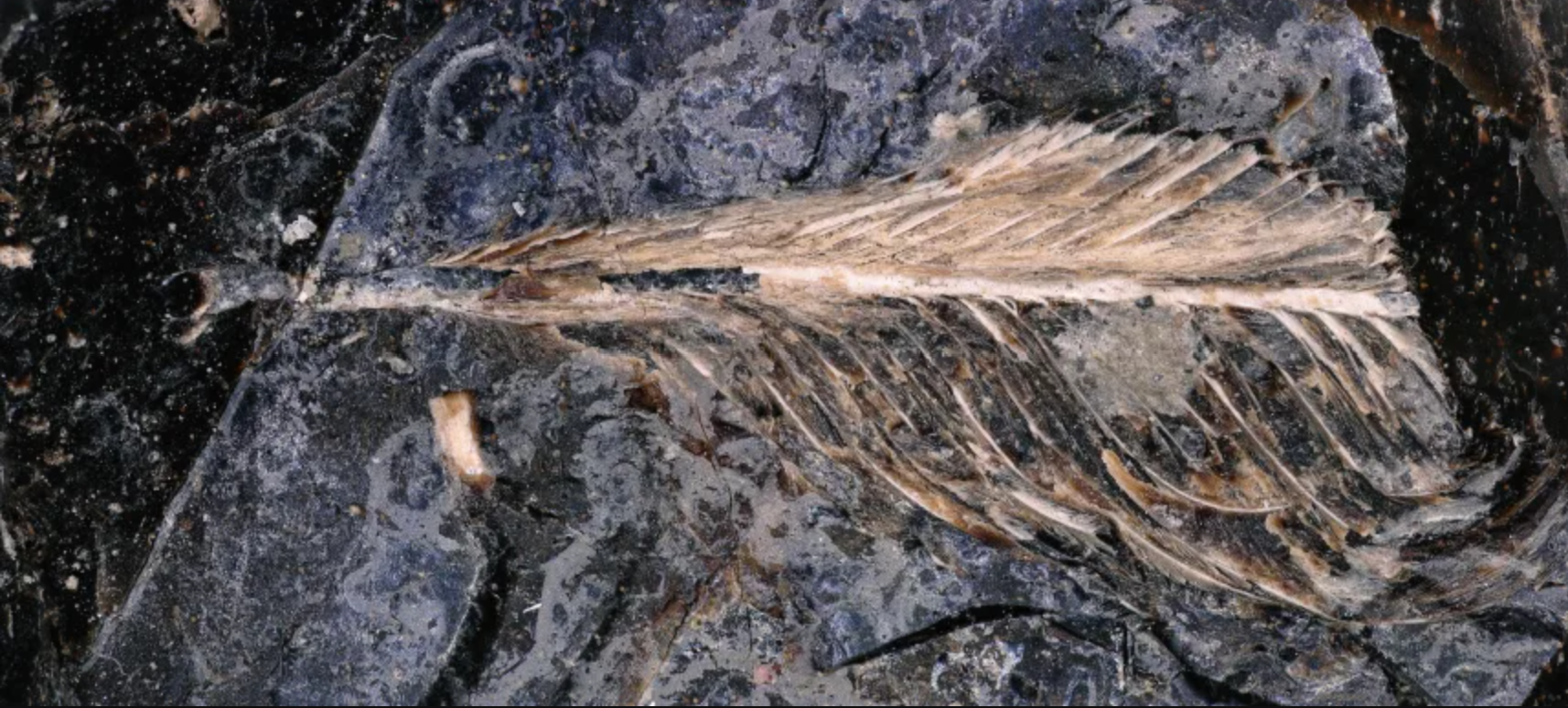
“It’s such a beautiful, well-preserved feather, from such an unexpected source, and it’s exciting that it could help us answer this huge question in paleontology,” O’Connor said.
The discovery began in 2016 when David DeMar Jr. of the University of Washington Burke Museum was collecting fossils in northeastern Montana’s Hell Creek Formation.
While crawling along a rocky outcrop looking for fish fossils, DeMar noticed a dark reddish-brown object approximately half the size of a golf ball. Examining its surface with a hand lens revealed something unexpected: a tiny feather.
That was particularly surprising because feathers had not previously been found in the Hell Creek Formation despite more than 150 years of fossil collecting there.
Researchers later determined that the object was a coprolite, or fossilized feces, produced by a medium-sized theropod dinosaur. The exact animal responsible cannot be established from the specimen, although the researchers consider predators such as Tyrannosaurus or Nanotyrannus among the possibilities.
Micro-CT scanning transformed the seemingly ordinary rock into something much more revealing. Thousands of X-ray images allowed scientists to virtually examine its interior without destroying it.
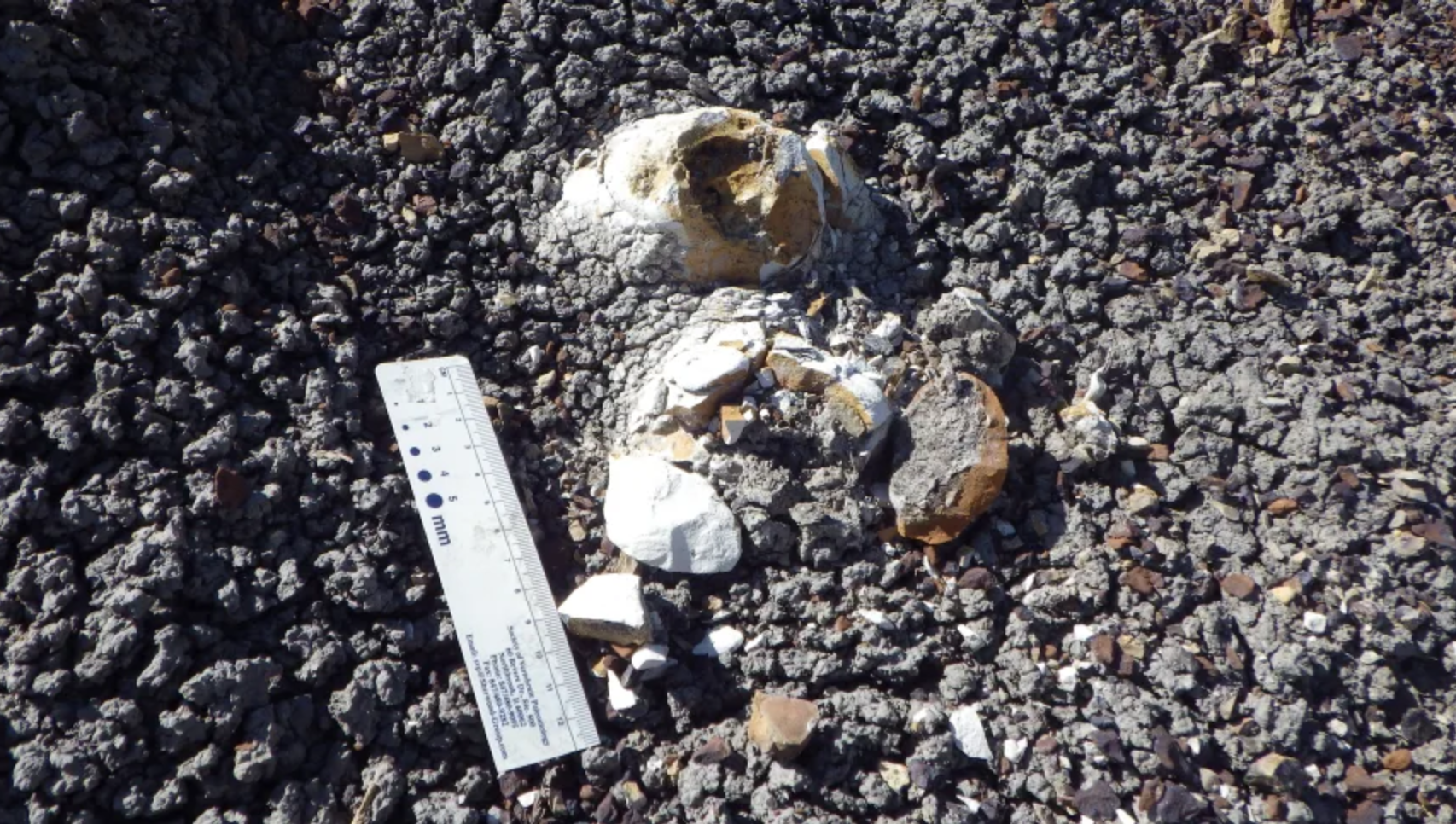
“Every hour processing the data revealed another feather, another scale, another bone, in stunning 3D,” said study co-author Nate Carroll of the Carter County Museum in Montana.
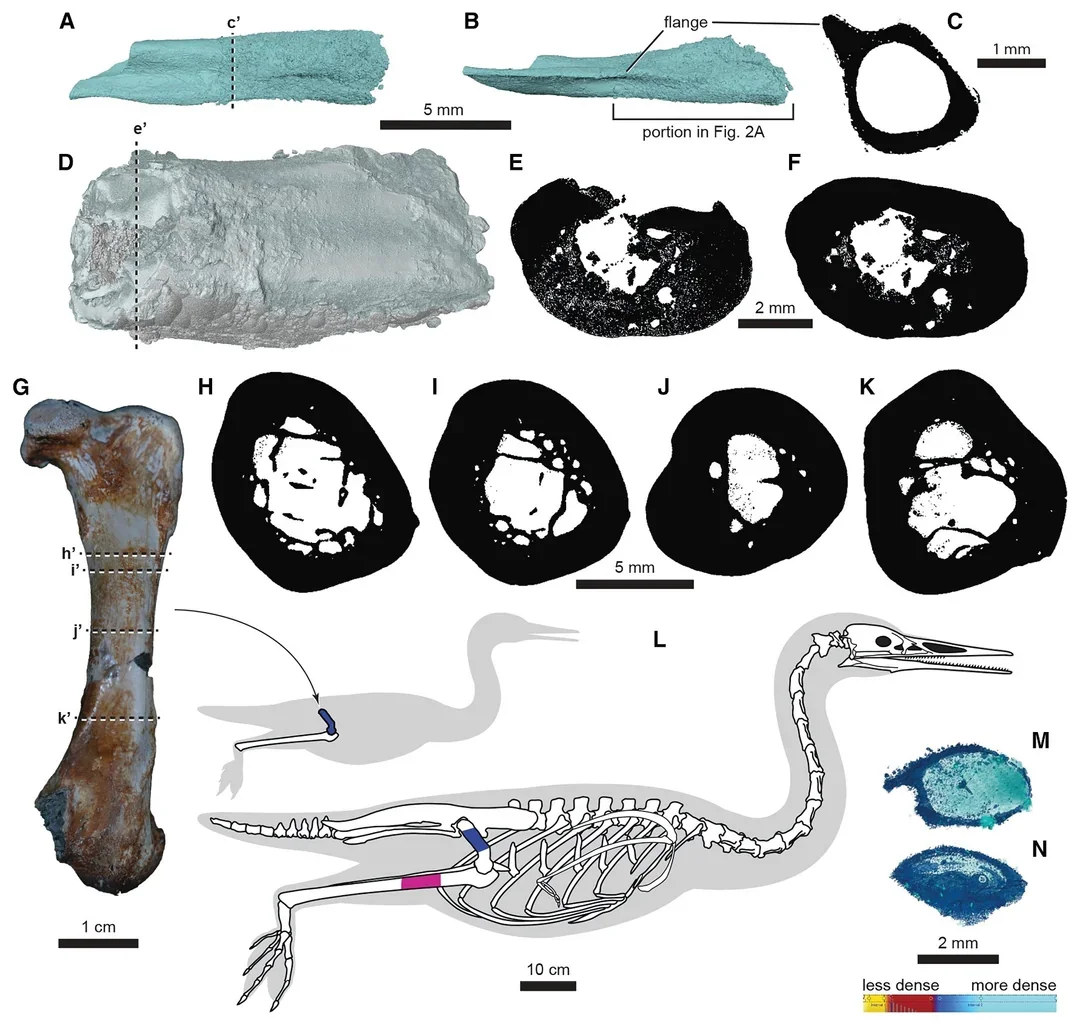
Inside the coprolite were several kinds of remains from the dinosaur’s meal. Researchers identified multiple feathers, tiny scales belonging to a gar fish and leg bones from a hesperornithiform bird.
The bones make the bird the most likely source of the feathers.
Hesperornithiforms were specialized aquatic birds that lived during the Cretaceous. Many were flightless and used powerful feet to propel themselves through the water while hunting fish, making them broadly comparable to modern foot-propelled diving birds.
The fish scales tell an additional story. Researchers interpret them as remains of the bird’s own final meal, meaning the fossil potentially preserves two levels of a Late Cretaceous food chain.
A gar was eaten by the bird. The bird was then eaten by a much larger dinosaur, whose feces ultimately fossilized.
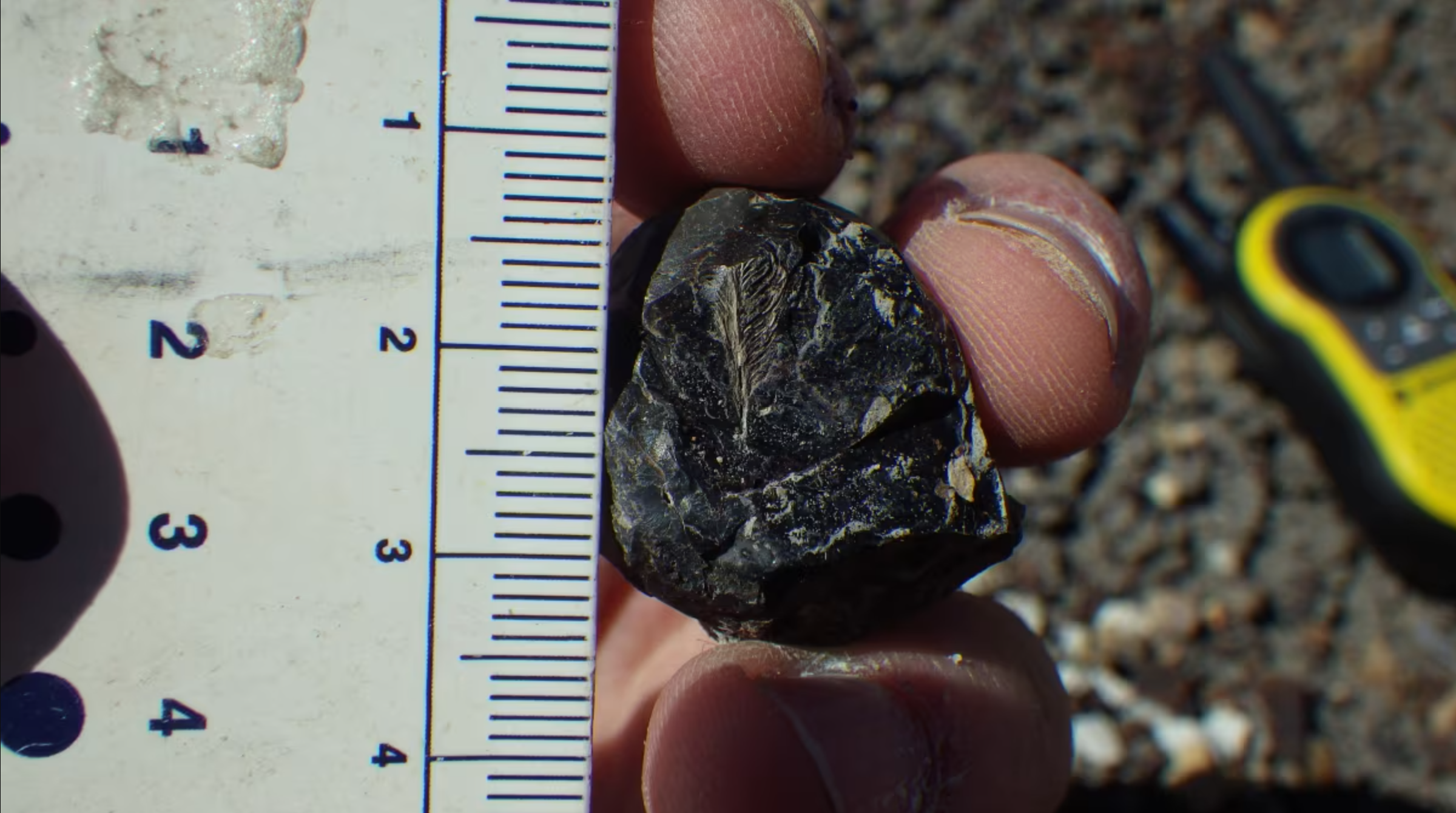
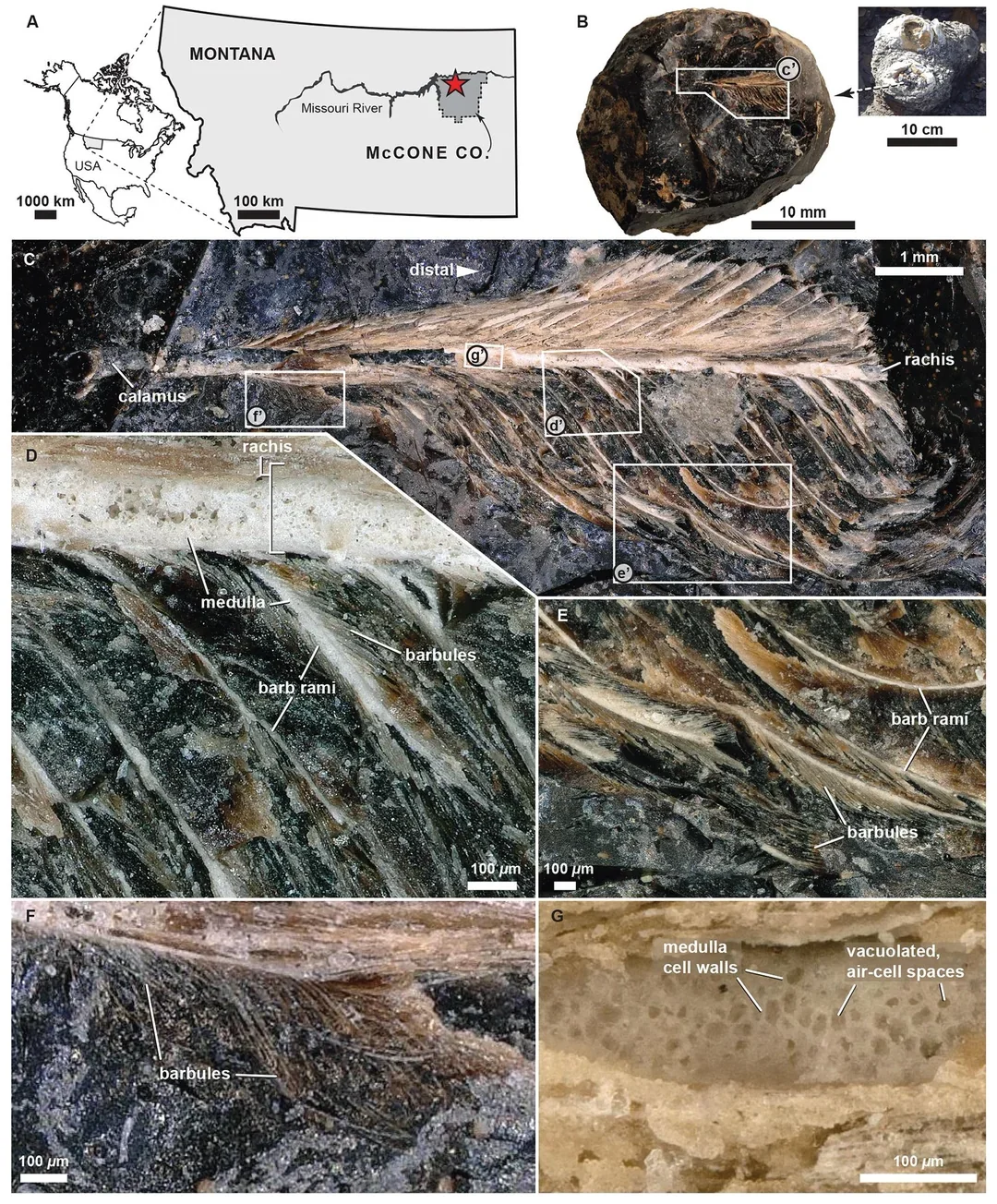
The largest visible feather is particularly remarkable because three-dimensional feathers from rocks this old are exceedingly rare. The researchers describe it as arguably the best-preserved feather recovered from a Mesozoic rock deposit.
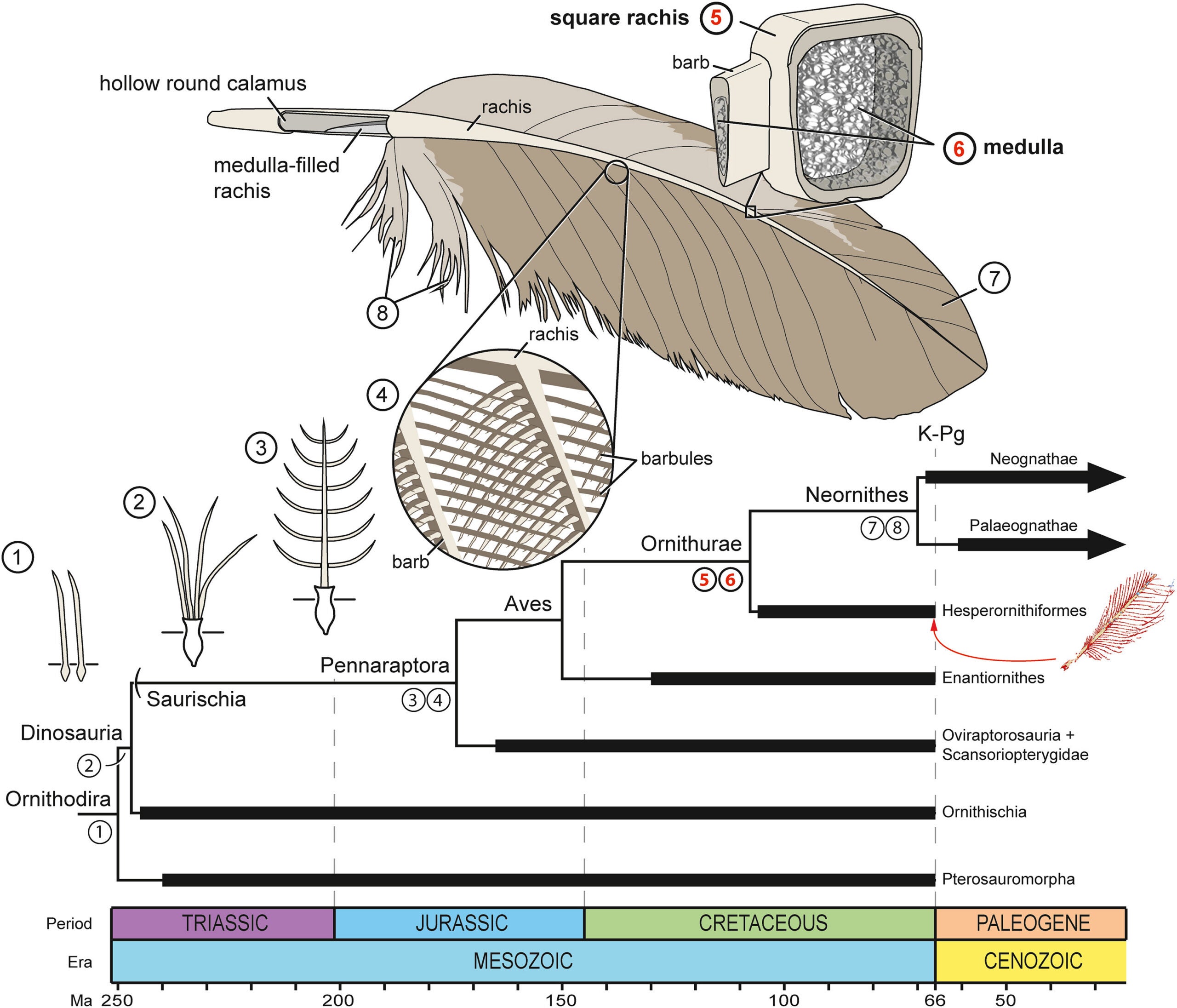
The main feather contained characteristics associated with sophisticated modern plumage.
It was lightweight yet stiff and had a square, medulla-filled central shaft, or rachis. Its densely arranged barbs and other structural features would have reduced the ability of water to penetrate the feather, an important adaptation for an aquatic bird.
Those features show that advanced feather architecture had evolved before the mass extinction.
Yet scans of the coprolite also revealed smaller feathers with more primitive structures. This combination surprised the researchers because it suggests hesperornithiform plumage represented an evolutionary mixture.
“Some of these diving birds’ feathers seem to have been modern-looking and water-proof, but they also had some smaller, fuzzy, primitive body feathers that we associate with dinosaurs and enantiornithines,” O’Connor said.
Those fuzzy body feathers may be especially important because body plumage provides thermal insulation.
When the asteroid struck Earth 66 million years ago, nearly all dinosaurs disappeared, including most bird lineages. Only Neornithes survived and eventually diversified into the thousands of bird species living today.
Researchers have proposed several explanations for that selectivity. One possibility is that surviving birds benefited from particular habitats, including environments near water.
Hesperornithiforms complicate that idea because they were extremely well adapted to aquatic life and still went extinct.
The new feathers point toward another potential factor.
If primitive body feathers provided poorer insulation than the plumaceous feathers of Neornithes, hesperornithiforms may have faced a disadvantage as global conditions deteriorated following the asteroid impact. Dust and debris thrown into the atmosphere are thought to have reduced sunlight and produced a period of severe cooling known as an impact winter.
The researchers do not claim that feathers alone determined survival. Instead, plumage could have been one of several biological characteristics influencing which bird lineages endured the catastrophe.
“We think the types of feathers that these birds had, and/or the way they molted those feathers, may have been one of the underlying causes of the selectivity of the end-Cretaceous mass extinction,” O’Connor said.
The discovery also demonstrates that coprolites may contain biological information researchers have largely overlooked.
Feathers are fragile and rarely fossilize, particularly in the Late Cretaceous rock record. Their survival inside feces suggests coprolites could preserve delicate remains that disappeared almost everywhere else.
This specimen was noticed largely because it happened to split in a way that exposed a feather on its surface. Other museum collections may contain similar fossils without any obvious external sign of what lies within them.
O’Connor hopes researchers will use CT scanning to examine more coprolites for hidden feathers and other delicate structures.
The approach could reveal details not only about extinct plumage but also about ancient predator-prey relationships, diets and ecosystems.
“It made me feel like a detective, piecing together all these little clues,” O’Connor said.
In this case, those clues extend from a fish eaten by a diving bird to a dinosaur that ate the bird and finally to a feather sealed within fossilized feces for 66 million years. That unlikely chain of preservation may now provide a new way to investigate why one branch of the dinosaur family survived the worst day in its history.
These studies explore feather evolution, molting, ecology and other traits that may have influenced which bird lineages survived the asteroid-driven mass extinction.
Rarity of molt evidence in early pennaraptoran dinosaurs suggests annual molt evolved later among Neornithes: Examines fossil evidence for feather replacement and proposes that modern annual molting strategies may have evolved relatively late, potentially giving crown birds an important plumage-maintenance advantage. (Communications Biology, 2023)
Early Evolution of Modern Birds Structured by Global Forest Collapse at the End-Cretaceous Mass Extinction: Finds that the bird lineages surviving the K-Pg extinction were predominantly non-arboreal and proposes that worldwide forest destruction strongly shaped avian survival and recovery. (Current Biology, 2018)
Dental Disparity and Ecological Stability in Bird-like Dinosaurs prior to the End-Cretaceous Mass Extinction: Examines ecological patterns among bird-like dinosaurs and suggests that toothless beaks and seed-eating may have contributed to the survival of crown birds after ecosystem collapse. (Current Biology, 2016)
Hesperornithiformes: the Origin and Evolution of the Cretaceous Diving Birds: Reviews the anatomy, distribution and evolutionary relationships of the specialized Cretaceous diving birds whose extinction contrasts with the survival of their crown-bird relatives. (Japanese Journal of Ornithology, 2018)
Definitive fossil evidence for the extant avian radiation in the Cretaceous: Describes Vegavis iaai from Antarctica and provides fossil evidence that members of the modern bird radiation were already present alongside non-avian dinosaurs before the K-Pg extinction. (Nature, 2005)
Research findings are available online in the journal Current Biology.
The original story “A feather found in dinosaur poop could help explain why birds survived the dinosaur extinction” is published in The Brighter Side of News.
Like these kind of feel good stories? Get The Brighter Side of News’ newsletter.
The post A feather found in dinosaur poop could help explain why birds survived the dinosaur extinction appeared first on The Brighter Side of News.


Leave a comment
You must be logged in to post a comment.